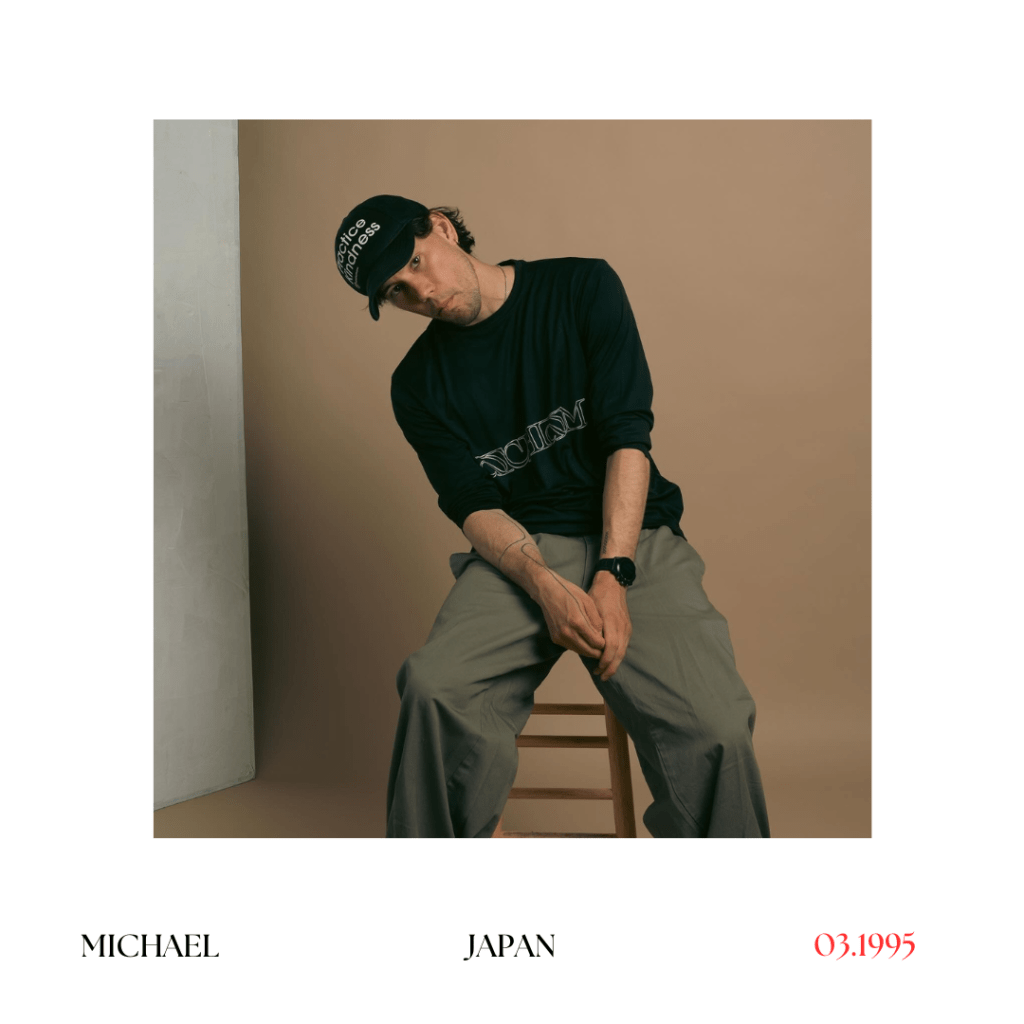
My name is Michael and I grew up in a town called Sammamish, WA which is outside of Seattle by about 30 minutes. I moved to New York when I was 21 years old. I went to Cornell in upstate New York and then I came down to New York City afterwards. So I’ve been here for almost 8 or 9 years.
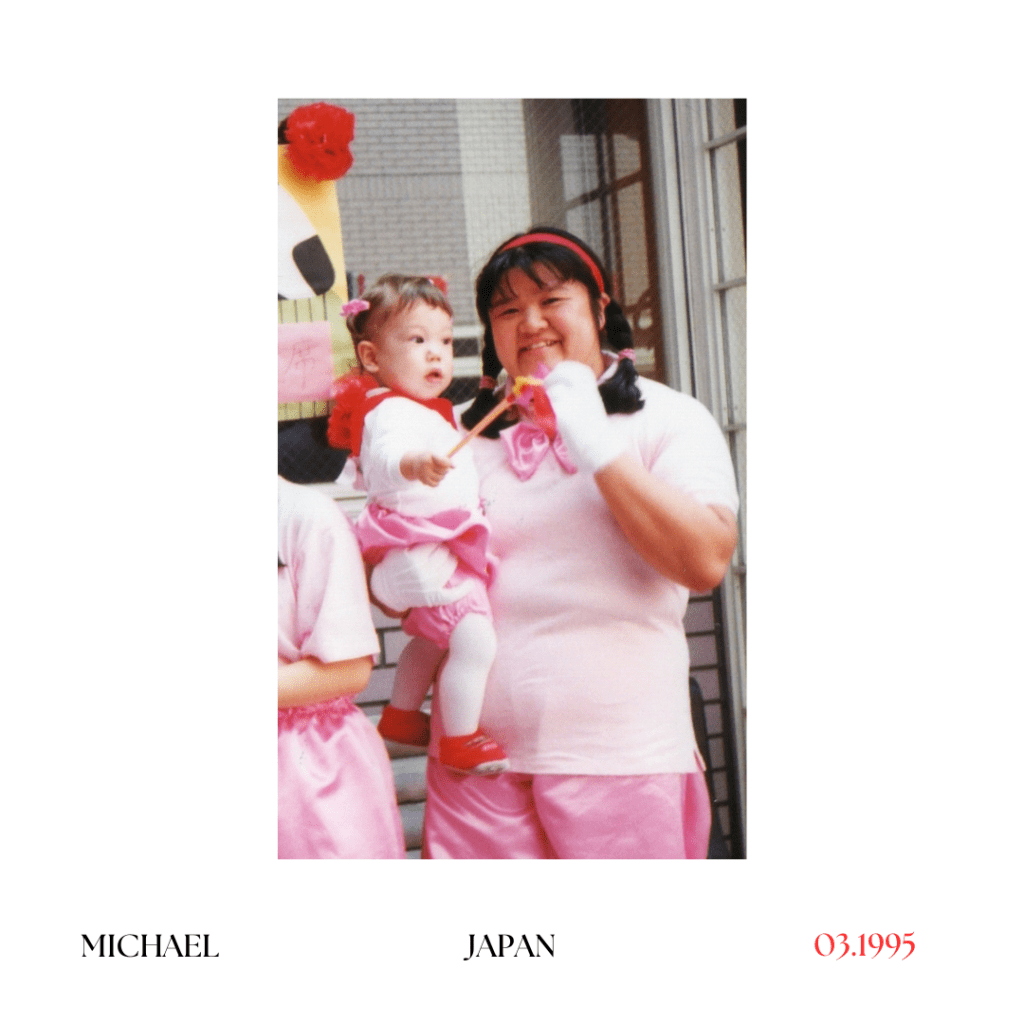
I was adopted when I was a year and a half old out of an orphanage in Tokyo. It’s an area called Azabu in Tokyo itself. I was placed in a government orphanage.
____
Well, my adoption experience, the first thing I would say is that because of the way it was told to me, my mom and dad were very upfront about the fact that I was adopted, apparently to the point where my mom told me that I just thought, that’s how all babies are placed with parents– they’re chosen or they’re distributed. I don’t know if there’s a better word for this, but I thought, of course everyone’s adopted. So apparently I had to learn that not everyone is adopted.
I don’t know where to place that, I don’t really have an emotional state about it, I think it’s kind of funny actually. And I remember I had a time when I was young and in the US already, and I was watching some TV show. And this kid learned he was adopted for the first time at an older age and it’s a big deal and the kid goes running off crying. I was really confused because I was like, isn’t everyone adopted, it’s not a big deal dude, calm down. So that was when I was younger, it was just a matter of fact.
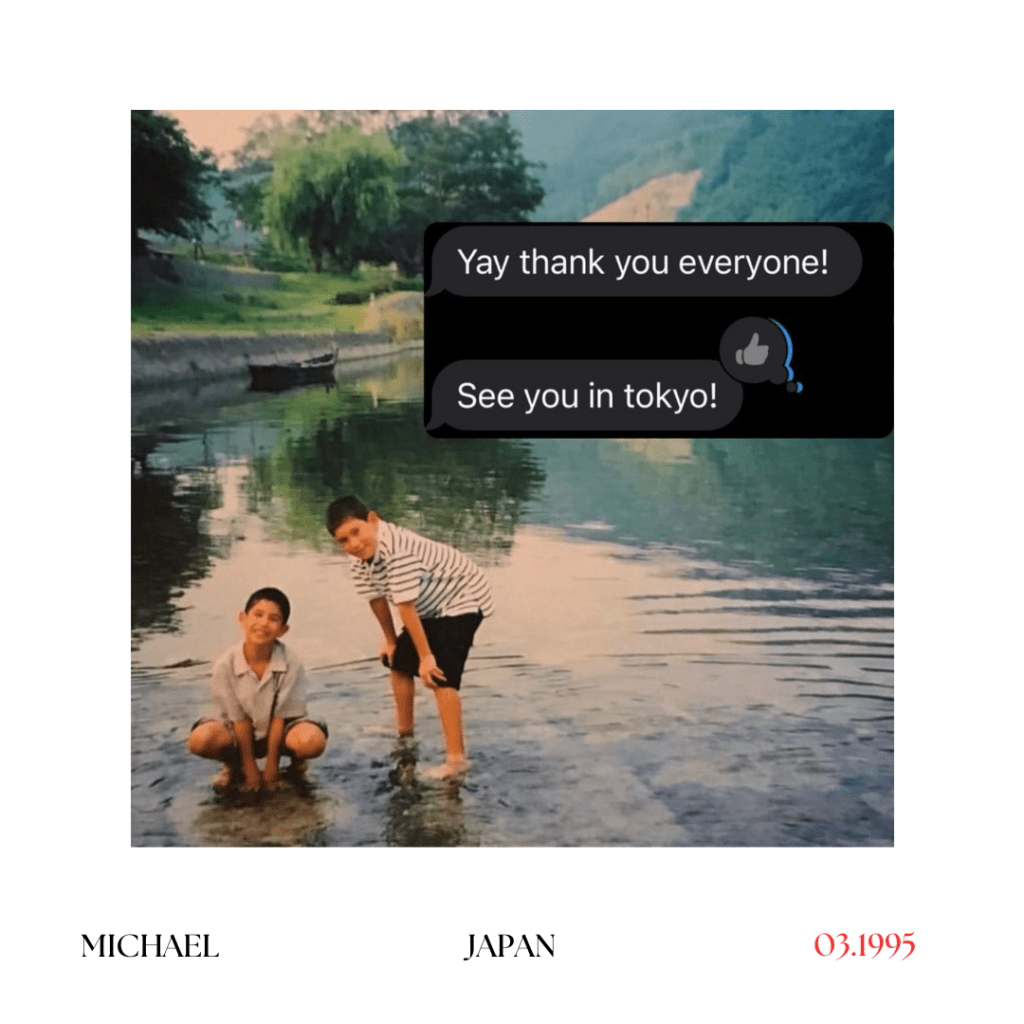
I was just floating by in life. I was adopted at a year and a half and then we were in Japan untilI was five. My younger brothers also adopted. So I have a younger brother who is two years younger than me, he was three when we moved to the states. At that point, I was a Japanese kid who knows some English because my dad’s American, and I came over here and I was just kind of just living life as a kid knowing I was adopted- it was just a thing about me. And as I got older it became more of like ‘ohh, who was my birth mother? Who is this person? What is she like?’ And having those questions and trying to figure out how to go about answering those questions.
But it was interesting on my end because my mom is Japanese American, she’s very in between- she was in Japan for elementary and middle school and then was in high school, was in Hawaii, which has a lot of Japanese people as well. She knows the language and is a Japanese teacher. So in that sense, the cultural stuff was something I didn’t really deal with. I know a lot of adoptees deal with the culture issue and fitting in and seeing themselves. I didn’t look like my parents, so no one was like, ‘oh, you have your mother’s eyes’ or whatever. But in terms of being Japanese and the language, and the food being cooked at home, we went to Japan in the summers all the time for a month, so that was not even really a question. Even now if you ask me if I’m more Japanese or white, I’d say I’m more Japanese just because of my mother’s influence. And I think for a lot of mixed kids in general, your mother has a lot of say in the household. Not to bring down any dads who are in mixed families, but I don’t know. I think mother’s have a larger impact in terms of cultural upbringing and caregiving.
Last year, I went back to Japan for the first time in 10 years. And in the span of 10 years, that’s when I had the most questions, like, who’s my birth mother? What’s the deal with that? How do I feel about it? I got to go through a fashion photography thing that I wasn’t expecting, which is cool. I ended up in Japan and then I was in the mindset of trying to figure out what that story is.
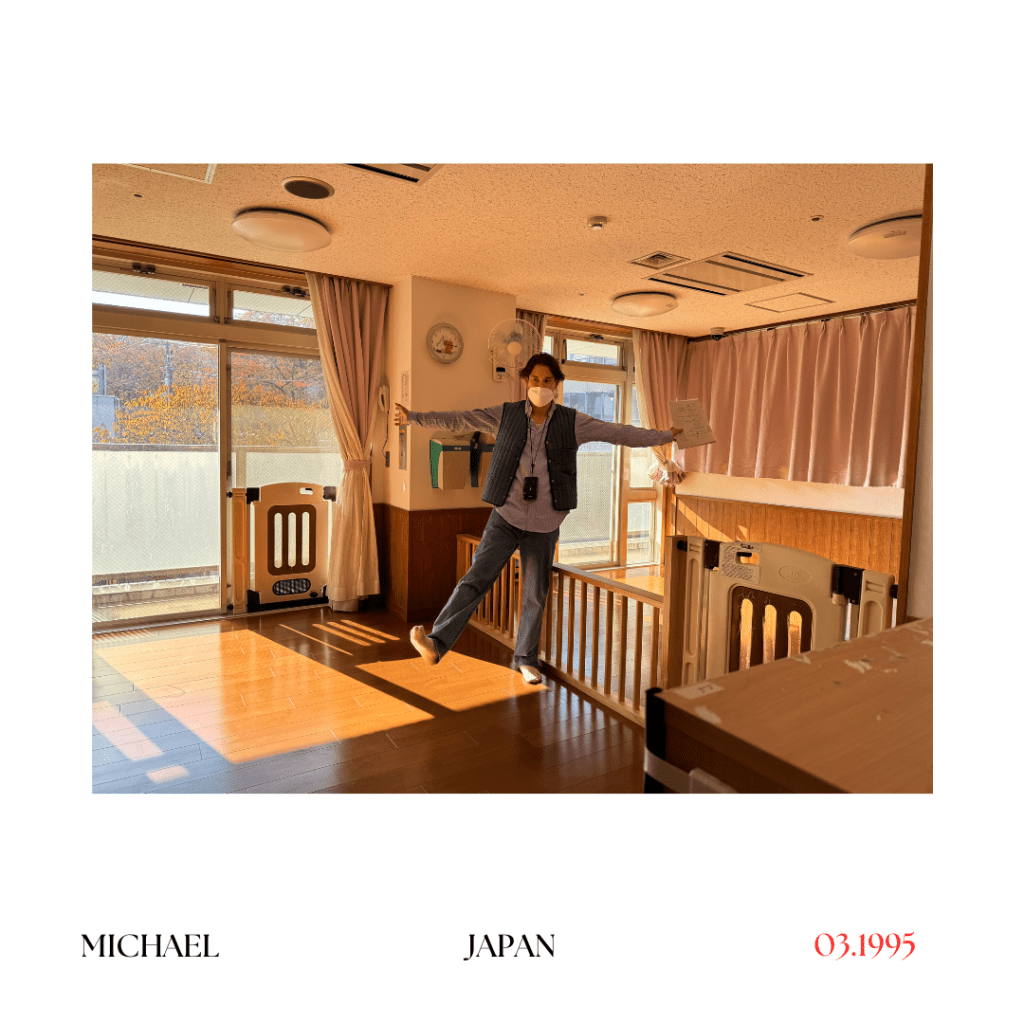
I went to the hospital where I was born. I went to the orphanage where I was at and met some people there that were still working there who took care of me. And other people who cared for me came and said hi to me, which is cool. Then through that I learned a lot about my case and they brought out files and we’re talking about XY and Z. I learned about the situation, which was actually pretty detailed in my opinion. That was great, and luckily I was working with an adoption agency out of Japan and this woman was there helping me translate. I can speak some Japanese, but not technical Japanese. I learned a lot. And the circumstances are the circumstances, but just knowing what happened is important in my head. So that was nice.
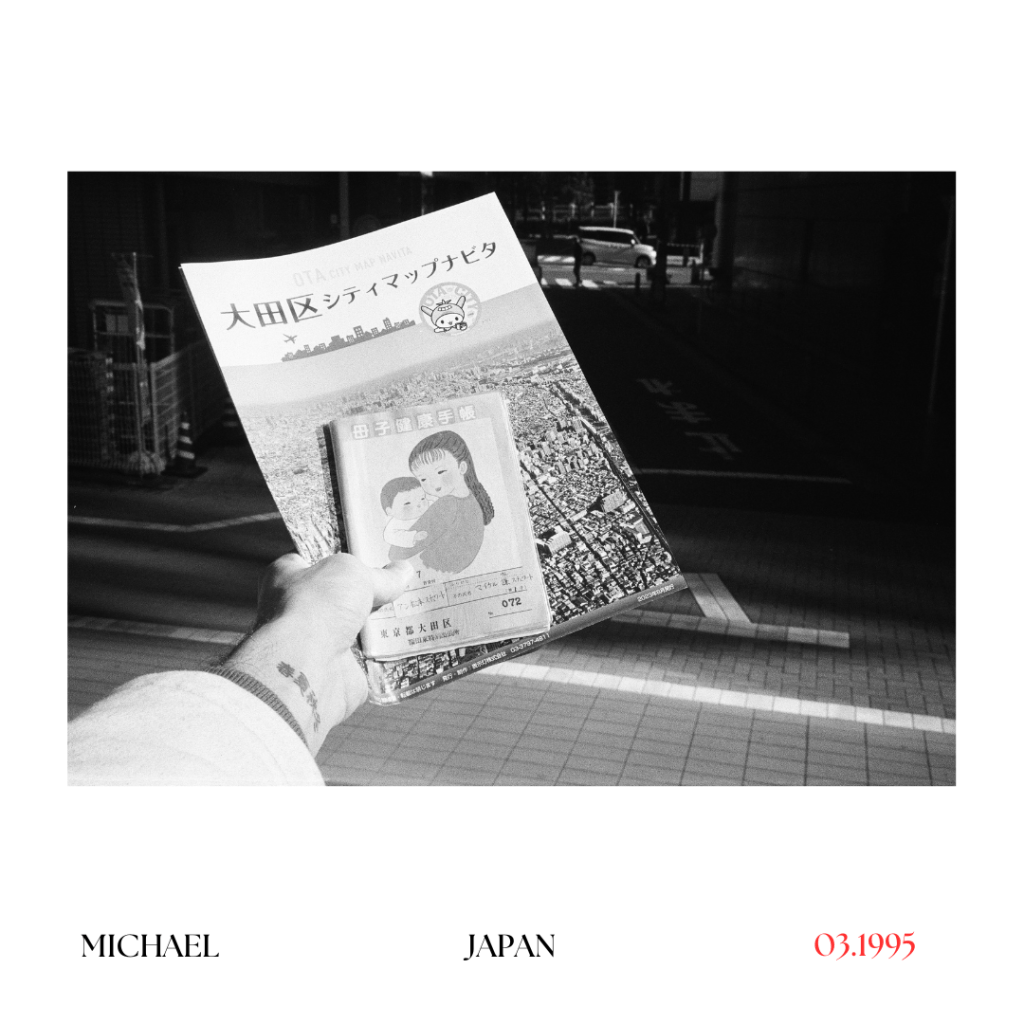
I had a couple addresses so I went to one of the addresses and the family name was on the house, so I was very shocked. I was also kind of mad because we would come to Japan all the time in the summers and I literally could have just taken the train here and found this place, I didn’t have to go through a crazy hunt for this, it’s an address I’ve had in this book ever since I was adopted, actually.
So I was confronted with that, but then a neighbor came up to me and he was like, well, “are you gonna knock on the door?” I didn’t wanna knock on the door. I don’t know what’s happening. hen he was explaining to me how this one older woman lives there. So it was probably my grandmother. And then he said, oh, she doesn’t come outside a lot. She doesn’t talk to neighbors. So I was like, okay, great, a crappy mean old lady, that’s the last person I want to talk to at this moment because I don’t have perfect Japanese. I wish I could explain these things, I don’t want it to blow up on the spot, so I decided to leave it.
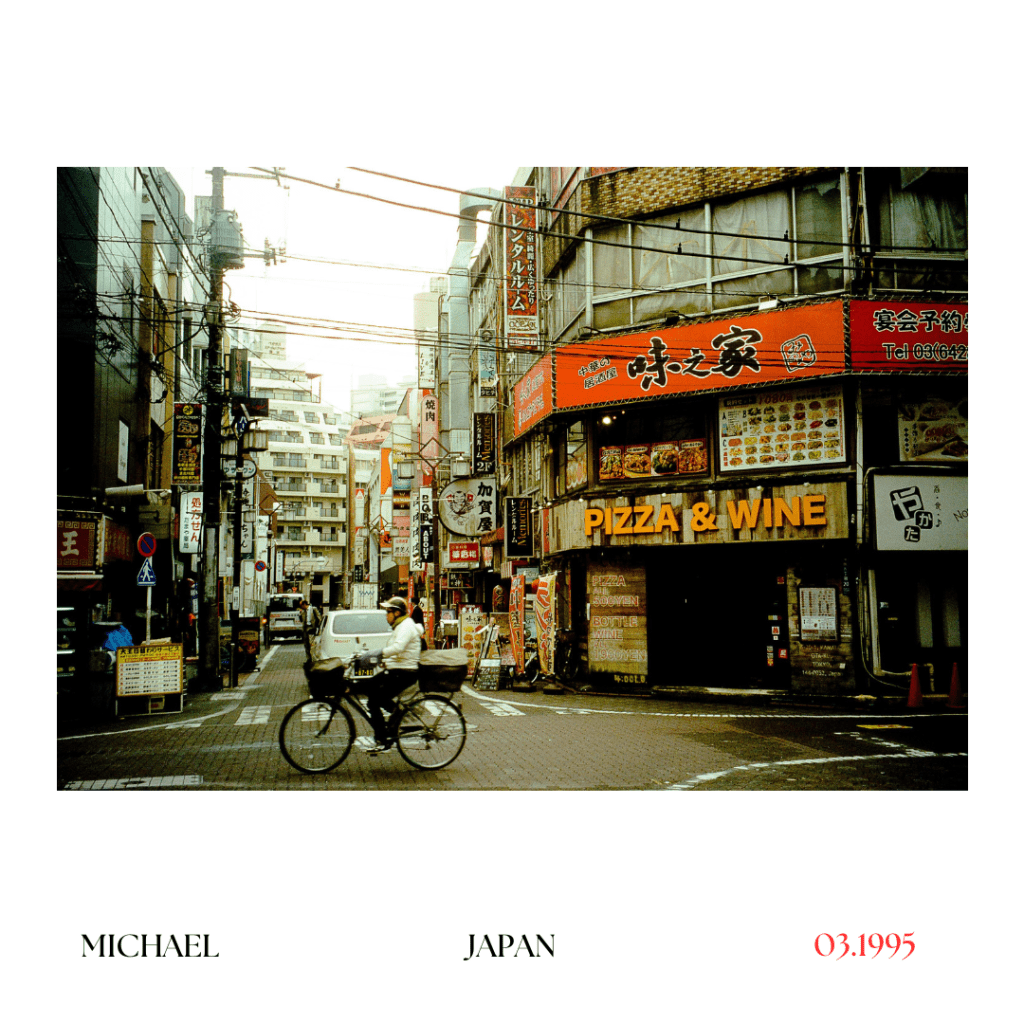
I had a hotel nearby and then I came back the next day and then I was about to look at the house again and there was a moment where she was opening up the gate and I could see her feet and I freaked out and ran away. I had this panic hour of what should I do. I was swinging on the swings at this nearby park and I was alone. But I realized this was the area that my birth mother grew up in. So it became more important for me to see what’s up with the area. So I walked around a lot, took a lot of photos, kind of felt what life would have been like here. This is southern Tokyo, Kamata area. Right by the Tama River so that was more of an intuition thing I guess because I was just trying to feel out the ground.
And what I ended up doing is I had the agency send a letter to the house. Which they were supposed to do earlier when I was working with them a year before. But that’s how I found out they never sent a letter, which also pissed me off a bit, but it worked out. I had to wait a week and I was supposed to leave Japan on a Wednesday and we got in contact on Monday afternoon. Apparently the letter that was sent went to that house and then the grandmother just forwarded it off to where my birth mother was, luckily. So she made contact and called the agency and set up a meeting the next day, basically 48 hours before I was supposed to leave. We had the meeting and met her at the agency and then had dinner, and then the next day before I left I went to her apartment and hung out a little more and then I left.
So that was last year, and since then I’ve tried to process everything that’s happened. I still have a connection with her in a sense where I’m emailing or it’s called Mēru in Japanese. It’s the same as text messages, here, but people just send emails to each other.
But I’m planning to go back in October this year again, to be in Japan and to see her. And we have family in Hiroshima, so we’re gonna go there and I’m trying to do some archival research on my grandfather in Hiroshima too. So there’s a lot of things going on, but I’m hopefully spending more time and building that relationship.
Nicole
How did it feel to meet her?
Michael
I was nervous. I was sitting in the little conference room and the doorbell rings and the adoption agency lady says, ‘oh she’s here, let me go get her’ and then you just hear the little patter of feet and then the bowing and the do you want tea? You know, you just hear the voice, and I don’t know the person. And she walked in and it was a shock to actually see her person, but I would say she did a very motherly thing where the first thing she asked me was if my throat was okay and I was like, why are you asking this question? And then she said ohh, because I get bad coughs and stuff from dust and I don’t know, different airborne things and needs a very clean apartment which I found out later.
But I was like, I’m pretty good usually thanks for asking. I think that was really funny the way she opened with that because I guess I didn’t know what to expect.
And then I think it took a while to sink in, the bigger hugs and tears were after the fact. I was too in the moment, I guess you could be in the moment and cry, but for me when I’m in the moment, I don’t know, I just became fascinated about what happened in her life when she started explaining the story.
But it was interesting because I was seeing things in her that I thought ohh okay that’s weird, facial features were similar, and someone that kind of looks like me. So that was itself validating and weird to see. There’s a photo of me and her and we’re next to each other, kind of smiling weird. We both kind of have this weird look when we laugh.
Nicole
It’s so special, but I’m sure it’s so interesting to experience this in adulthood- to see a source of familiarity.
Michael
Yeah and up to that point I didn’t know what’s gonna happen. So I have to be ready for anything, you know, even up to that meeting and up until she walks in the door. I don’t know what her personality is fully or how she’s going to be. Is she going to be very excited or very reserved? Or just a nice or a mean person–you just don’t know these things. If they don’t want to have anything to do with you, or if they are very excited about it or you know, I’m still even building a relationship. And it’s kind of hard. So I had to be ready for anything. So constantly having that go through my mind. Luckily she said, I do want to see you. She said that she was waiting for me to contact her.
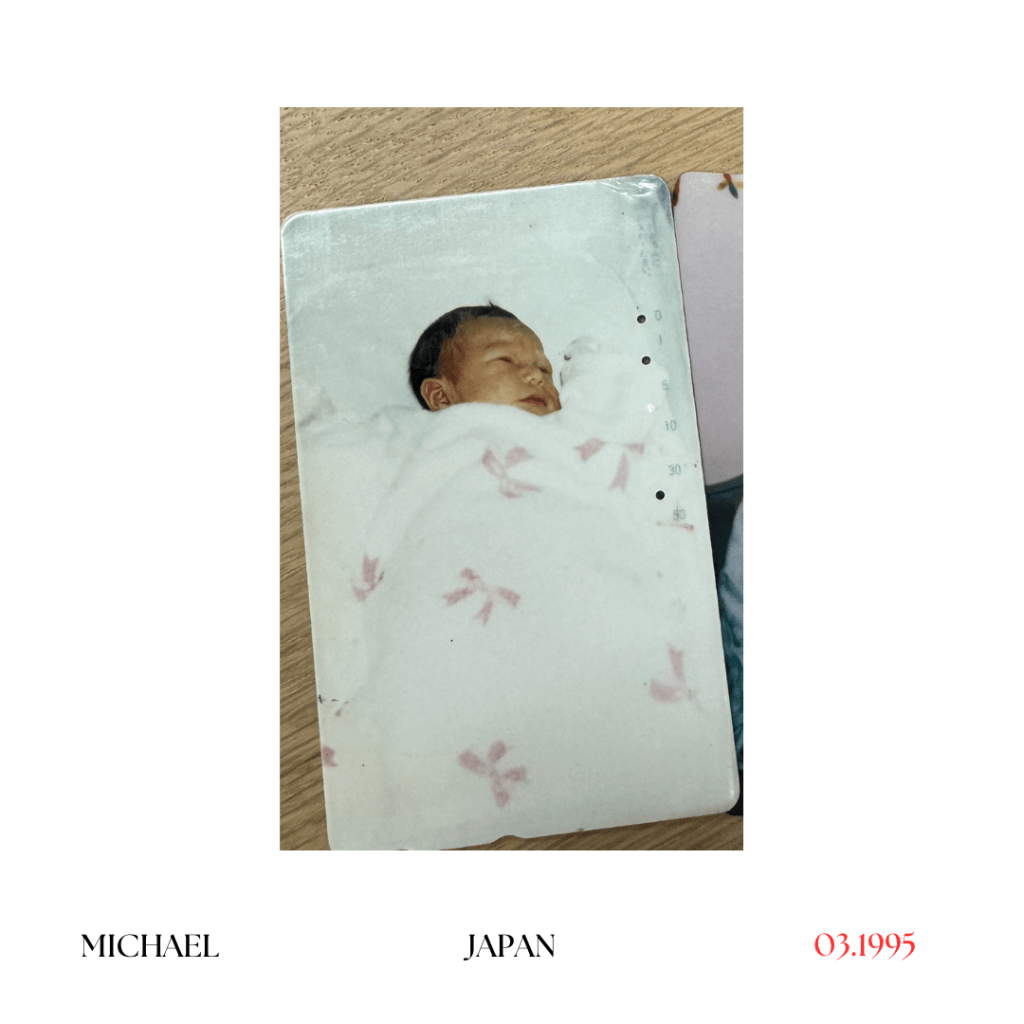
And she had a picture of me as a little baby in the hospital in her wallet the whole time, which is very touching. And I had never seen that photo before in my life. But the funny part is that it was a telephone card. The thing that you stick in the telephone so you can call, but it was used. It was used because the punches were on the side. It was just funny. She’s like ‘ohh I’m sorry I just have to use it sometimes to call people’.
Even something like that makes me kind of connected with her because I love functional things, but it’s kind of funny that she just used the card anyway. You know, that’s something I would do and laugh about as well. So in those ways, it’s cool, right?
She’s a very creative person, and very serious in certain ways, with paperwork and getting things organized but also very goofy and other ways. Very forthright. These are the kinds of things where I was like, oh, this is kind of similar to me. I was never raised by her, but seeing it reflected. And in relation to my mom and dad, who are very, I would call them very textbook career people. My mom’s a Japanese teacher and goes by the book and believes that hard work pays off, very American in that way, you get out what you put in, type of thing.
Which now going to Cornell and being in New York, I’m like this is all a lie, it’s all nepo babies and all these people are faking it and there’s very few people that have expertise. I’m just like the world is not the way you told me. My dad’s an engineer so he’s very methodical, you know, there’s right and wrong and he’s creative in his own way, in music and certain things.
But I guess I felt like when I met her, I felt like this is more reflective of who I am.
Nicole: How do you think she expresses her creativity?
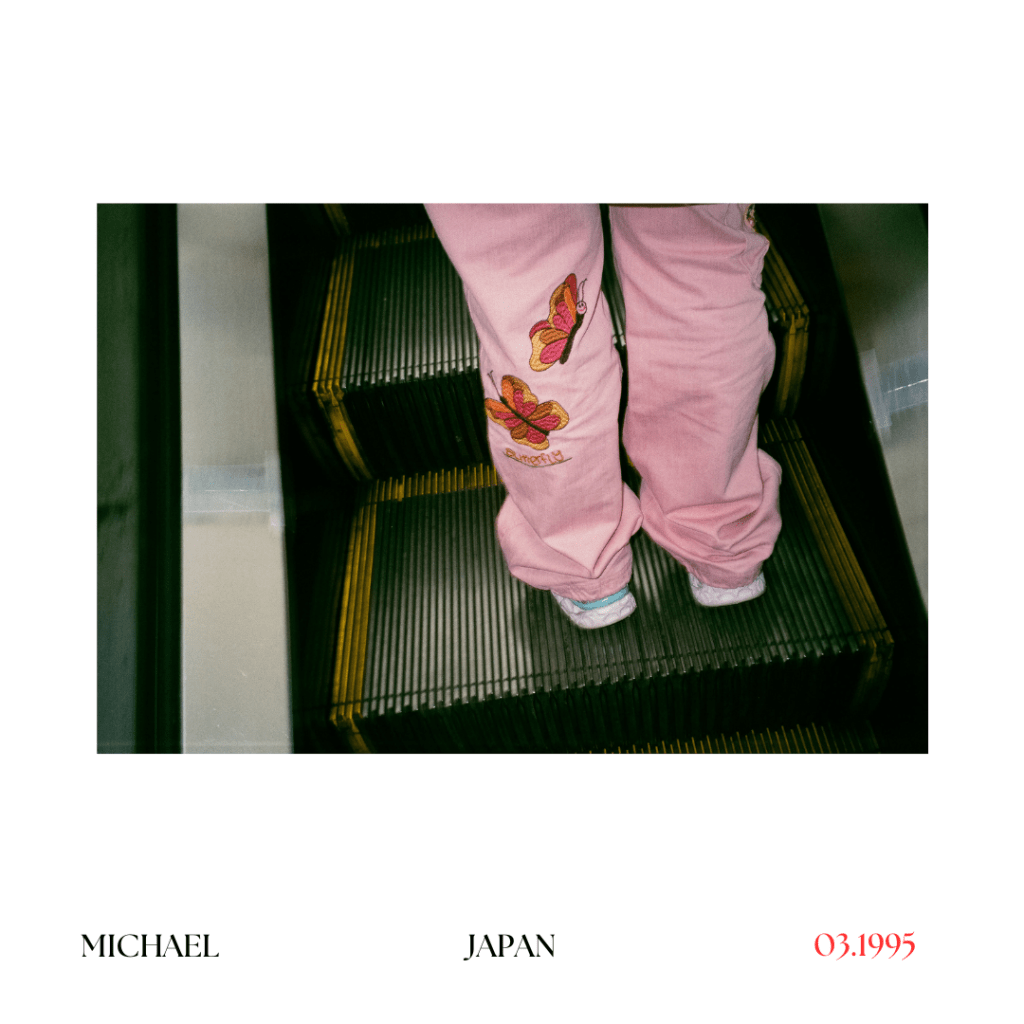
She’s 50 plus years old and wears pink pants and different colored outfits as a Japanese woman in Japan- which is different. Most people are just very conservative and dressing especially at that age, a lot of neutrals, a lot of loose fitting clothes which looks great in certain ways. This was for the art show I’d had, but she’s wearing pink pants with embroidered butterflies. I didn’t wanna show a picture of her, I just wanted to show her personality. We were going to the grocery store, and I thought that it was interesting that she had those pants on. *shows photo in call
Nicole
That’s so funny. Cute.
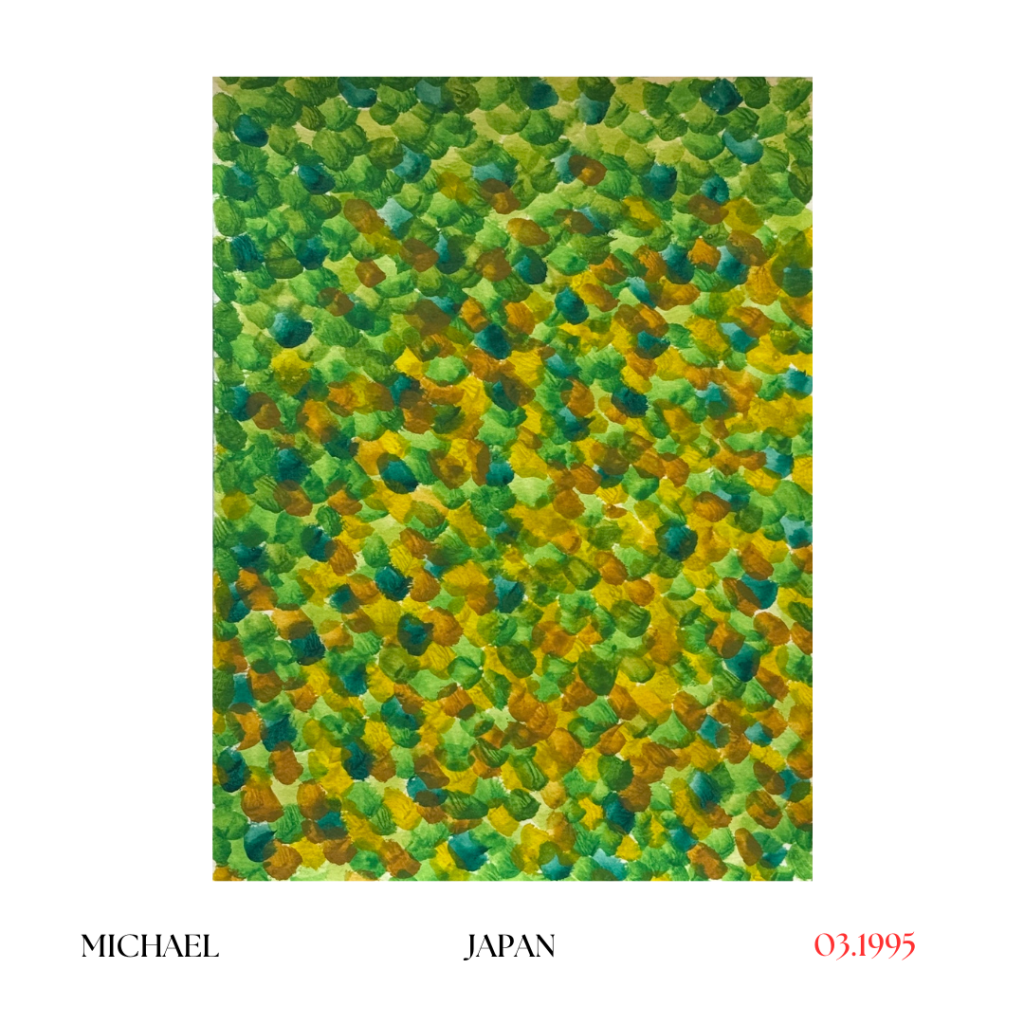
Yeah. And she also draws a lot. So she’s sent me some letters with drawings by hand with Sharpie and she’ll photocopy it and send it to me. She had a camera so she was showing me all her photos that she took and I do photography, I paint a little bit. Not everyone sees it, but I do stamps and these are my photos. *shows photos in call
So, it was cool to see that connection.
Nicole: That’s super cool. The question of nature nurture comes to my head. I remember taking psych in high school and I was practicing for the ap test and there was this question I kept getting wrong. It was asking about if the adopted child will more likely take on the personality of their biological or adoptive parents– and the answer was biological parents. I got it wrong every single time out of principle. It was a reductive question to start with, but it pissed me off.
Michael: Yeah, haha who wrote that?
Nicole: I know that whoever wrote that was not adopted. And it’s interesting because as I’ve done more and more of these interviews, people who have met their biological parents will share about their similar personality traits, and that’s such a craving you feel when you’re a kid. And when you’re even in biology class and you’re learning, do you have this trait or this trait? Can you roll your tongue? Can your mom roll her tongue? Little things like that, where there’s just wonder for kids who are adopted. I’m just imagining having that experience of getting to spend a little bit of time with her and getting to develop a relationship with her. It’s cool to hear some of the similarities and some of the little connection points that you guys are having.
Michael: Yeah, I don’t like that question either. That study they probably used is very old, probably like a Freudien study. I feel like I’m a little of both. I feel like you are who you are raised by, but there are also certain things that you gain from your parents because it’s literal DNA.
It was cool to kind of just see those similarities because I think you are right, as adopted people, these fundamental questions about who you are in terms of what you look like and what you’re interested in, how you act, but people who are not adopted don’t have to answer those questions or think about those questions because it’s like, yeah, they’re my parents. That’s just the fact of life. They birthed me out of their bodies. You know, there’s no discussion about how there are these other people that birthed you.
In a sense, that gave me a lot of anxiety growing up and I think slowly looking at that anxiety has allowed me to be very aware of the fundamentals of society in life and what we assume to be true. And that’s a form of awareness that people who are not adopted don’t have. Even though it does feel great sometimes just because obviously it keeps you up at night in some ways.
Nicole: How did you process your experience back in Japan?
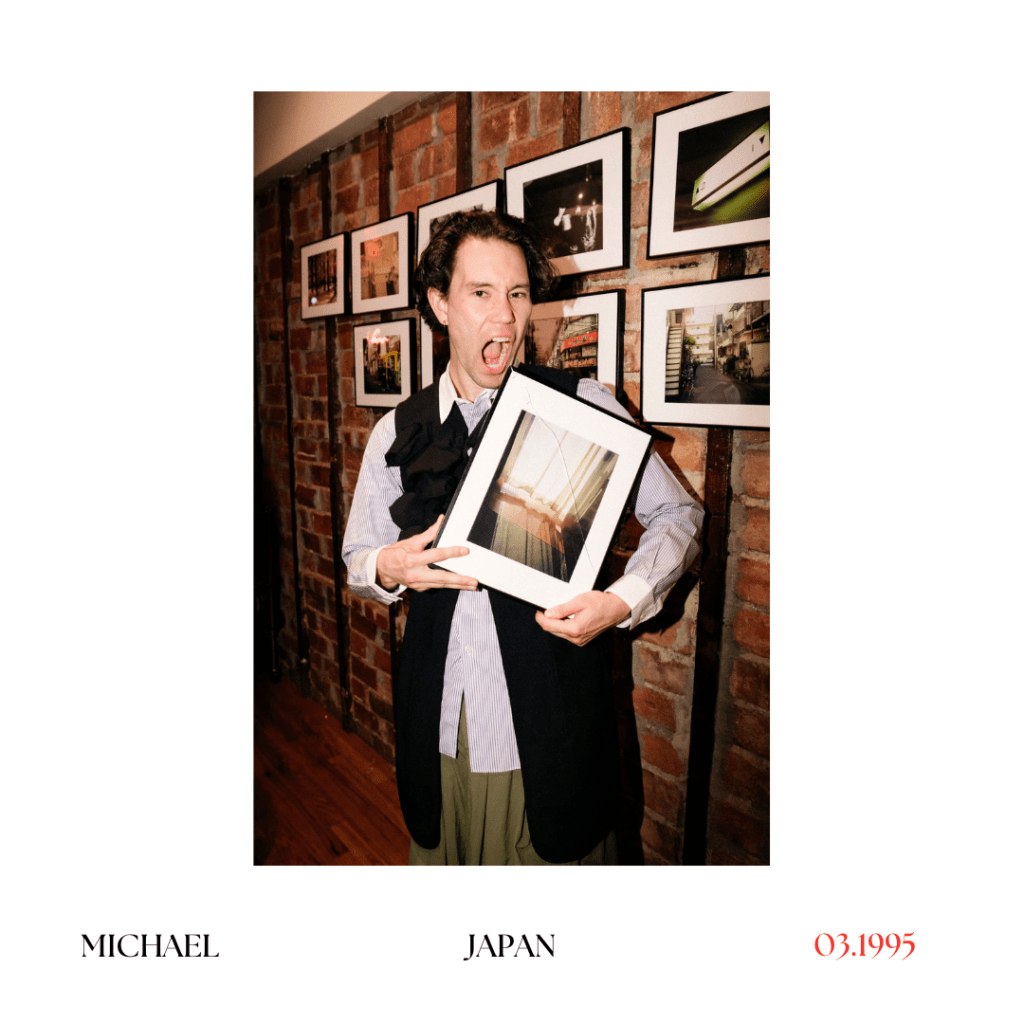
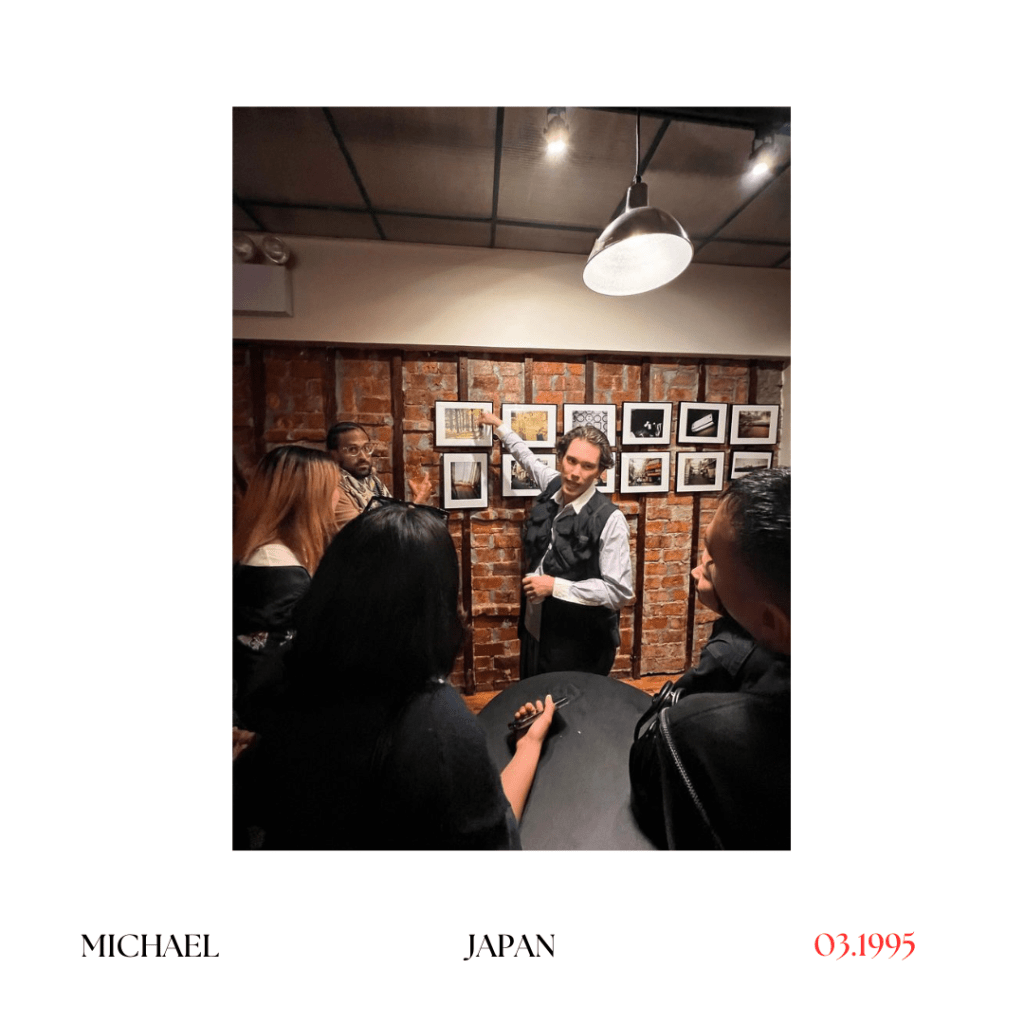
I had an art show at my friend’s cafe in New York called Land and Sea. It was kind of serendipitous because I had a friend last September come to me and as photographers and artists do, we just go back and forth about ideas. We had gone to this Tyler Mitchell exhibit at the International Center of Photography. Tyler Mitchell’s this amazing photographer, first black photographer to shoot the cover of Vogue a couple years ago, which is like really it took that long to do it? Not that I really care about vogue, but I mean, it’s a big deal in certain things. But his stuff is really rooted in black play. And what does joy look like in this essence of play and how black folks can be depicted as being relaxed and playing in peace and joy, which is lovely to see in his work.
And that’s obviously translated to him doing a lot more fashion editorials these days for huge brands for European fashion houses but at ICP, he had an exhibit, but then instead of printing on regular silver prints he printed on different fabrics, so it would be like chiffon or even like microfiber, or towels or all these things. He hung them up and I think the idea was these pieces of clothes on a clothesline.
We liked that. It was so cool and it was like three years ago when we saw it. So then last September somehow this memory came up and she was like, I really wanna print my photos on fabric and show them. And I had a friend who has a cafe that might actually fit, Land and Sea which is very based and inspired by these two women and their parents’ homeland in Asia and then how that kind of translates into this noir type of thing.
So I set up a meeting and they’re talking through stuff. I’m facilitating the meeting and then I’m thinking, ‘oh, wouldn’t it be funny if I went to Japan and got some photos?’ Because this would fit the theme and the theme was parallel lives. The idea was that she’s Vietnamese, but if the war never happened and this population of people weren’t refugees and had come to America, what would my life be like? And she had photos of Little Saigon in Orange County, California, and her photos from traveling in Vietnam.
So I thought this adoption thing kind of fits that, I could put photos from home versus photos of Japan.
So then I end up going to Japan around a month after having that conversation. And then meeting my birth mother and all that. So I came back home and I came back to New York and I had a thesis. I had a piece now that I wanted to put into this. I put myself into my own show basically, which is whatever, I’ll admit it, but at the end of the day in terms of processing the trip that was a big part.
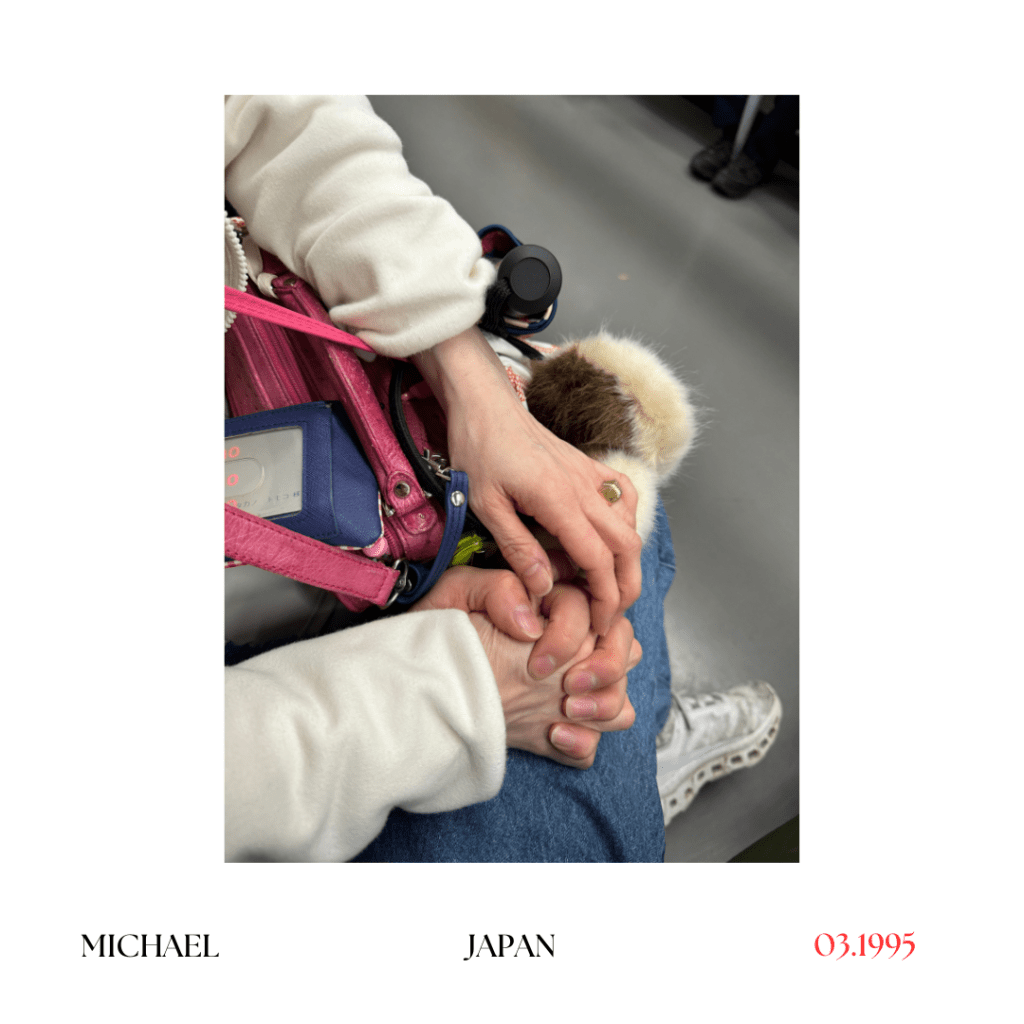
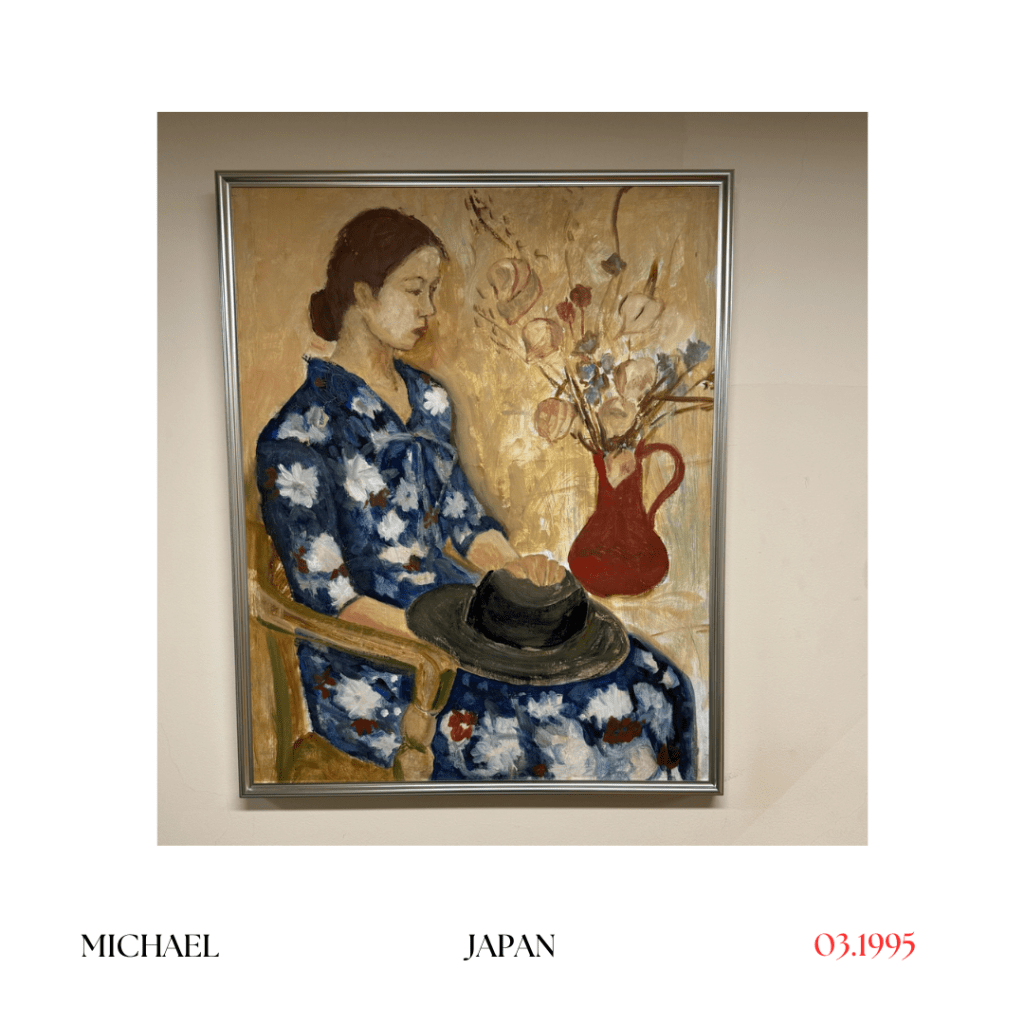
I took 500 to 1000 photos over the month that I was there. And with specific adoption stuff, at least 200. So just going through those photos, editing them, and then having to pair that down to 12 photos, writing an artist statement that I wrote first was 8 pages, then was 4 pages, then it was a page. This is the first time I realized how art can very much be a way to process and express things. And I don’t know why it never clicked for me, I’ve always painted in my own free time and made these stamps and things and danced but I guess it was the first time it was a very clear moment that I was making something and then that turned into this art show with the photos. It was fun.
I brought out a bunch of people for the opening. It was with four other photographers, so it was a group show, but being able to tell that story to a bunch of people and then having it connect with a lot of folks, whether they were adopted or not, was cool. I ended up doing an adoptee mixer in the space when the photos were up. Or regular Japanese people that kind of just saw those photos of Japan were like ‘ohh those remind me of home’ just because I think I shot it in a way that was not just the highlights of Tokyo. Like the Shibuya Crossing or Tokyo Tower or some businessman drunk on the sidewalk or something.
They always pop up on Instagram or these Japanese workmen with their wide balloon pants, you know, can we talk about other things? But I think that’s the difference between being from there and spending time there and having a more personal relationship with the place.. And like what’s important to me, I like certain things that are important to me versus, I don’t know, what a foreigner might do in Japan. So yeah, it was a great way to share the story.
Nicole: What was the name of the event?
It was called Parallel Lives.
Nicole: That’s sick.
We printed it on wood, it’s engraved. *shows exhibit poster
Nicole: How many artists were there?
There were five of us.
Nicole: Can you talk about your adoptee mixer?
Yeah, I mean that idea just came from just wanting to have a place for people to meet and honestly I was a bit tired at the time so I wanted to have it there, but I didn’t want it to be too produced just because I didn’t want to think of questions and do a round table discussions. Also, I think I have fatigue around those things because pre-pandemic I was in the Asian American world in New York. There are so many events, and every event was curated to the max and it was like, you go and in the 1st 30 minutes you do the bingo card and then next you ask this person you don’t know this very personal question about their background and it’s kind of corny to me to be honest or just forced conversation.
I mean, it comes from an honest place. To me I just think how do you create genuine connection between people when they’ve never met 5 minutes in? And you’re like, tell me about trauma and about being Asian American and I don’t even know you bro. It’s almost a trust thing too, you know?
Nicole: For sure, and I just hate the forced situations.
So I was thinking about those things and I’m just gonna say it’s an adoptee mixer because I want people who are adopted to come to this space and meet each other in the hopes that somehow they meet like a new friend or somehow they connect on a certain thing. But in my mind, I don’t really care if you talk about adoption, you can talk about your dog, you know, you could talk about the shit day you had at work, or you can talk about how you love baseball or I don’t know how you’re a brat and now you’re demure, I don’t know.
I had some people message me asking what’s the agenda? What’s the run of show? And I didn’t really have a plan. I’m just going to create a space and I’m gonna introduce me and the work and I’m gonna have a drink and sit down and talk like adults. I’m not here to tell you how you should feel about adoption or I’m not gonna force you to do these things.
It turned out well, there were around 25 people that showed up. A lot of them said that they’d never been to an event in New York with Asian adoptees specifically, which surprised me because there’s a couple organizations that are trying to do some stuff, but maybe they’re more specific to just Korean American adoptees.. So it was cool. Someone had come from Jersey. For the people who did get something out of it, they said that they haven’t been around all these adoptees in a while or ever or that it was nice to talk about these things with some sort of understanding. So it was good it seemed like there were friendships that came out of it. I was trying to distance myself a bit because I was an organizer of the event, I wasn’t trying to cozy up too much unless it naturally happens.
A group of them went to get dinner afterwards. But at the end of the day, I think I was just trying to facilitate a space where people can come in with somewhat of a shared identity, but hopefully leave with a larger, deeper connection than just their identity itself as an adult. Because I’m sorry, but I’m not gonna be friends with every adoptee just because we might share a story. And I can be supportive and help people through maybe certain questions, but if we don’t have similar interests then I don’t know. I like surfing and running around, and running marathons and doing photography and things. But you know, that’s not everyone’s jam. So I’m not gonna force a relationship off of identity, which I think is a lot of the issue in those Asian American spaces that I was in.
So that was kind of the idea of the adoptee mixture. I’m trying to do another one in September, we’ll see. I’m also working on my career. So it’s kind of hard to do these things constantly, but it was great for at least one night to bring people together.
Nicole: Yeah, that’s really cool. Do you have anything else to add about your adoption experience?
I think I would say just, from my experience I would say go find out for yourself. No shade to my mom, but she has her motherly concerns about what’s going to happen if it doesn’t work out or certain things don’t go your way or kind of being protective in terms of trying to seek reconnection or find out any information that you might have in the back of your head about adoption or your own story. But for me, I had to go do it myself to figure it out, you know? And once I started doing things myself, I got past the places my mom said or was worried about.
But even if someone says there’s no record of you. Why don’t you find out if there is no record or not? The worst thing that could happen is that there is no record, which is what was already told to you and the best that could happen is there is something there. Even if it’s just a sentence, you know? I think it is still worth the adventure. I’m very into side quests and quests right now so to me these are like life quests.
So there’s a lot in just going out and trying to figure it out yourself and bring your friends along and have them support you and ask for help along the way as you need it. Don’t be afraid to meet your own fate or destiny. That sounds very Asian uncle of me, but I’ve been thinking about destiny and fate a lot these days. These things just don’t happen-you have to meet them. So meet them.
I think the biggest thing with adoption is that there needs to be more emphasis on adoptees. I think there’s always a lot of emphasis on the parents and how they feel and the systems that are in place to assume that we need to protect the child in a way that’s very babyish. I also believe that young humans have the capacity to think for themselves in ways.
I’m very keen on people’s own autonomy and life and the ability to express themselves and to have agency, I guess not autonomy, but agency in their life, to make choices. So I just hope that more adoptees, whatever age, feel like they have the agency to speak up for themselves. And whatever situation they’re in, whether it’s an orphanage, whether it’s their adopted parents or anything, that we’ll give them the time and place to listen to their feelings or their wants and concerns and actually provide support around it.
And not just this assuming ‘well, we don’t want to have them talking crazy or we don’t want them to have thoughts around these things cause they might damage them’. I think babying people doesn’t really- not allowing them to feel things fully. And if you adopted a kid, you gotta deal with the punches, you say you want this fire but you can’t handle it. Like yo you’re weak. Not to put parents on blast, but I mean, I guess I am. If you can’t handle it then it’s like, what did you sign up for? When you adopt someone, it’s a serious thing.|
Nicole: I will blame the system till the day I die. But the system is only half the battle because the parents still chose to adopt. And I understand that back in the day, it was marketed in a way where it seemed a bit too good to be true. Little bit of over promise under delivering kind of vibes like here’s your kid, you’re welcome. Adopt them when they’re babies so they have less problems and everything will be fine.
Yeah. I think if you’re giving birth or you’re choosing to adopt, being a parent is a serious thing and shouldn’t be taken lightly. So for parents to not take that seriously or feel that there’s an escape valve where they can just send them back just because. No bro this isn’t how life works.
At the end of the day it’s about just supporting the kids and helping them through things and providing them that space to do it. I think that’s why, in terms of my work, social justice is very important because it’s about people and their agency to make choices for themselves. And a lot of these laws are very restrictive, even though they’re claimed to be deregulating, you’re actually regulating a lot. So yeah, that’s kind of a convoluted way to say kids should have agency and kids should have the ability to express themselves and be heard.
Nicole: Can you talk a bit about your work, what you do?
Career wise right now I’m doing photography production, marketing, and brand strategy stuff. My undergrad is in HR, I have not used any of it in my work as an artist. My photography is very documentary style, I’m always looking for those moments that we might miss with the naked eye, but somehow through a photo that’s captured, you can kind of relive a moment and reminisce a bit. I wanna move more into doing, I am already doing this through my portrait work and through these engagement things or we’ll see maybe weddings, but in just other moments in people’s lives, this idea of archival photography and how important that is.
To me those are the most important photos anyone can take. I think a fashion editorial can maybe do some things in terms of making people imagine a new world and that can be important. But to me, family and those moments are even more important.
And to be able to be part of capturing that is a very big responsibility I take on in that way, because these photos that go in the photo album or you show your grandkids and you’re like, this is this person and this is uncle whatever, and auntie whatever. I don’t really take that lightly. I just also love doing it. I love being part of it, being part of people’s lives like that. And that kind of goes into me going to Japan this time. I’m going to Hiroshima to do more family archival research.
Do you have any advice for adoptees who have gone through similar experiences to you?
Connect with your intuition. Because I think what trauma does or what hardship does in a lot of ways or anxiety and stress does, is disconnect you from your body and your intuition. I think your intuition is very powerful. So taking the moments to seek help or sit in silence. I love meditation and yoga and running is another way I do this. These are all ways to reconnect with my body. And when you do that more frequently with your breath, from what I found at least, is that this kind of second knowing comes around. And then it’s trying to learn how to trust it and see where it takes you.
I think intuition is a very powerful thing. It’s like when you meet people, you have that feeling about certain people or when you enter a space you have a feeling about a certain space–this is all intuition in my head. So I would say to really connect with your body. The body stores a lot of trauma too, so, shaking or dancing literally is shaking your body and releasing trauma and meditation and all that stuff. Reconnect with your intuition and reconnect with your body as you need.
I always like this quote these days and it’s “how you live today is how you live your life”. And I was thinking about that a lot. It doesn’t need to be grand things you do everyday, but the kind of mentality of how you live your life today and every day is your life. So take today seriously and be where you are.
Enter your email below to follow along.
© Rebirth Adoptee Stories


