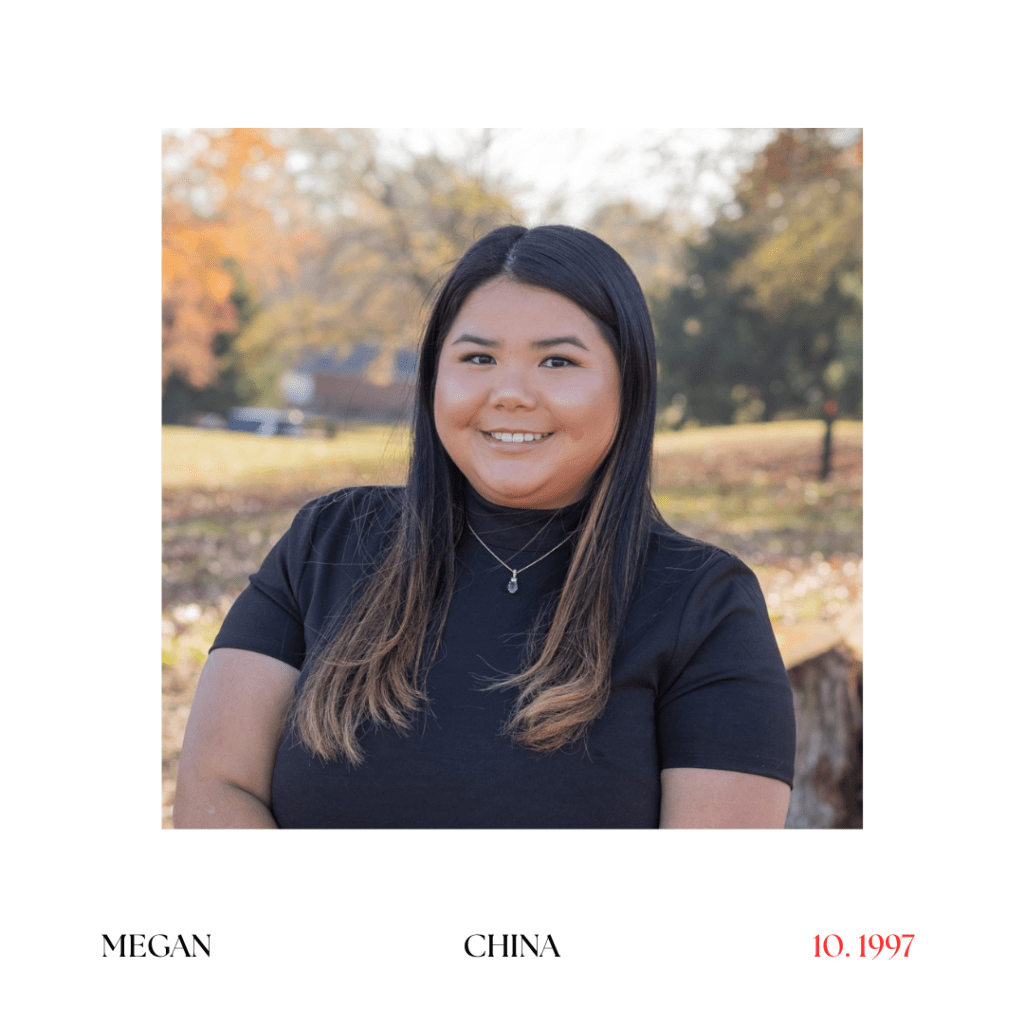
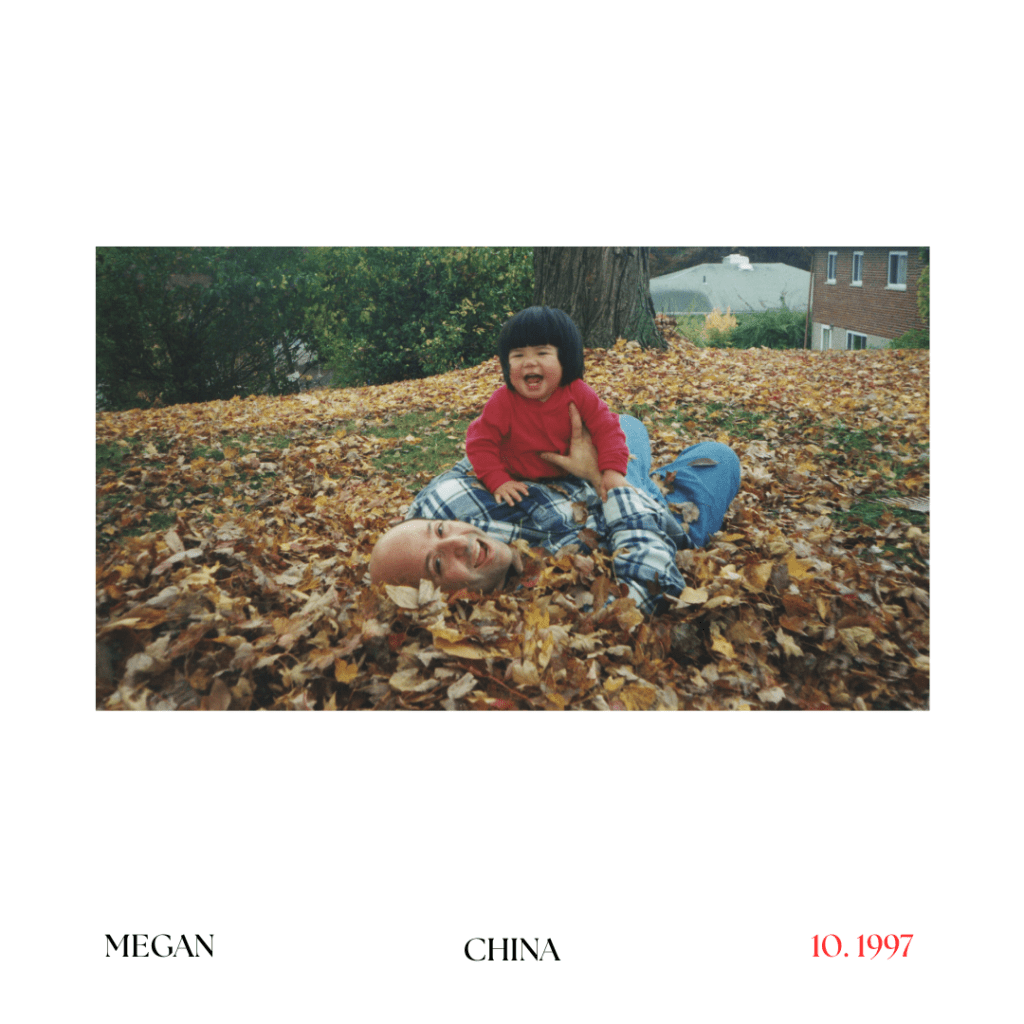
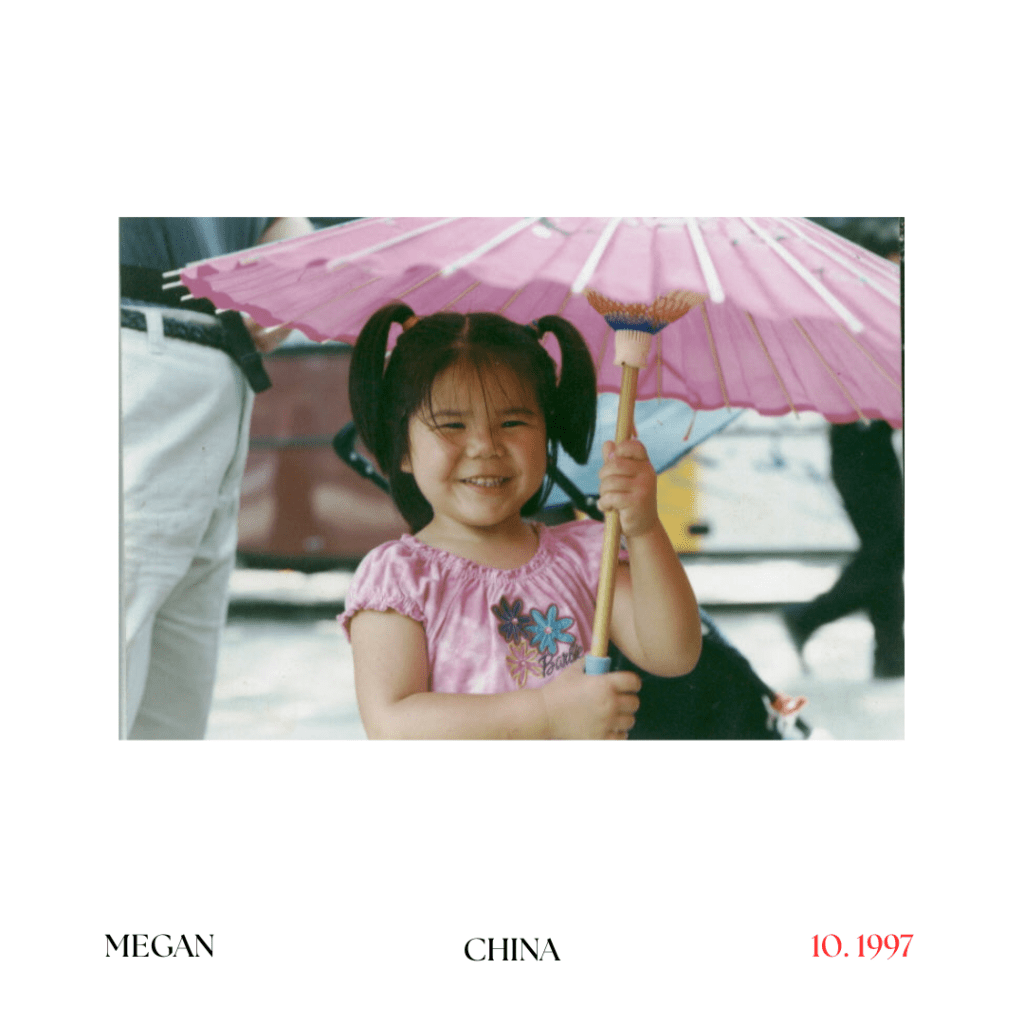
I grew up in Virginia, but I live in Paris right now. I believe I was less than a year old when I was adopted. And I’m adopted from Hunan, China.
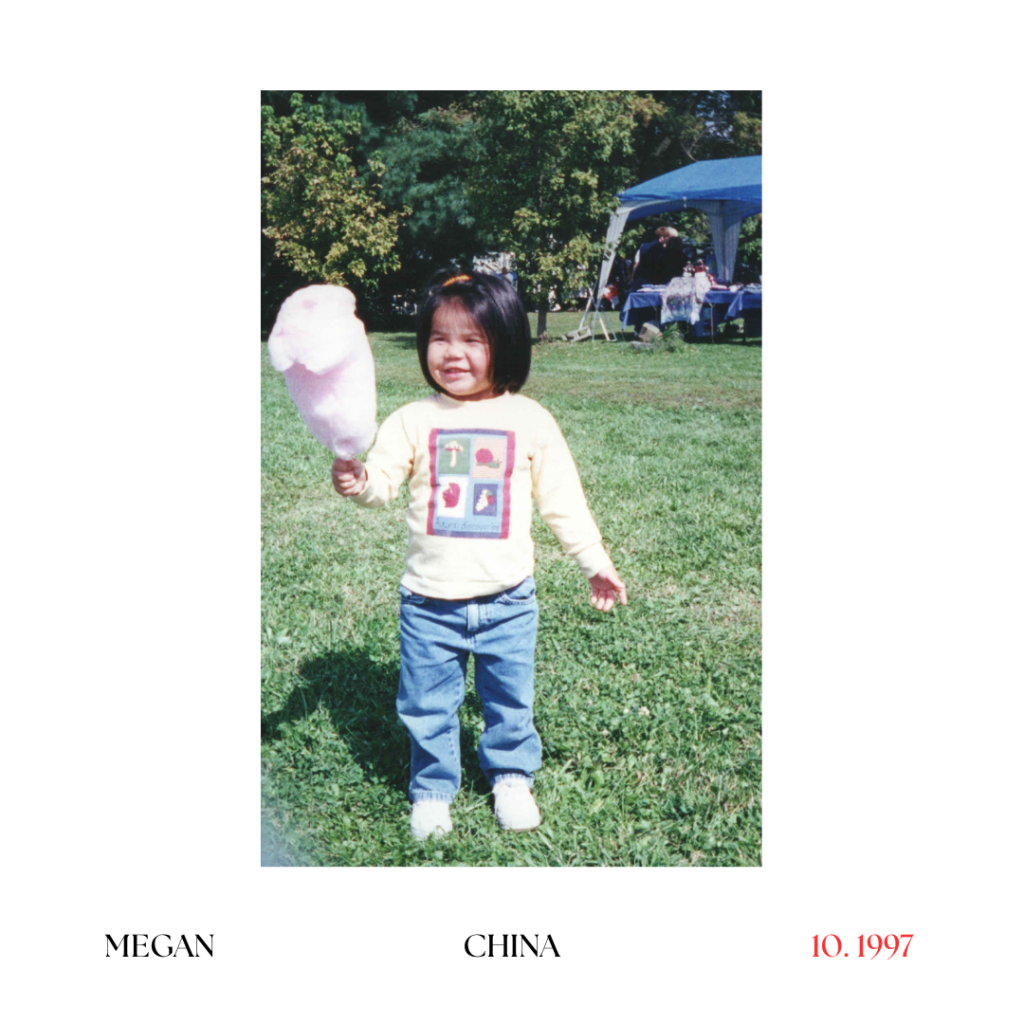
So I was adopted less than a year old as a baby, and all I’ve really known is an American way of life. My family is white and the town that I grew up in was predominantly white. My younger brother is also adopted from China and so I think that helped me feel less alone growing up because he shared a similar experience to me.
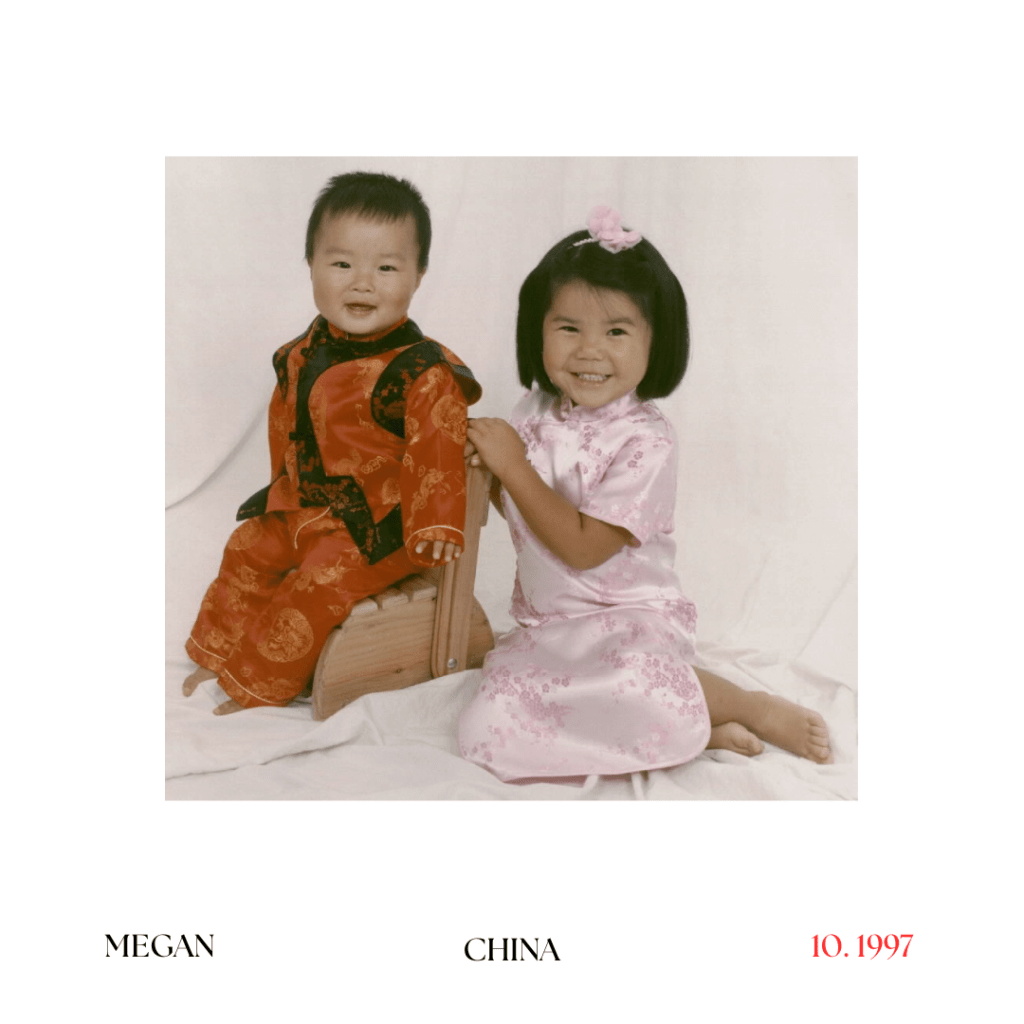
My parents joined a group of other local families that adopted from China. And it was unique, during that time, because it was 1996 for me and that was during China’s one child rule, and it was rare for boys to be up for adoption, because they were culturally preferred. So we’re not really sure why my brother was put up for adoption. We went over when I was about four back to China to go get my brother and people kept telling my parents that they were very lucky that they got a boy and that he was good luck. Growing up, we would meet up for different events with the adoption groups.
Nicole: Did you enjoy meeting up with the families in the group?
I think I enjoyed it and I didn’t feel awkward about it. I think because my parents had developed more of a friendship with the other parents so it felt more like a regular play date or something.
I also went to this really specific horseback riding summer day camp for adoptees. One thing my mom did growing up every year during elementary school was that she would come in during Chinese New Year. She would arrange with the teacher to come in and I would dress up in a silk Chinese dress and she would bring in a plate of Chinese candy and treats from H Mart and have different activities to do. I remember one of the activities was sand art or something like that.
Looking back, I’m really glad that she did that because it addressed that I was different, but it made it more acceptable. And no one really was mean about it and if anything, they thought it was really cool. Also it was just like, we get to do crafts and have candy.
But I guess one of the negative aspects was during that same time, my parents tried to have me and my brother go to Saturday school to learn Chinese, but it wasn’t for adoptees specifically, it was just for any Chinese children. And because of that I was met with, from both the kids and their parents, with some resistance because they were like; “How could you possibly be truly Chinese? Your family is white. Just because your race is Chinese, doesn’t make you Chinese”.
This was in elementary school, so I was still pretty young and that really hurt at the time and it has kind of discouraged me from trying again. But that’s a question that I get all the time when people learn that I’m adopted or just that I’m Chinese. They want to know what my ethnicity is and whether it’s someone who’s also Asian or not Asian, they are always curious. And then the most common follow up question is “Oh do you speak Chinese?” And when I tell them no, they would question why that is and they just don’t realize that it can be a sensitive topic.
Nicole: Yeah, I relate to that feeling so much. It’s like when people figure out you are adopted it seems to allow everyone to just fire all their questions at you at once. And as a kid I used to answer all the questions and then I remember feeling really hurt and not understanding why.
And as I’ve gotten older, I’ve learned that I have more agency and I can answer what I want. And in some cases I’m a bit sarcastic with my answers. But I relate to that feeling of being constantly questioned. And for me too it started at a really young age.
Yeah, and I’ve talked to my mom about it before because, I mean, obviously when I was that little, I would become upset and I would go to her and she would feel kind of helpless because she didn’t really know what to do. That’s not part of how they prepare you for adopting a child. That’s not one of the things they teach them. And I mean she tried to do her best, but it’s kind of hard to accept that sometimes. I think as I’ve gotten older I’m more sarcastic and I’ll stand up for myself more and not necessarily answer their questions if I don’t feel comfortable answering it.
How do you feel about adoption now being an adult?
I feel really lucky, I feel privileged that I was adopted. And there’s always gonna be a part of me that I’ve kind of realized as I got older and depending on the situation, at least in my case, I have no idea who my birth parents are. And I probably won’t ever know. And so it’s kind of like grieving someone, a stranger, but they’re important to you. And you wouldn’t exist without them, it’s hard to describe.
Nicole: You put that really well. And it is grief, I feel it too.
Megan: That was something when I was really little and people would upset me with their barrage of questions. I would break down to my mom and that was one of the things that was probably hardest was just knowing that I won’t ever know who they are. But growing up now, I don’t know if I’d want to know at this point, I think it would be more painful. I wouldn’t necessarily want to open that wound now.
And I’ve talked to my brother about this and I don’t think he feels the same. And I know that it deeply hurt my mom when I would cry to her and say why didn’t my birth mom want me kind of thing and that’s just such a heavy thing for a mom to hear. As far as I know, my brother never felt that way about it. In a way, I think it kind of gives you this identity crisis a bit.
Nicole: And the idea of being Asian enough.
Megan: Yeah, I’ve been called a twinkie.
Nicole: Yeah, Golden Oreo or a banana haha
Megan: And people all the time tell me that they forget that I’m Asian.
Has your perspective surrounding adoption changed as you’ve grown up?
I think so, before I kind of felt, I don’t know, angry about it, bitter, almost. I resented the fact that, and I don’t even know who I was resenting, maybe myself, but it’s something I can’t help or change, but as I’ve gotten older, I’ve accepted it more and it’s just part of what makes me unique.
Do you have any advice for other adoptees who have gone through similar experiences?
It’s hard because everyone handles it differently and their experiences are going to be different but I would say allow yourself to feel the way you are because it might feel wrong to feel the way that you do or you might feel conflicted. But it’s totally valid and you can still have a brighter outlook on it in the end. Also I would say surround yourself with people that aren’t going to make those comments you’re so white and stuff like that because it kind of sets the precedent of what’s okay and what’s not. I mean, a good friend wouldn’t say that to you because it wouldn’t matter.
Enter your email below to follow along.

© Rebirth Adoptee Stories

 Rebirth