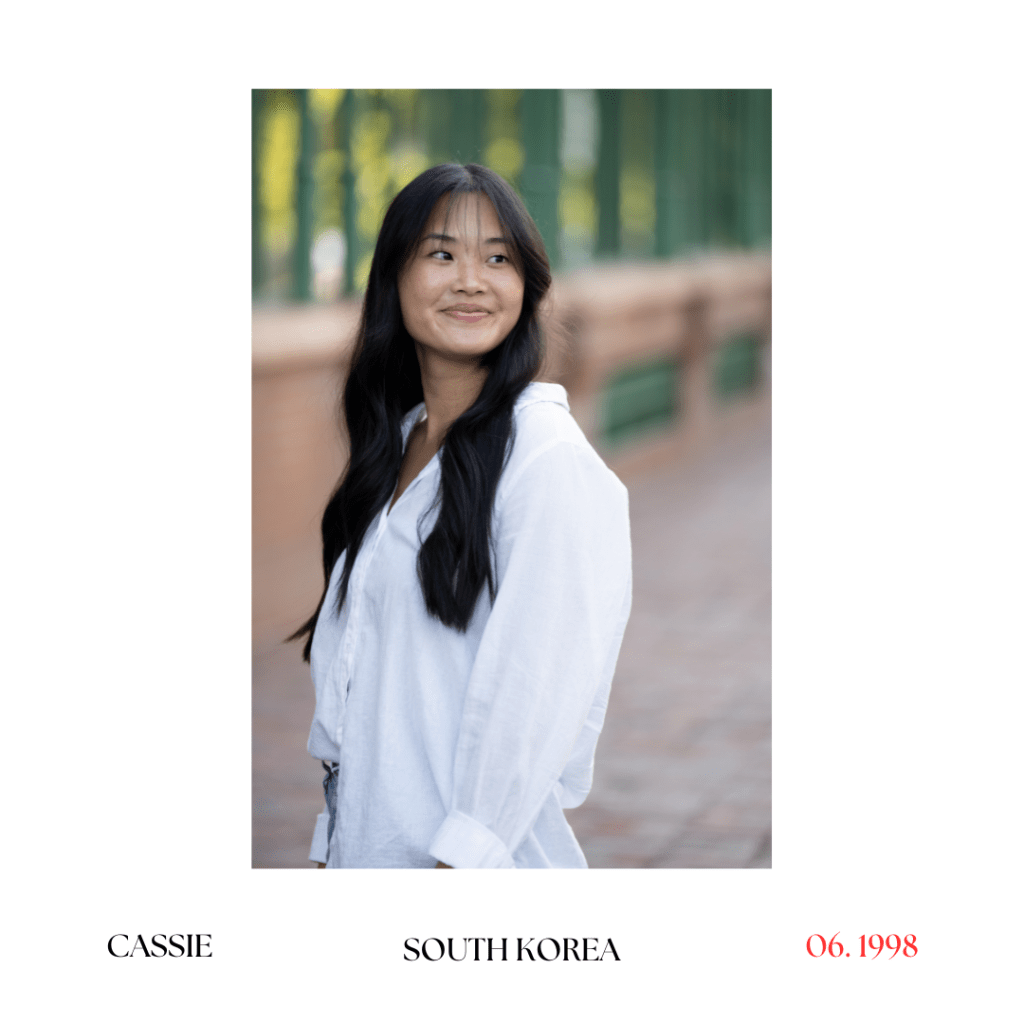
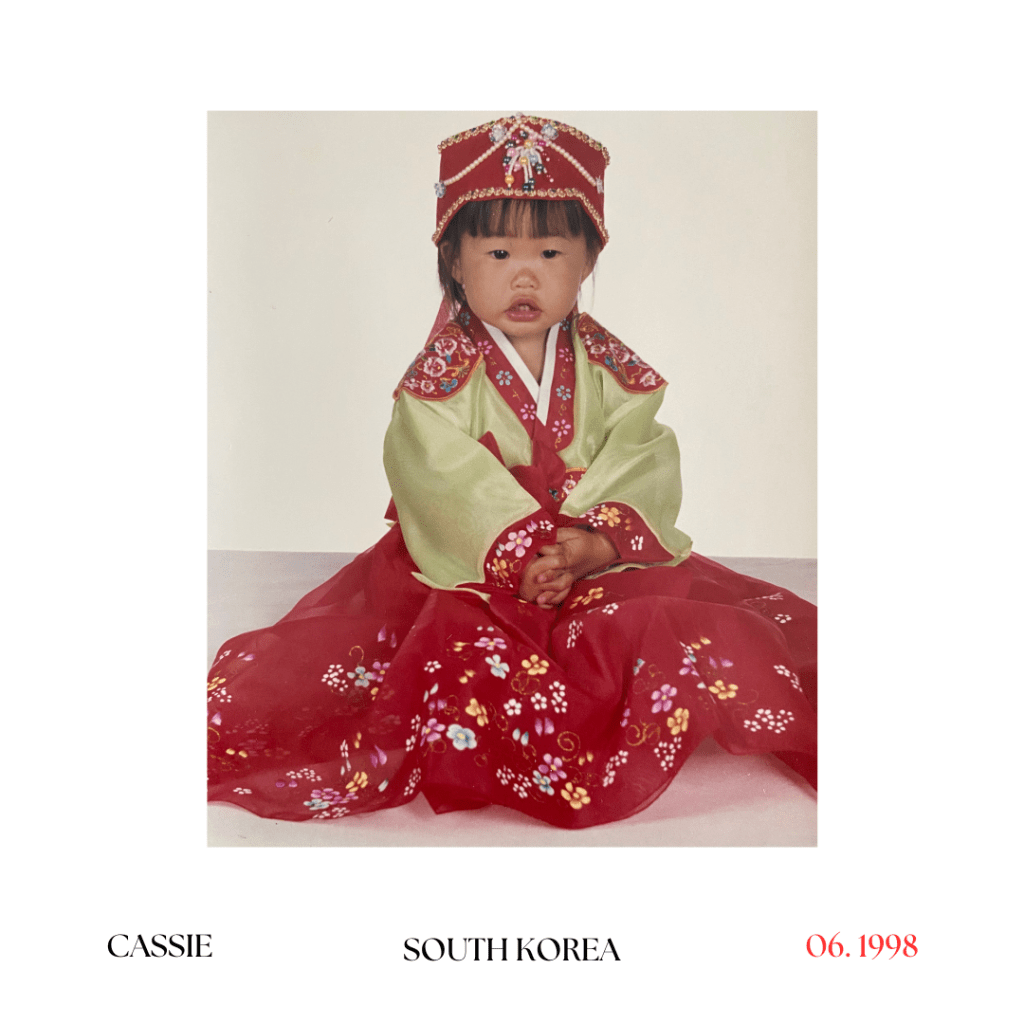
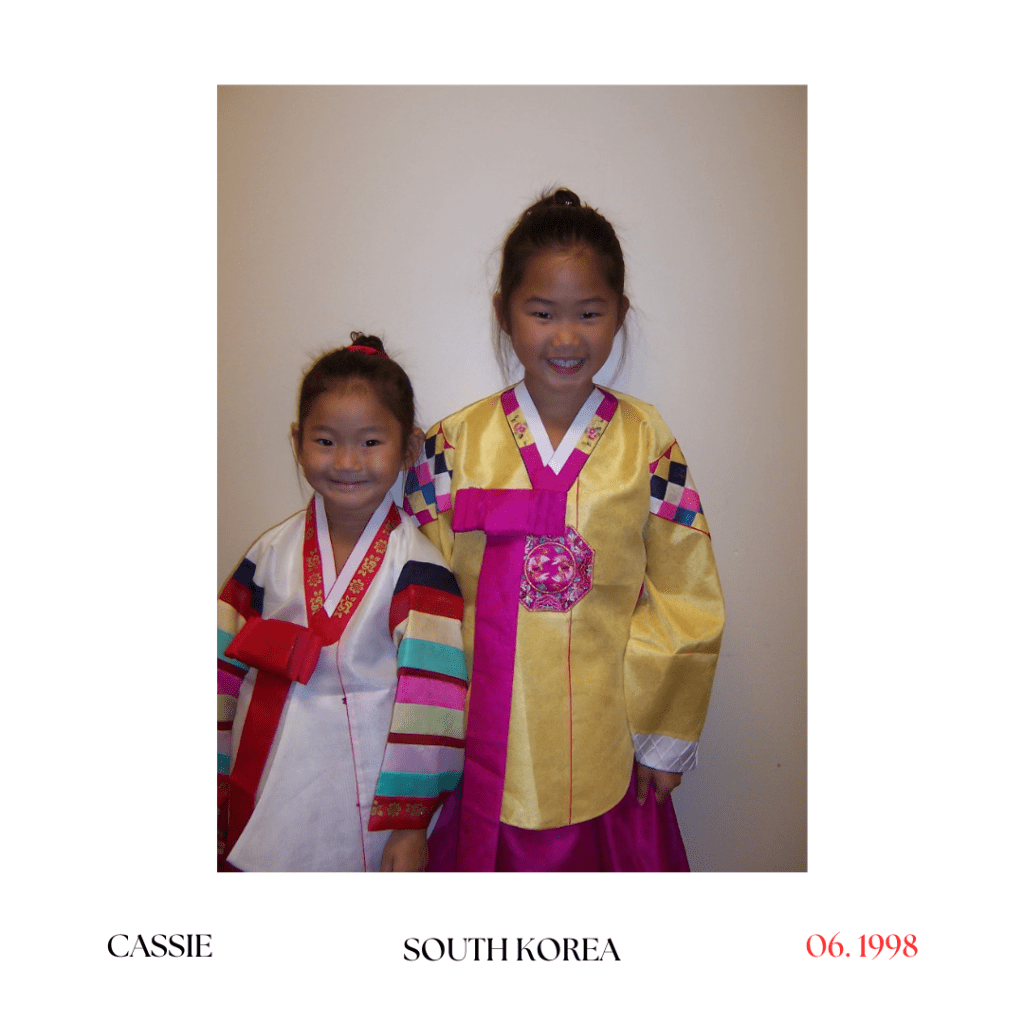
I grew up In Circle Pines, MN. I was four months old and I was adopted from Seoul, South Korea.
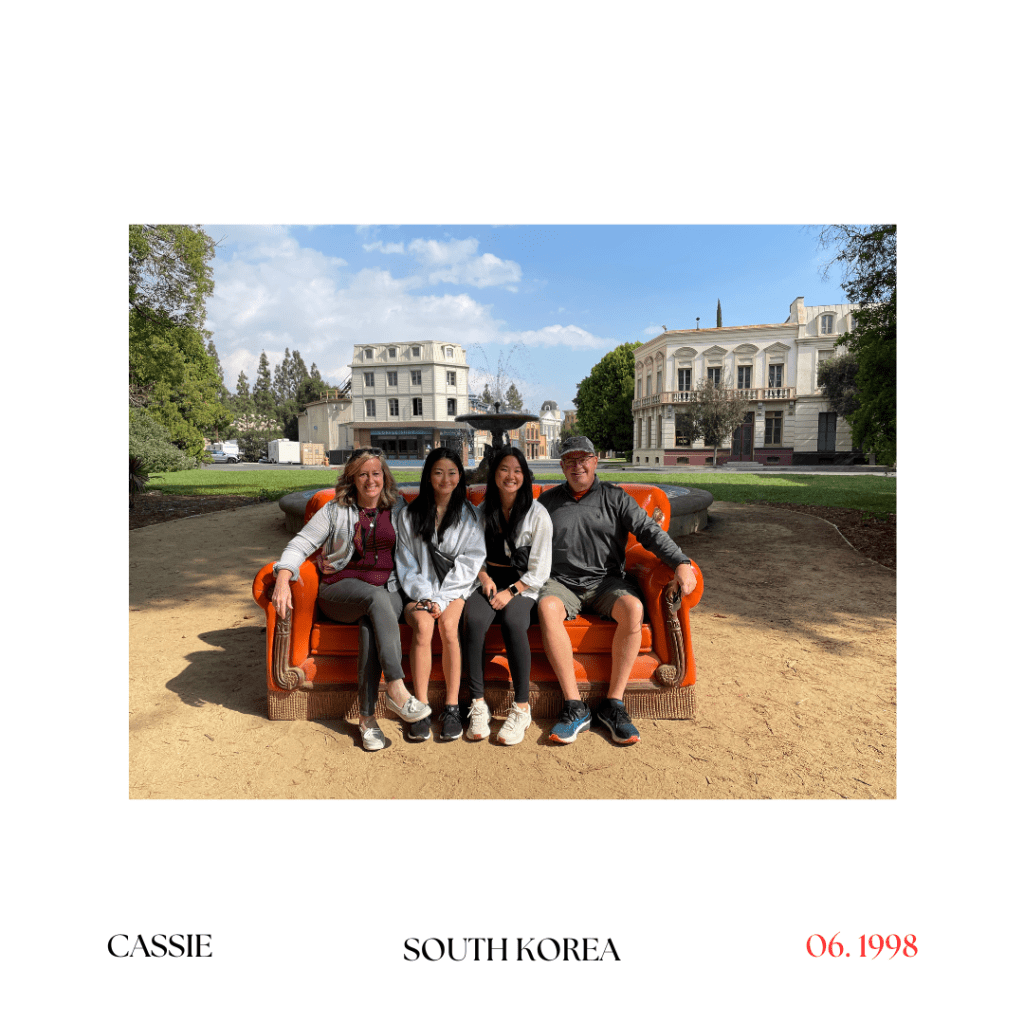
My mother and father adopted me in June of 1998 and then three years later adopted my little sister from South Korea. I was very fortunate to grow up in such a loving and accepting family in my immediate family but also my extended family. I didn’t realize I was adopted until later in elementary school. I remember kids would ask me if I missed my birth parents and if I was sad about them putting me up for adoption. But I don’t think it actually affected me until middle school. Middle school as a teenager was already pretty awkward. Everyone was just trying not to stick out too much to avoid getting made fun of. So for me coming to terms with being different from everyone else in an obvious way was really hard. It also didn’t help that I just kept the struggle to myself.
In high school, everyone already knew I was adopted for the most part so I feel like I came more to terms with it. And then in college I kind of ignored it. I just didn’t think anything of it because I was on my own having different experiences and then now it’s been three years out of college and I’m still in that phase of ignoring it but after talking with you last summer about all the great things you’re doing with digging into your adoption identity, it’s really put in perspective how I need to dig deeper into that because it’s a big part of my identity.
One of my best friend’s girlfriend is also a Korean adoptee and went to Korean Culture Camp and she sees being adopted very differently than I do. She told me that in class, you know how you have to say, a fun fact, her fun fact right away was ‘I’m adopted’ but that is the last thing I would ever say as a fun fact because I don’t want people to know.
So just talking to her about it too, has been so different and has been making me put it in a different perspective. I know we’ve talked about that too, where we don’t want it to be our whole identity. But then also you don’t want to put it on the back burner and not ever think about it, which is what I do, there’s definitely a happy medium there that could be reached.
Also it’s interesting because my sister and I don’t even really talk about it, even though we’re both adopted and we don’t really talk about it in my family. We talk about going back to Korea a lot and how it’ll be hard on my sister and me because after talking with you and your experiences, it seems heavy and emotional. It’s something that I’ve been putting on the back burner like I said, after talking with you, it’s definitely something I want to dig into more and be more proud of instead of hiding it.
But it’s so weird now that we’re older, when we’re younger, we go everywhere with our parents. So it was very obvious, but now that we’re older and we’re on our own and someone looks at us and they can’t say, that person’s adopted just by looking at them.
But, when we were with our parents when we were young, it was very obvious and everyone knew, in my hometown for example. But at my previous job, it’s really interesting because I had a lot of Asian coworkers, and one of them was Korean. And during AAPI month last year we did this whole cookbook and put in recipes from when you were younger that your parents made. Iit was weird for me because all of my Asian coworkers weren’t adopted. So, yeah, it’s obvious we are Korean, but our parents aren’t. So that’s a whole other view and it made me feel weird too since I couldn’t add to the cookbook with Korean recipes my mother made.
Nicole: Yeah, and everything we know about Korea is learned intentionally, it wasn’t inherited by any means. I think that’s a super interesting part of growing up as an adoptee. And people forget too, because when they look at us then they have the expectation that we’re fully Asian, like raised in an Asian household and everything.
People make adoption jokes all the time. And it’s weird for us too because at the time, people don’t know because they’ve never seen your parents and if you’ve never told them that, then obviously they wouldn’t know. So growing up, it’s definitely gotten easier for me, but it’s just a different feeling, I feel less embarrassed and now more like, okay, I need to actually own this.
Nicole: Yeah for sure, I relate to that, I feel like I made the jokes first so other people didn’t make them later.
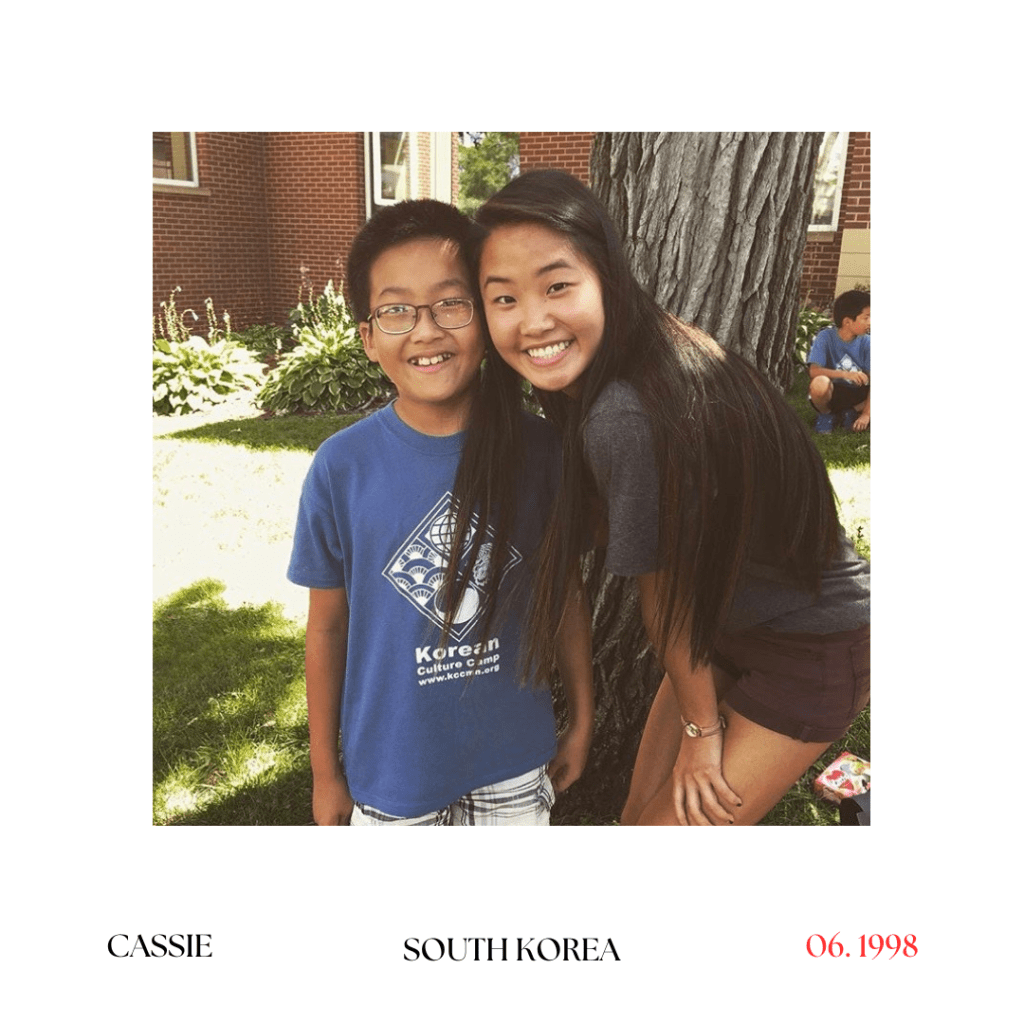
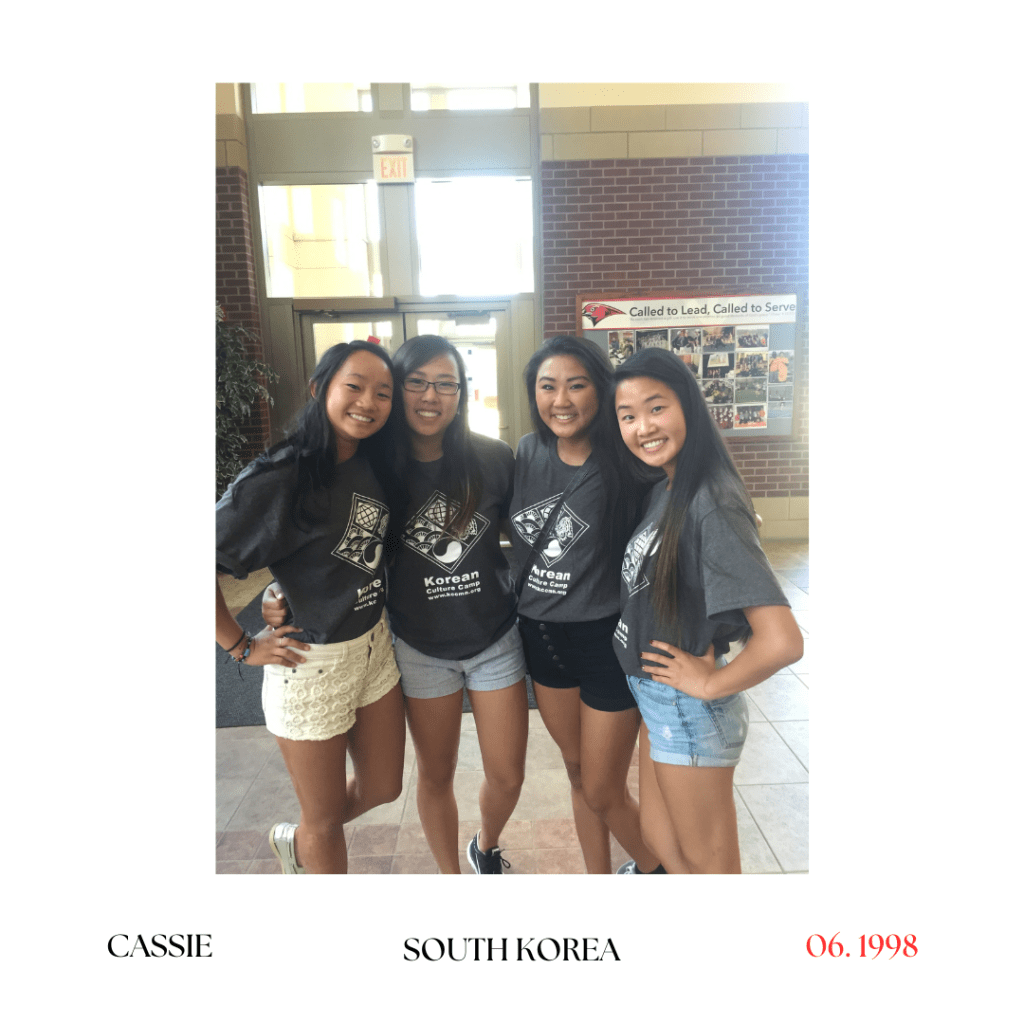
I went to Korean Culture Camp growing up. I was part of it from first grade until the end of high school. I loved it and it was really cool getting to be with a ton of people that looked like me, but they were adopted too.
There are Koreans there that weren’t adopted either, but it just felt right being with a group of people that knew what you were going through. So that was very pivotal and learning about our culture was really fun and interesting. My family planned on going to Korea once I graduated from college. But then we pivoted to Italy and then COVID hit. So there’s always been a want from me and my sister to go together with my parents to Korea.
I don’t necessarily know if I want to go look for my birth parents right away, I think I want to go there first and kind of do what you did with Children’s Home and go through the whole process and then maybe go back and search later because it’d be a lot.
Nicole: Yeah, it takes the pressure off because it’s a lot at once.
How do you feel about adoption as an adult?
I had a hard time around my adoption identity growing up and now I’m finally ready to face it head-on instead of ignoring it.
Also, I think it was the right thing to do by my birth parents and I’m very happy that I’ve had the life that I’ve had because I was adopted. But that is my specific experience and not everyone who’s been adopted/gone through foster care had a positive experience. So it’s tough but making sure kids get into good homes is something I’m always in support of.
Do you think that your perspective about adoption has changed over the years?
My perspective has changed in many ways. One that I remember specifically changing was that I always told myself that when I was old enough to have kids I would have them myself and not adopt so my child wouldn’t have to go through all the feelings that I did around being adopted. But now I am more open to adopting than I was previously just based on growing up and knowing that life doesn’t always go as planned.
I was a psychology minor in college, so I took a lot of the attachment style tests. And I’m pretty sure I got a secure attachment style, but then I feel like sometimes I can be semi anxious, avoidant. Secure makes sense because my parents made me feel loved and safe as well as my boyfriend does now but then some things in me are the anxious-avoidant type and I’m like, okay, does that stem from being adopted or is that just me?
Nicole: It is trippy to question those things and it’s hard because no one’s ever gonna have or give us the answers.
Do you have any advice for other adoptees?
Yeah, I think camp was really good for me, going to Korean Culture Camp and meeting people like me and not feeling so alone helped, because we’re still friends with some of the people now, which is cool just growing up with them. So I would heavily suggest finding an adoption community of some sort, whether it’s going to Korean Culture Camp if you have one in your area or finding an online group.
Enter your email below to follow along.

© Rebirth Adoptee Stories

 Rebirth