
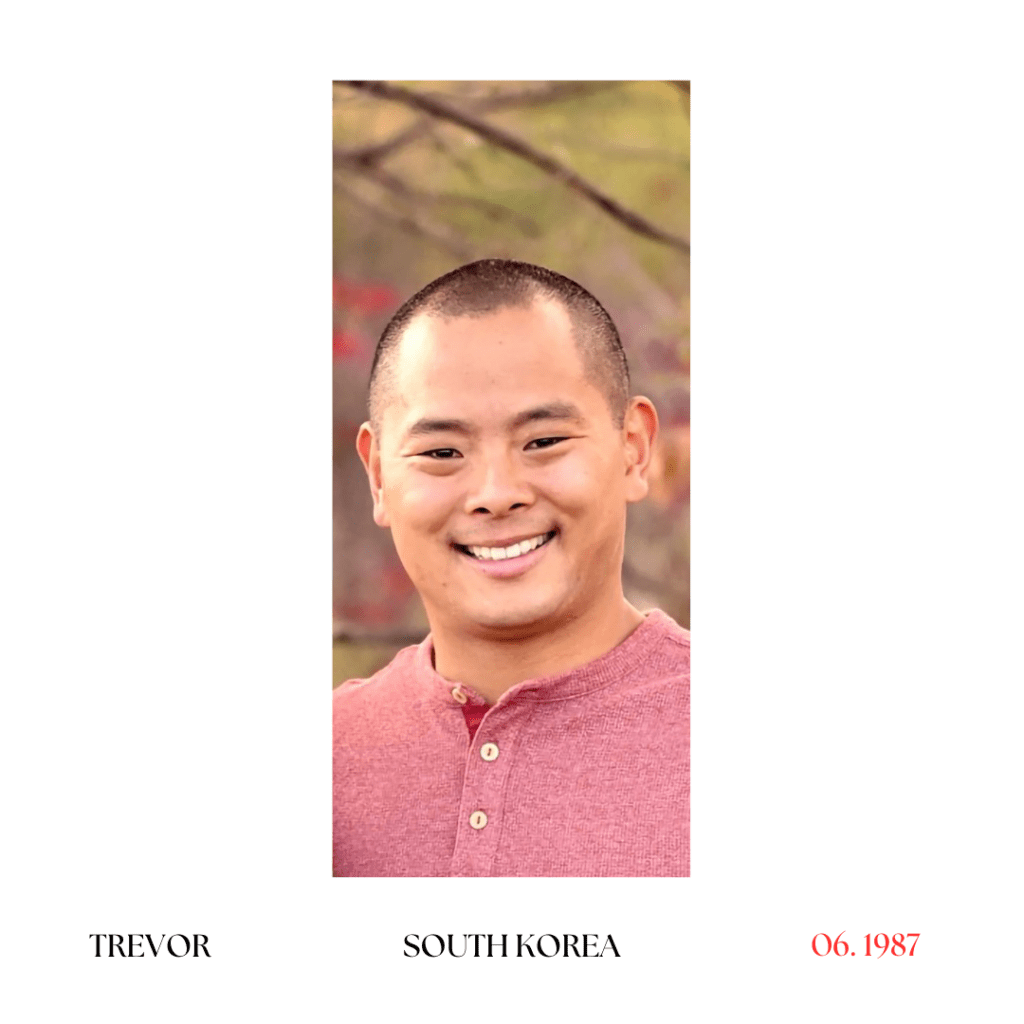
My name is Trevor. My Korean name 하정석 (Ha Jeong Seok) . I grew up in Minneapolis and I now live in Eagan, Minnesota.
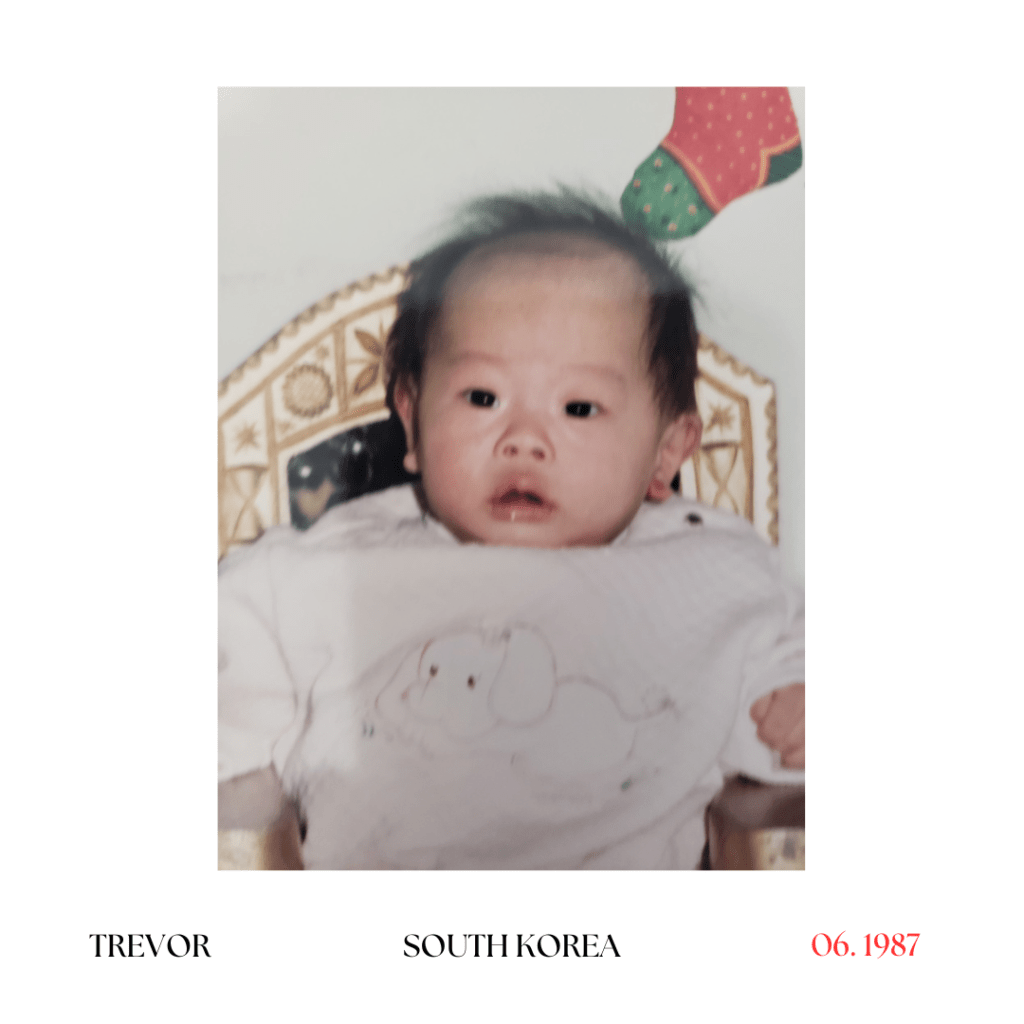
I was born in Masan, South Korea, taken to Seoul and I was adopted at 10 months, through Eastern Social Welfare Society in South Korea and Children’s Home Society in Minnesota.
Well the first part of it I guess, I don’t really necessarily remember, it’s just from what my parents told me. They adopted me after I was apparently turned down by some other families. And my family obviously said, yes. So I came over when I was 10 months old. Apparently, everyone came, because at that time, everyone could come to the airport, but my flight was super late. So it ended up just being my parents and my grandparents and the rest of them went back to my parents house. I think I was, like eight hours late and they were just sitting there.
My mom said it was hard in the beginning, because I was on opposite time. Korea and Minnesota are, what, 15 hours apart? So when they wanted to be sleeping, I was wide awake, and vice versa. It took all of us a while to adjust.
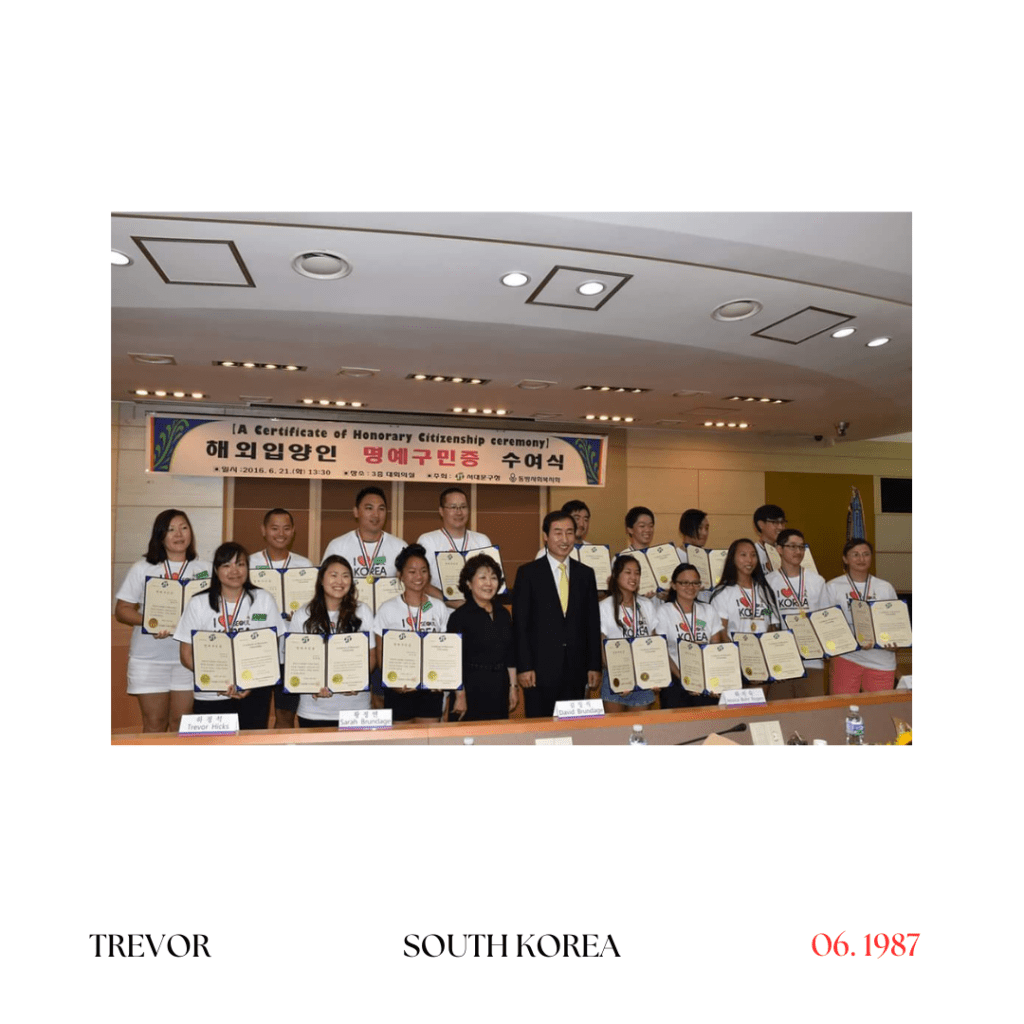
Fast forward a few years, I got my citizenship and I don’t know if I remember it, or if I just remember it by looking at pictures, but I was in kindergarten. We went to the agency, took some pictures with the Korean and American flags, and then I distinctly remember going back to school and I got to lead the Pledge of Allegiance for the whole school and they announced ‘Trevor became a citizen’. It was pretty cool but I think still being so little, I still didn’t know the magnitude or anything. But that’s a core memory.
Then in like fourth or fifth grade, there was another boy around the same age, and we were sitting out there talking, playing and then he just straight up asked me , ‘are you Chinese?’ And I said ‘no’. And I remember getting this weird feeling in my body like, ‘oh, this is uncomfortable’. And then he went through what I would call the typical order of things like ‘Chinese, Japanese, Vietnamese,’ and I was like, ‘nope, nope, nope, keep trying’. And I eventually told him ‘I am Korean’. And even growing up through middle school, even in high school that was the order when people asked me, it was never, are you Korean’
The other adoptees that were in my grade or in a class were all Korean. We didn’t have very many other kids adopted from other countries. So that’s why it also surprised me that that wasn’t one of the top three places they asked. I felt a little uncomfortable with that. I didn’t know what it was, I guess, you know, again, being young. And looking back I understand why it was uncomfortable because it’s kind of one of those times when you realize ‘Yeah I look different’.
Another memory of when I started to figure out that I was different was when we did family pictures on my dad’s side and my mom bought me a Korean hanbok type thing. I was in this bright blue hanbok and then everyone else was in more normal clothes. Which I thought was cool, but also wow I really stand out.
So I have these weird, core, memories that stick out. And I don’t know maybe it was me starting to realize I was different or feeling like a part of the family but also not. I was lucky to grow up in Minnesota where there’s a lot of Korean adoptees. There was a Korean Adoptee I became friends with in middle school.
And then there’s another that I met in high school. We were in orchestra together and a few other classes. I remember sitting with him in the audience every year of High School when the ASA (Asian Student Association) did their program. Not feeling Asian enough to be part of that group, while also not fitting in with the crowd watching. Looking back now and being more aware I know one of those factors was the microaggressions and just straight up racist comments and behavior. I wanted to just blend in, fade away. But I couldn’t. Him and I did a project for History Day about the Korean alphabet, about Hangul. That was one of my first projects I did that was about Korea and I was proud of it. And it was also weird and different, because I hadn’t done something like that before. His mom worked with Children’s, and she went over to bring adopted babies back to the US, which I thought was kind of cool. I have a picture somewhere of the man who brought me over. I think my parents even tried to keep in contact with him for some time. When his Mom was in Korea she got me a “Be The Reds” shirt, which is the support group for the Korea Republic National Football Team.She got one for my friend and his older sister who is also adopted from Korea.It was fun and interesting being around them, because they all spoke and wrote in Korean. They went to Korean camp and stuff like that. And there were a lot more Korean vibes at his house than in my house. Which is one time I realized everyone’s family was a little different. Because my friend from middle school is kind of like mine, they had pictures of him hung up but this other family had Korean artwork and things like that. And since then it made me think ‘did I miss out on stuff?’ You start to get to that age where you start to recognize things or maybe be more aware of feelings and stuff.
I never went to Korean Culture Camp and I kind of wish I did. But I also don’t know if it was my parents not offering it, or if they offered it, and I just said ‘no, I’m not really interested’. I could totally see that being something on track of what I did growing up.
Because there were so many times I said, ‘No, I don’t want to do it’. And 90% of the time, if I did it, I had fun or enjoyed it, but my parents tried not to push too much. Which is good and bad, sometimes I wish they would have pushed.
The one thing they did do is food and food is a big thing that I connect with. Because taste is such a big sense. The smells and taste can just transport me to different places. We call it ‘gotcha day’ and I know some people don’t like that term, but I’m fine with it. We always went out to Korean restaurants and did stuff like that. During different holidays we’d go to Korean restaurants also. And so that’s one thing that was the most consistent in terms of connection to Korean culture growing up.
Again, my parents tried to fit in things here and there. There’s this event called ‘The Festival of Nations’ that used to be big in St. Paul. We would go and go to the Korean booth and get my name written in Korean,go to the Korean performance, and of course the Korean Food stand. I remember doing stuff like that. But aside from those couple of things, there wasn’t a whole lot of influence.
I knew I was adopted growing up. It became clear from simple things like going to my dad’s work. And they’d say, ‘Oh, you look like you’re dad’. And I think it was one of those nervous things, they just didn’t know what else to say. And I was like, ‘I don’t really look like him, but thanks.’
I was comfortable with being adopted. Because I had I guess I would call it a ‘good’ adoption experience. My parents may not have incorporated a lot of Korean culture, things like that, but they clearly, and still love me very much and want the best, and we’re continually working on our relationship.
Because they were working off what the agencies told them what was best for us, you know, ‘love them unconditionally, as you would your own child, and everything will be fine’, which is what they did and they did a fantastic job of that. So you know, I’m lucky that way. But, nothing’s perfect, even with your biological parents, as I’m learning, being a parent myself.
I would call my adoption experience, pre-travel back to Korea and post. So before, the simplest way to describe it is how I kind of looked at my life with rainbows and butterflies. I didn’t dive into deep topics, I didn’t explore my feelings or things like that, everything was good. I always talk to my best friends, ‘oh, yeah, I’ll go back to Korea someday, and I’ll do a birth search to find my mom’. Simple.
And so then in my late 20s, I reached out to Children’s Home and for a couple of years, I would reach out and every time I got an email back, it was the same thing, ‘here’s some information if you want to go here’s what we can do’. I never responded. And then I finally started to really get interested in it and I don’t know what necessarily was the kicker, I don’t know if it was seeing my friends getting married or you know, that I was just at a good part of my life to do it. But I started to show more interest through a couple more emails. And really started to think about going over to Korea and doing a birth parent search. I did a birth family search first, and then finally ended up going on a birth land tour. I always talked to my best friend about going so he was going to come along, but this was a time when I was getting engaged to my now wife, and her and my best friend talked during my birthday party the summer before and pretty much flip flopped and he said ‘you should go, not me’.
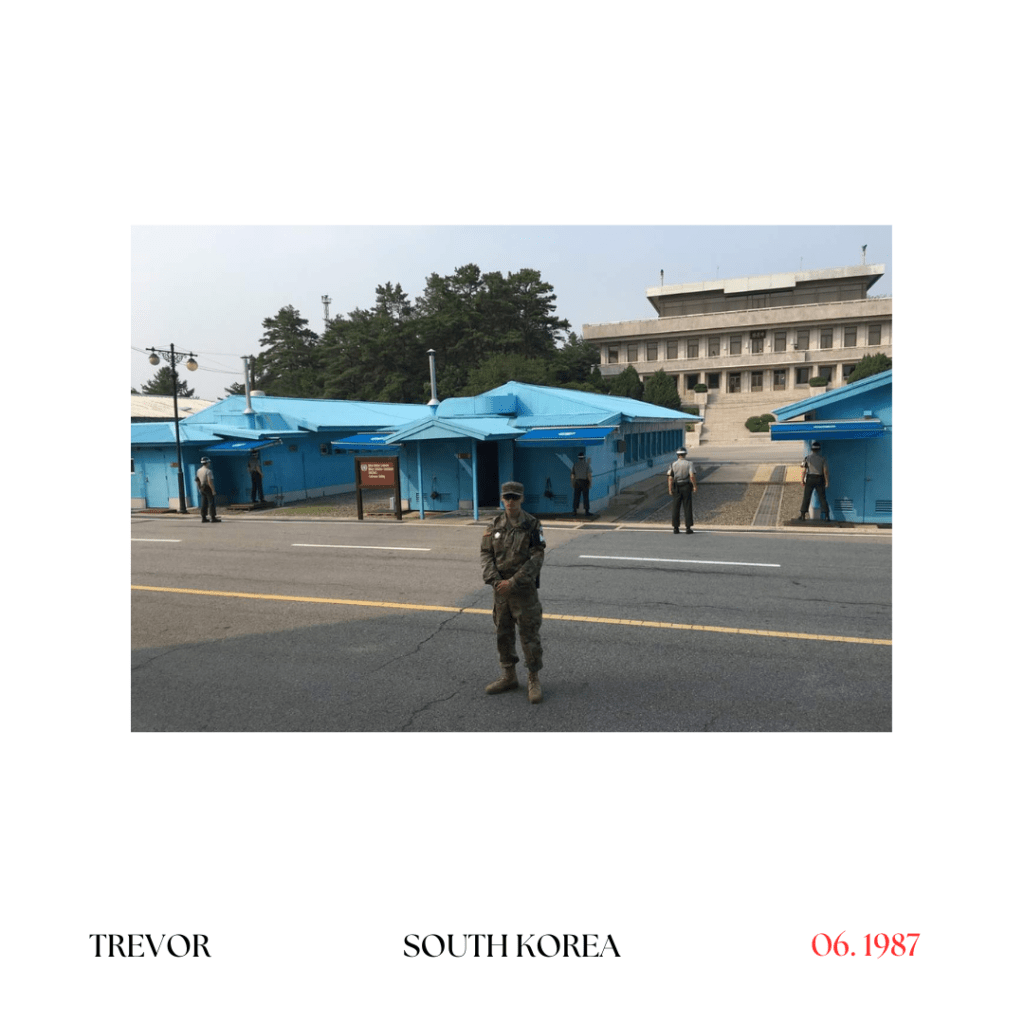
Which was a big deal because he’s always really wanted to be the one to go and bless his heart, that would have been fun, but I think she was the right person to go with me on that trip. So we went on the trip, which was an amazing experience. My wife said that there’s not many other times in our life together that she has seen me so happy. She said that I was in my element. And I met amazing people there, especially with Christine, Nicole and her family.
But I think one of the things I really remember is wishing that I could have been in the moment more with it. And I think this is what really started getting me to transition to explore my adoption more. We were in Daegu and we were getting ready for dinner and my wife looked at me and said, ‘what’s the plan when we get back home?’ I was confused, ‘home? I don’t know, I mean we’ll spend a couple weeks adjusting with the jet lag and go to work’. I was very confused. And she goes ‘no, there’s a lot going on here and you need to process these things’. I have the benefit that my wife works in the mental health field, I think she just had a good grasp on the whole scope of it and also an outsider’s perspective, and I didn’t really think about it, but then it kind of festered in my head.
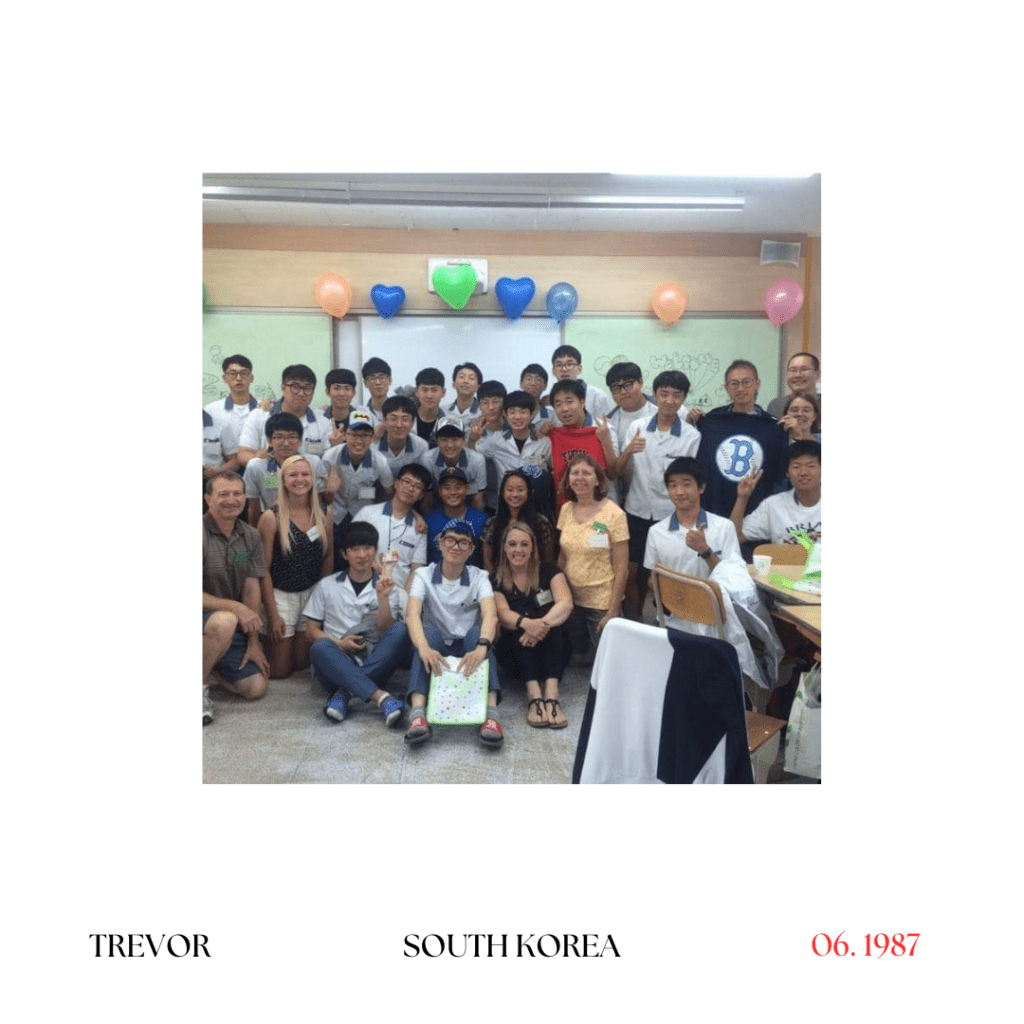
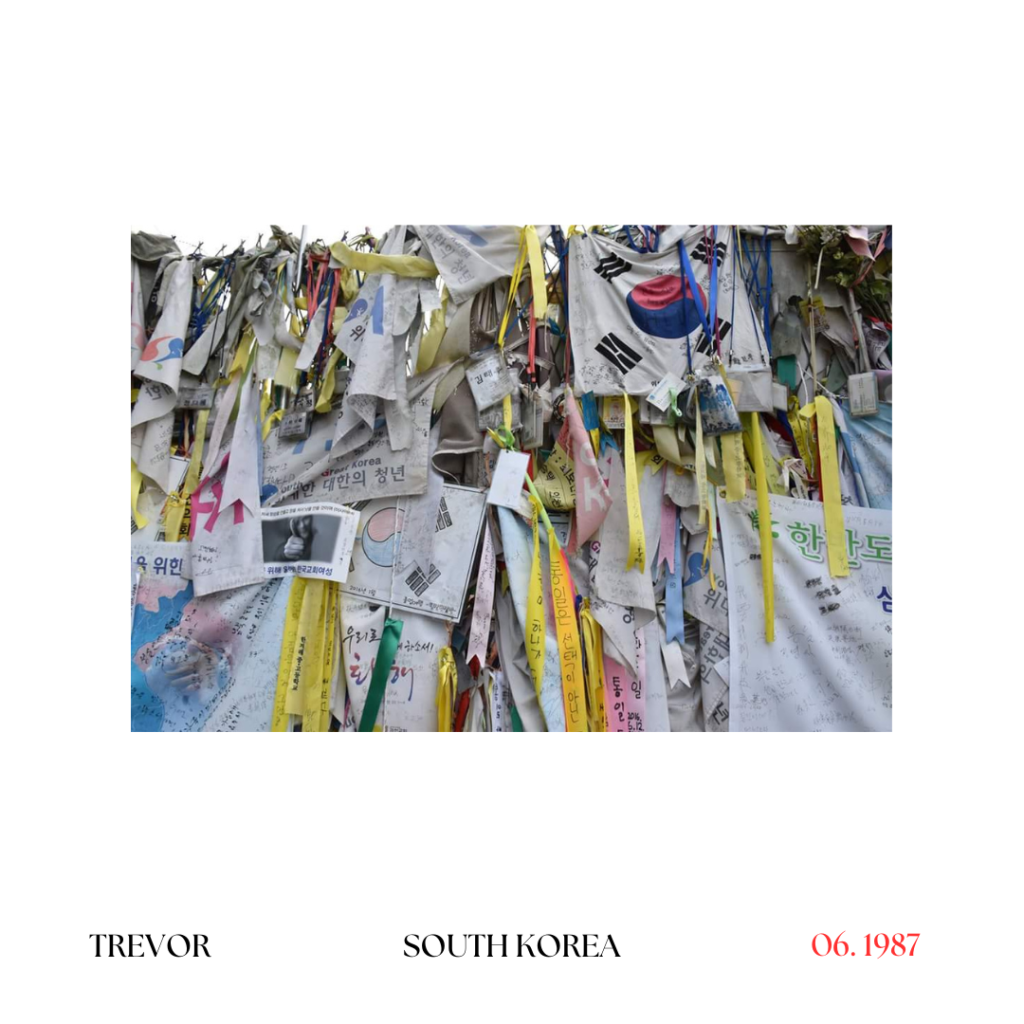
The next place we went to was Busan, which was by where I was born.We were able to do a side trip to go see where I was born in Masan. This is where emotion started to hit. I remember the first thing when we pulled up, the lady who met us there said, ‘Oh my gosh, you look exactly like somebody from here.’ This was the first time in my life that anyone ever genuinely said, ‘You look like you’re from here.’ and I believed them. All those times growing up, ‘Are you Chinese? Are you Japanese?’ No, it wasn’t even, ‘are you Korean?’, she said you look like a man from Masan who grew up in this area. And it was crazy and it hit me, but at the same time it didn’t because I was just trying to take it all in.
I got to go to the hospital I was born at, and met a nurse that worked there since it opened, it opened right before I was born. So there’s probably a 99% chance that she held me when I was a baby, which I thought was cool, but then again, I don’t think I was taking it all in.
I remember talking with Jackson, one of our helpers from the trip and when I told him about it he got goosebumps, and got emotional. And I was like ‘what’s the big deal?; I thought it was cool, but then a month later when I was back home I was like ‘oh shit, that was really emotional’. Why was I not in that moment? I wish I could go back and sit in those feelings for a minute and really take it in.
Looking back at that picture of us, and that moment I realize that she is the closest connection I have to my birth mom, to that time in my life. And then my last big memory was when we were loading on the bus to head to the airport. A fellow adoptee was saying goodbye to his birth family that he had connected with on the trip. As I looked and watched I felt so many emotions rush to me. I cried the whole way to the airport, I remember hearing someone say “It’s hard to leave, you will be back someday” and then my wife responding “it’s not that”. She was right.
So that was a big turning point, going on that trip. And then talking to Christine who led the trip, about post-trip stuff because Children’s Homes Society didn’t really have anything, the trip was all focused on going, but they didn’t have anything for after. She gave me a few resources, but typical me I didn’t do it and set it to the side.
A couple months after the trip my wife and I got married. And after a couple years we had twins. And as you were kind of mentioning about your counselor, that was a big thing.You’re right, when you have kids, it’s the first actual blood related people in your life. You hear people say, ‘Oh my gosh, they look exactly like you’, or things like that. Or filling out the birth certificate or filling out a census and I filled them out as my kids, and my relatives. My family tree is me and then them because that’s all I know. So that was a huge moment for me, I don’t even know the exact words to say, but emotionally, seeing that. And balancing that with starting to really dive into my adoption experience and story and stuff at that time was really hard.
Then at the same time they were about a year old or so when COVID hit. With that came a bunch of anti-Asian stuff . And it was a big mental bomb on me. Again, thankful for my wife, because she pushed and pushed and pushed, not in a bad way in a good way. And finally, I found a therapist through Christine which was one of the best things I was able to do, because there was a lot going on that I was not able to organize or break down or work through.
So those are huge main points, definitely the trip, having the kids and then starting therapy have been huge on the journey to get to where I’m at now.
Nicole: Did you tell me that your therapist is an adoptee?
Yes, when I went to Christine she gave me a list and they were all Korean adoptees but something about her stuck out. Part of it for me was just that she was a female and I don’t know if it’s because my mom was always the one home at night, my dad in the morning, so there’s more talking going on at night if it was that or I don’t know, I talked to my therapist about if it was because of my misconnection with my biological mom. But I’ve always had an easier time talking to females about different things, so when I looked for therapists, I specifically looked for a female Korean adoptee.
Those were the two things I was worried about and my wife had a few more insights that helped. My therapist has been amazing and she’s helped through different things, giving me coping skills and working on different visualizations, just all the things.
Nicole: That’s great. I have a therapist who’s also a Korean adoptee, and even just having her to talk to and watching her exist is helpful.
Yeah, she has so much experience, working with other adoptees and being adopted herself. And even talking to her about parenting stuff. She’s a parent, she’s gone on a search for her biological mother, she’s had other people do it, and she pulls from all these different experiences. Whether I need to be validated that day, whether I need to just hear that there’s another person going through the similar experiences, it’s not just diagnosing. She often says adoptees often have these feelings, whether it comes from rejection or being pulled apart from our biological parents so quickly or the separation. She just knows, both educationally and also with experience, I think the combination is exactly what I needed. It’s one of those things where you just wish you would have started sooner. I guess you can also say I just wasn’t ready for it before.
••Thinking about when you went back to Korea, is there a place that you feel more home, Korea or Minnesota?••
That’s a good question. Yes, to both. And there’s also a third thing. So when we were on the trip, there’s another Korean adoptee who was, I want to say 15 years older than us, who had kids that were in high school. He described this feeling that I’d never thought of before and it’s how I can be here in Minnesota and it’s my home, but also I don’t fit in. We are lucky to have a high adoptee population here (in Minnesota), but at the same time, I can go a whole day without seeing another Korean, maybe not now that I have kids.
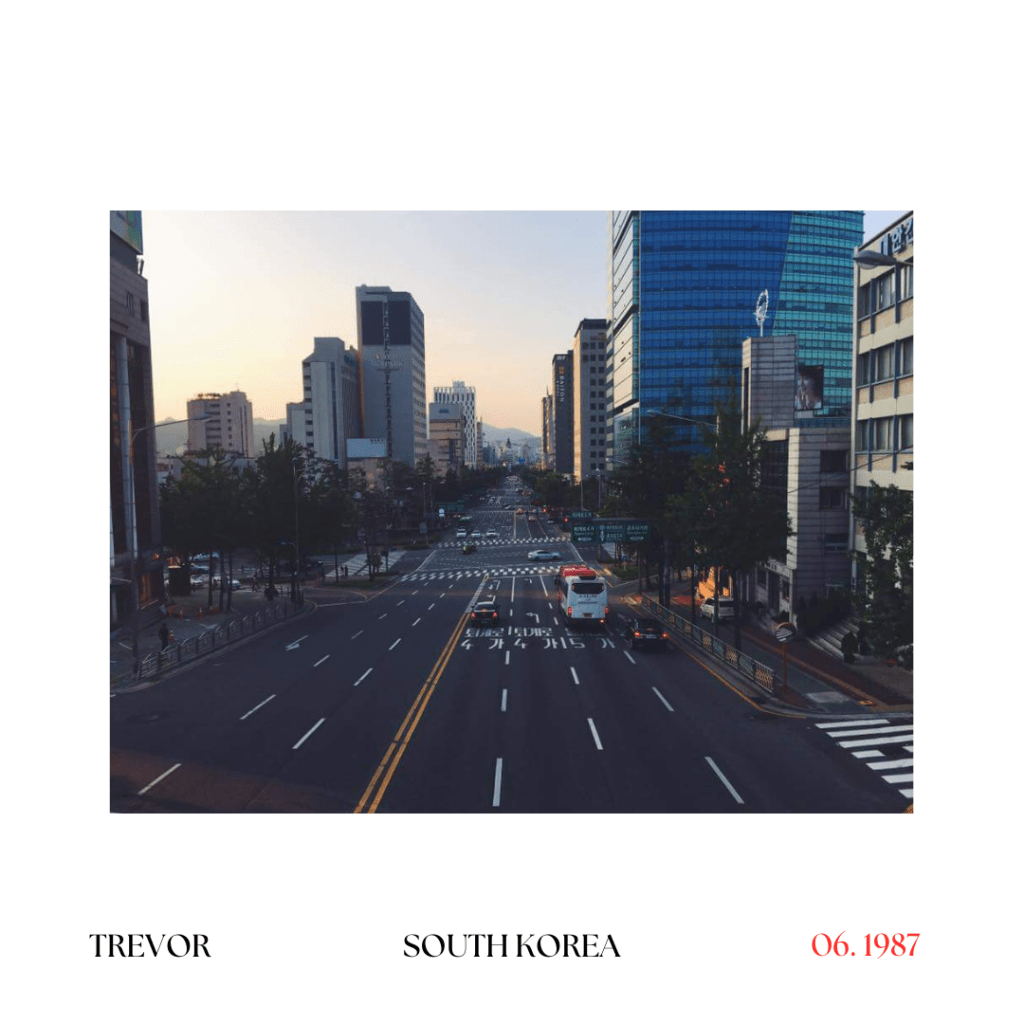
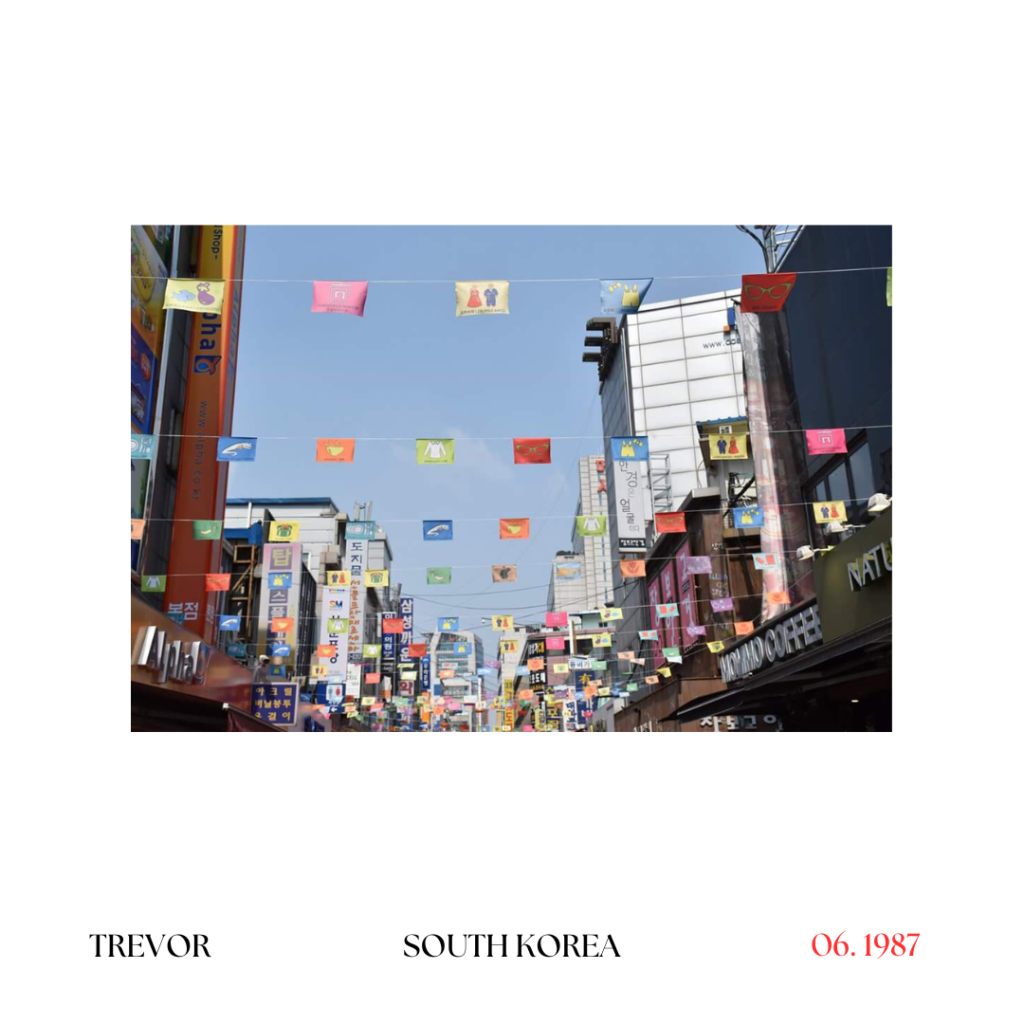
But being in Korea, I remember landing and my wife asking, ‘What do you feel, do you feel home?’, ‘I feel tired’. And during our time there it was crazy. We went from me losing her in a crowd in Minnesota to she’s losing me in a crowd in Korea even though we’re right next to each other.
Little stuff like that, but then at the same time, I have a very elementary grasp on the language. It’s very quick to go from feeling like you fit in to feeling like a tourist and honestly, I feel like I look like a white Minnesotan in Korea, you know? I don’t fit in here. I don’t fit in there. And he described it as this middle ground, like floating almost in between the two. Visually, I pictured us sitting on a cloud, hovering between the two. So I guess to answer the question, five minutes later, I feel at home in both places. But, I also feel very much like I don’t fit in in both places.
Nicole: It’s very complex, and specific to adoptees.
I’ve heard that adoptees who have gone back have a hard time and they have to find an adoptee community in Korea to fit in.
Nicole: I have a friend who went back and he’s a Korean adoptee from Seattle, and he lived there during COVID for about two years and he met some Korean Adoptees in his time over there. And one of the adoptees that he met was from northern Europe and he was about forty, and the first time he saw another asian person was when he was 18. Thinking about different experiences that people could have being adopted to other places, countries and states is so interesting to me.
I’m from Minnesota, but I have cousins who were adopted to California and they have a lot of Korean Adoptees and lots of other cultures too. And even listening to different podcasts and exploring more in the last three years, people who grow up in rural places, they didn’t have an adoptee community, they didn’t even have another person to be friends with, or realize that we’re sharing a similar experience.
Nicole: I can’t imagine how isolating that could feel, but I’m sure people get through it.
One thing that’s really surprised me as I have started to explore more about my adoption, I told you earlier that I’ve had a ‘good’ adoption experience with my parents. It blew my mind listening to other peoples stories about how their experiences were growing up with their parents. We just talked about growing up in a rural area or some other state that didn’t have very many Korean adoptees, it has blown my mind the negative experiences that people have had because mine was good and I would say all of my friends that I met growing up have very similarly ‘good’ adoption experiences, so I just wanted to add that.
Nicole: I think that’s a really strong point, thinking about having ‘good’ adoption experiences especially when thinking of going on a birth land tour, a lot of people will choose to go with some sort of family. And that rests very strongly on the fact that they have a family that wants to go back with them. But I did a research project in college about mental health and adoption, because I would join these Facebook groups for Korean adoptees and they were so dark, and it was super scary. It was super sad. So I don’t know. I just feel like, obviously, there’s a disconnect, between all adoptions being healthy and positive. And I know, we don’t live in a perfect world and I don’t think there’s a world where all adoptions are perfect, but I feel like there’s still ways that we could work to make it better, you know?
Yeah. I tried pretty much everything I could before going to therapy, for whatever reason. I went to this group in Minnesota called Adoptee Bridge, they have different monthly sessions for adoptees.
What I told my therapist I was searching for, was similar to when we were in Korea and we did these meetings. I don’t know if it was a daily, maybe? But the adoptees just met. That was one of the first times I had deep, meaningful conversations about adoption with other adoptees. So I think that’s what I have been searching for. And selfishly, maybe, specifically Korean Adoptees, just because of the similarities that we can have. But I went to this session thinking it’s gonna be similar, and it was not, I almost had the urge to leave. I got so uncomfortable because they were just bashing it so bad. And I get there’s a lot of negative things with the motives behind adoption and the government’s role and there’s lots of stuff that we could get into. But the way they said, ‘I don’t care if you can’t have kids or whatever, you don’t get to just pluck a kid from another country’.
From my perspective, I was like pump the brakes a little bit, listen, I hear you, and what you’re saying and your experiences are valid. This was at the same time when my friend group was trying to have kids and I had a few who were having a very hard time getting pregnant. They asked me my thoughts on adoption, and they were interesting conversations. There are people that aren’t able to be given the gift and obviously, it’s not their biological parents that’d be preferable, but, if the alternative could be a ‘good’ adoption experience, those are the good intentions of adoption and having families that truly, truly care about the kids well-being and understand that they’re not their biological parents, but giving them a roof, good food, education, opportunities to become whatever they need to be, and I think that aspect of it is good. I couldn’t even talk about it and it made me so uncomfortable because, and like I said, I had a good experience, which was not perfect. There’s still lots of things I would change if I could, but I think everyone could say that about different stages of their lives. I stopped going and I searched Facebook groups and I thought, ‘Is there nothing out there that is like what I’m looking for?’ Then luckily, I found therapy.
How do you feel about adoption as an adult? And has your perspective changed throughout the years?
It has changed. Because I’ll tell you another part of my mind process before going to Korea, I thought, I’ll get married, I’ll have one or two kids. And then if I want to have a third we’ll adopt from Korea, that was kind of my plan. My wife was on board with it when we got married. We had twins first, so it went right to two. And between having our own kids, then going to Korea, and working through the trauma and all the different thoughts and feelings we decided that for ourselves that I don’t know if I could just go adopt a kid just to adopt a kid. I feel like if someone really needed my help, I would try to help out.
But seeking out a kid to adopt ended up not being in the cards once I realized all the traumas I had to deal with, selfishly I didn’t know how I could help another adoptee go through it. I always thought that I would screw them up more than help them, whereas before I was like, ‘Oh, I’ll be helping them’,
I went from having this idea that I was gonna adopt a kid to then my reasons changed. I think it was like a process of two to three years to adopt a kid, you had to go to Korea a few times. And it made me question, what is this process like? And that was with me being an adoptee and having an advantage you get them even faster. If my parents tried to adopt now, the process would be even harder. Because my wife looked into it a couple of years ago and Korea likes to change their processes, so it could be different now. Whether it’s getting kids adopted out or us trying to go search for families, the policy seems to change quite often about how to do that.
For other people, there’s lots of families that I would trust adopting kids, whether from Korea or other countries, but I think, like you said there’s no perfect world, but there’s also so many people out there that have good hearts and could take on kids, like my parents did, and do the best you can. I would just say with all the access to information now, hopefully, there’s enough resources for these parents who want to do it to know what they’re getting into, and to prepare themselves the best they can. It’s not just about loving them unconditionally, which is a huge, important part of it, but that’s definitely not the only part.
Nicole: That stuck out to me when you said that before, because our parents were only given the resources that they had.
Try not to put too much pressure on yourself, even though it kind of just happens. I’ve had a hard time with that. One of the hardest discussions my wife and I have that’s unresolved is about my birth mother or birth family in general. And everyone, as I’ve learned, which I did not notice before, has very, very different experiences. In fact, I don’t think there’s one that is the same when it comes to the birth family search, and there’s different experiences, different stories that are going to trigger you in different ways.
I know for me there’s things that I don’t even realize affect me. And again, thankfully, I keep shouting out my wife, but she always seems to recognize this. Like when we were in Korea, I was supposed to meet my foster mom, but then I was told that she canceled and verbally I just said, ‘okay’. But my wife said ‘that is not how your body reacted, your body was completely disappointed’. And I was like,’ yeah, you’re right, I was pretty disappointed to not be able to meet them’. There were all these people meeting their foster parents and going through their files, and I was just kind of standing in the lobby waiting for everyone to be done. I guess I’m never gonna give up hope, even if the chances are relatively very slim.
But for a short background on it, I did a birth family search, I’ve done different angles, I’ve gone through different companies or whatever. The closest I got, I guess, if everything was truthful, which again, I don’t know, but they dropped letters off at where they assumed was where she lived, and then got a phone call from a person who they say was her, and she pretty much denied ever having any kids.
So that was hard because it was denying my existence. But I know from going through therapy, and luckily again, my therapist is an adoptee, that it’s not just my side and when we were in Korea I had the fortunate chance to go to the birth mothers, single mothers home. So hearing their perspective was super helpful, super emotional. Lots of thoughts coming from that, but just being able to see their perspective as well. You know, Korean culture back then didn’t really allow for these mothers, they really didn’t have a chance. Unfortunately, you were pretty much told that this is how it had to be. So I guess one of the hard things about being an adoptee is how these emotions come up at random times.
A lot of times for me during the holidays, or group gatherings. And I think it has to do with me seeing my wife’s family all together. And I’m never going to have that same thing and it brings up a lot of feelings. I can be in a room with people, and go from being there and present, to feeling alone and isolated. And she can’t do anything to help that situation and she gets frustrated because she looks at it in a way that, this person who gave me up owns so much of my heart, so much of my emotions and kind of takes away a sense of some of my time and focus and love for my three kids and my wife. And she gets frustrated with that which is valid. I just told her that there’s no chance that I’m ever going to 100% be over it or give up hope. Let’s just say that everything is true and that she denied my existence and so on and so forth. That probably means that whatever her situation is, she can’t connect and whatever has happened in her life, so it’s probably not gonna happen. But what if?
To me it’s never 100%, like, what if she, God forbid, gets sick or something, and then has this point where she’s like, you know, screw it, is he still interested? I have to do this before I die or something.
Nicole: Yeah. I mean, from another adoptee’s perspective, it’s something that feels almost as ingrained in me as my DNA. Like this is maybe the longest feeling that I could possibly remember having is that, that longing for connection with my birth family.
I think it’s come stronger for me since I’ve had kids.
Nicole: I bet. I mean, I can’t imagine what that brings up.
And I’ll tell you this, too, for me, I came over when I was 10 months, and those first 10 months with my kids were the hardest for me. I’m a much better parent now that they’re older. Not that I would say I was a bad parent, but I struggled. I struggled listening to them cry, when we were sleep training and stuff and I talked to my therapist about this, thank god, I told her about hearing them cry, I visually pictured myself as a baby laying in a crib, no blanket, just crying and no one coming to me. That’s the feeling I always got when I heard my kids cry. And oh my gosh, it just tore me apart. Because you’re not supposed to go to them because 30 seconds later the kid stops crying and they’re fine. But to me, I want them to know that I’m always gonna be there. I didn’t know that and I don’t know if my foster mom came to me all the time. She could have been a crappy foster mom, I don’t know. She could have had like four kids and she couldn’t come and get me right at that time. I don’t know.
Do you have any advice for adoptees that have gone through similar experiences to you?
Advice wise, I would just have to say what has worked for me, but you have to find out what works for you. For me, I found a great balance and it’s a continual work in progress. But, since I started therapy, I have really started to find a really good balance of things. I realized one simple thing was just looking at my social media feed. I have my sports teams, and I have a few other people, but I don’t really have much for just Asian people in general. So, I made a concerted effort that when I saw someone Asian, whether on TV or something, I’m gonna try and follow them. And it’s going to start connecting me and then my feed is not going to be for lack of a better word, just white people.
I’ve seen just that little change helped, I started finding Daniel Dae Kim, and then they would connect me to this person or this person. So if you looked at my feed in 2020, that started therapy and working through to now it’s filled with more Korean and Asian people. Growing up, the only Asian people I really remember seeing were Chan Ho Park, a pitcher for the Dodgers and then Ichiro Suzuki, and there were only a handful of Asian people in the media.
I’m thankful that my kids now are going to be able to see people from different cultures, and in my culture be successful. And know that I can do that. So that was a big part for me, seeing representation, even if it’s as simple as when I’m spending five minutes scrolling through social media being able to see maybe every other picture seeing an Asian or Korean person.
We have made a concerted effort as a family to do something even as simple as getting Korean food. And when different holidays come up, for instance, right now, it’s 추셕 (Chuseok) in Korea, Korean Thanksgiving. And I was thinking about doing it and my mom called me yesterday and she goes, ‘hey, we’re gonna go to a Korean restaurant and pick up takeout and bring it over’. I was like, ‘oh, thank you’. They’ve never done that, especially for Chuseok.
So we’ve slowly started to incorporate more things like that. Every year we celebrate the Korean New Year now.
My wife makes 떡국 (tteokguk) which is a traditional soup, and you’re supposed to make sure that you eat it and then you turn your next age. All my kids have 한복 (hanboks) now and so little things have been sprinkled in here and there.
I think when I originally started going down this path, I almost wanted to overcorrect. And make our house a traditional Korean house and it’s not really possible, at least not right away. There’s give and take with the kids and the wife and what not, so we’ve been having to find balances between things. I think what it is that balances you is a huge piece of advice that I would give and then I would encourage people to do therapy of some kind.
I guess lots of people used to have this stigma with it and I still struggle with even being proud that I’m doing it in a way. So I think therapy is a huge thing. Asking for help is a strength, not a weakness. And if not therapy, finding some sort of group or even if it’s just a friend to begin with, to just even just shoot the shit with and talk with. Find connection of some kind, in whatever ways you can.
Today I was at work and somebody asked me where I was from. I told him about Korea, and he said ‘oh I thought you were from Hong Kong’ and I’m like, ‘yeah, sure’. And being able to go to someone and say ‘I feel weird about this’ and talk with them for a minute and then move on. But comments like this make me feel weird. People say stuff like, “wow you’re English is good, or you make me want Asian food for lunch, or ‘oh, you’re adopted? My neighbor’s cousin has a kid they adopted’, and I’m like, ‘great’. I see you trying to connect, but that’s a lot of steps away. I don’t get a pass because my adopted parents are white or because my wife is white. In fact it’s the opposite. I get asked if they are my real parents. Yes, they are. I used to, well if I’m being honest I still sometimes compartmentalize these moments. I try to just push them aside. Without support and space to talk about this it would just build inside me.

Enter your email below to follow along.

© Rebirth Adoptee Stories

 Rebirth