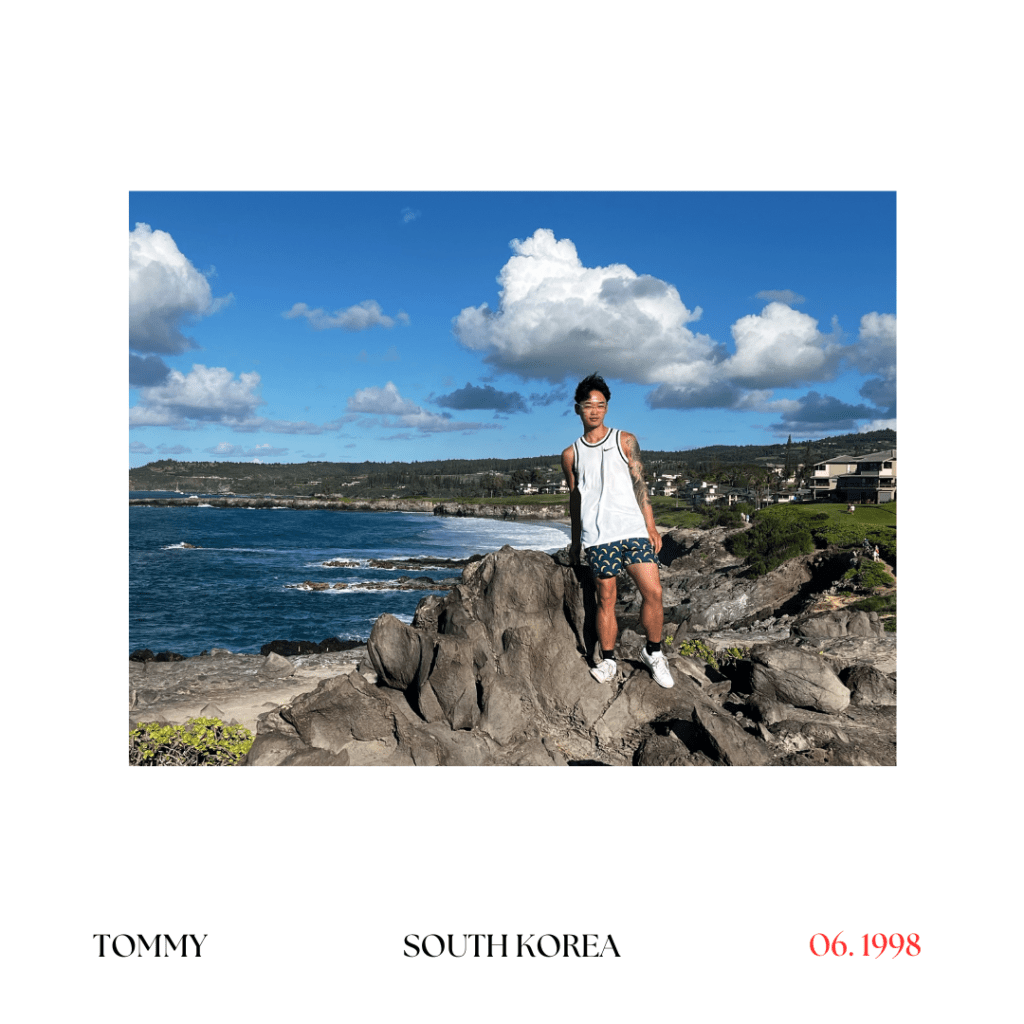
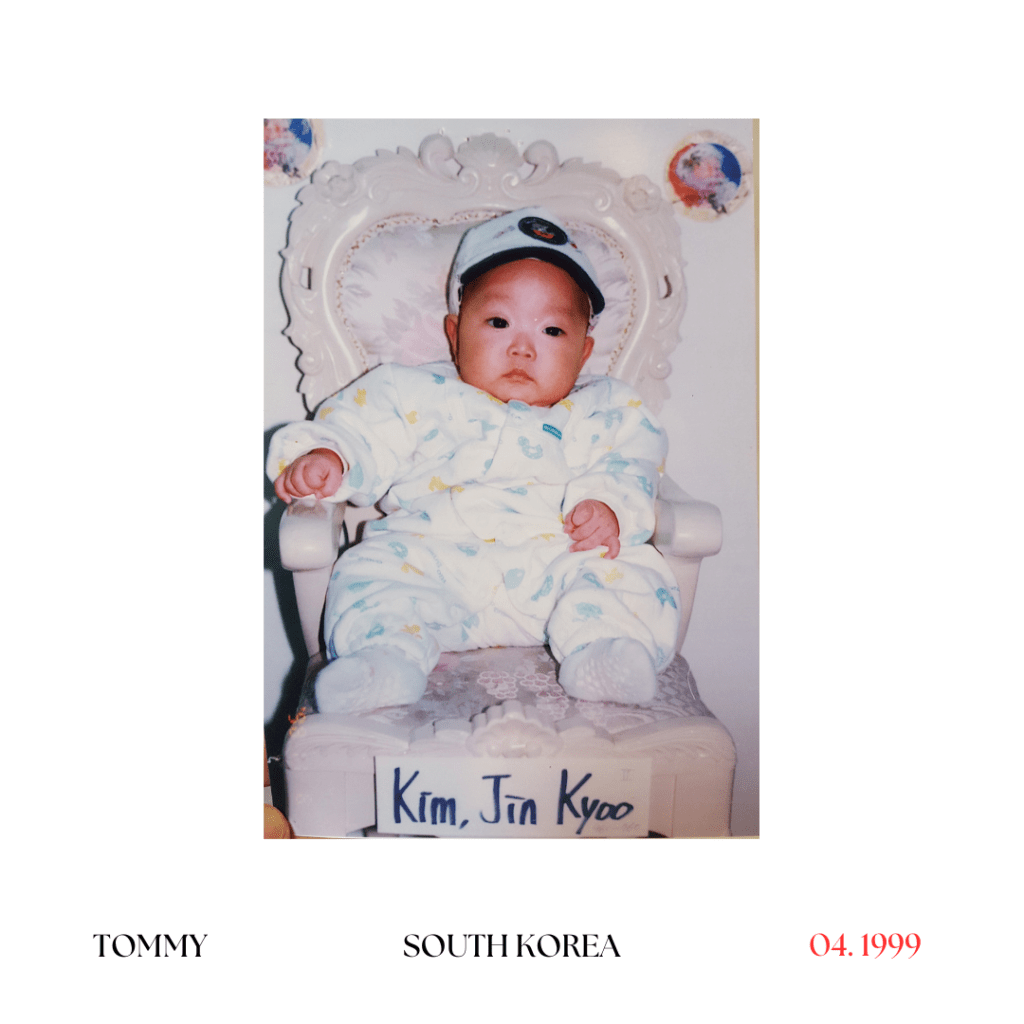
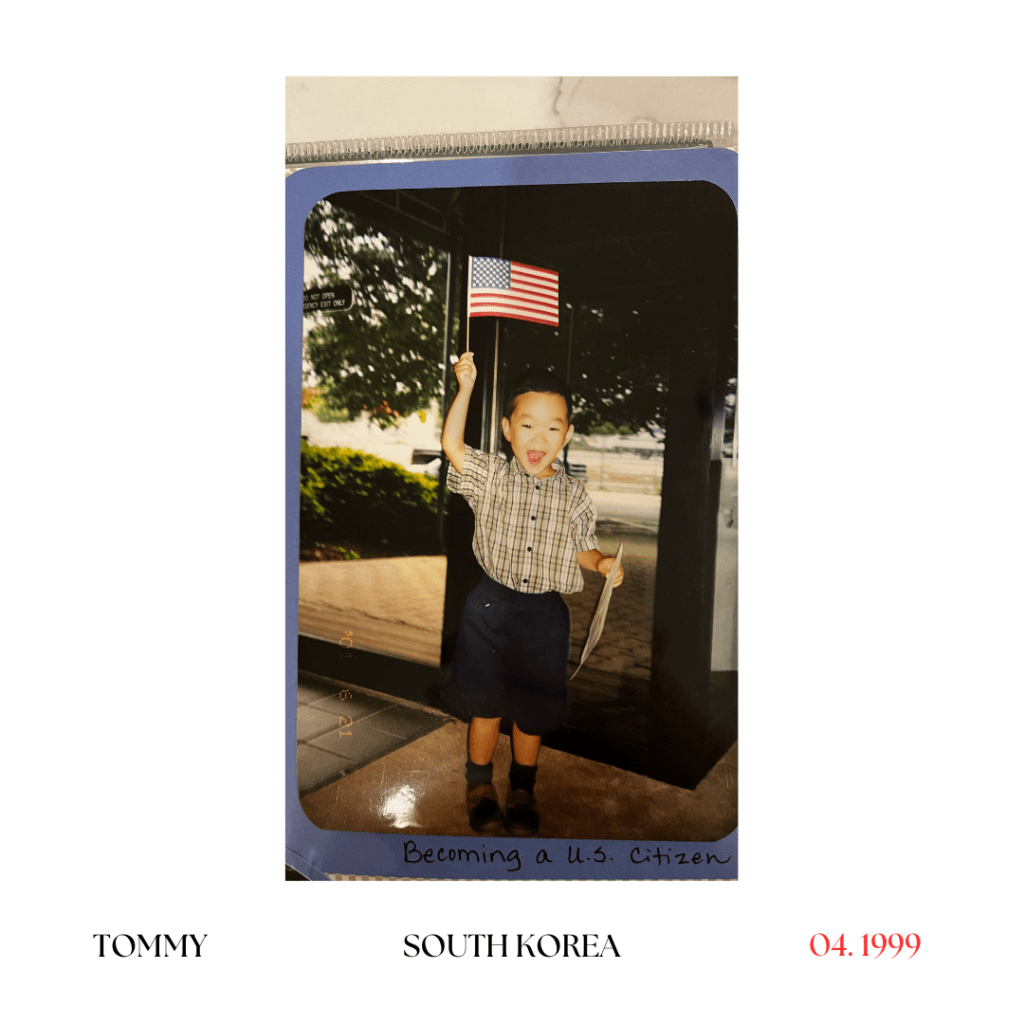
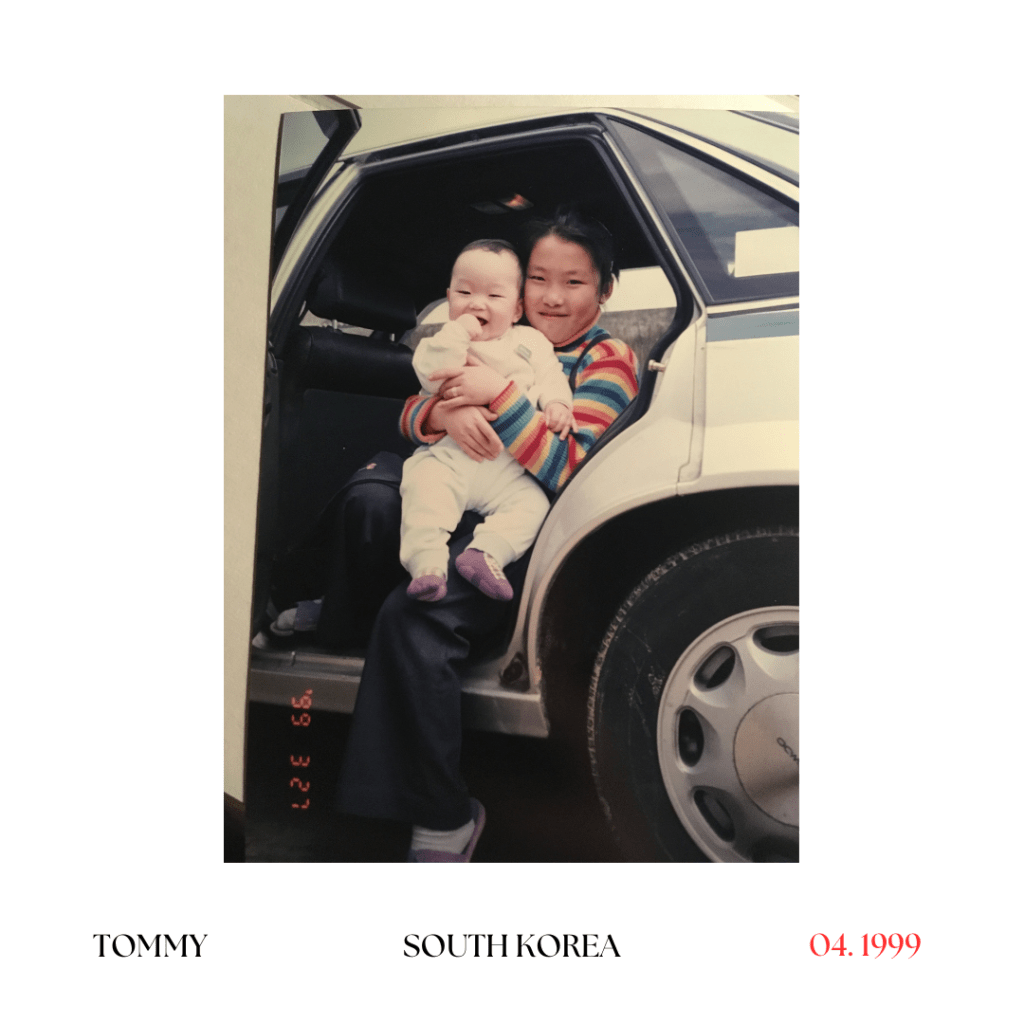
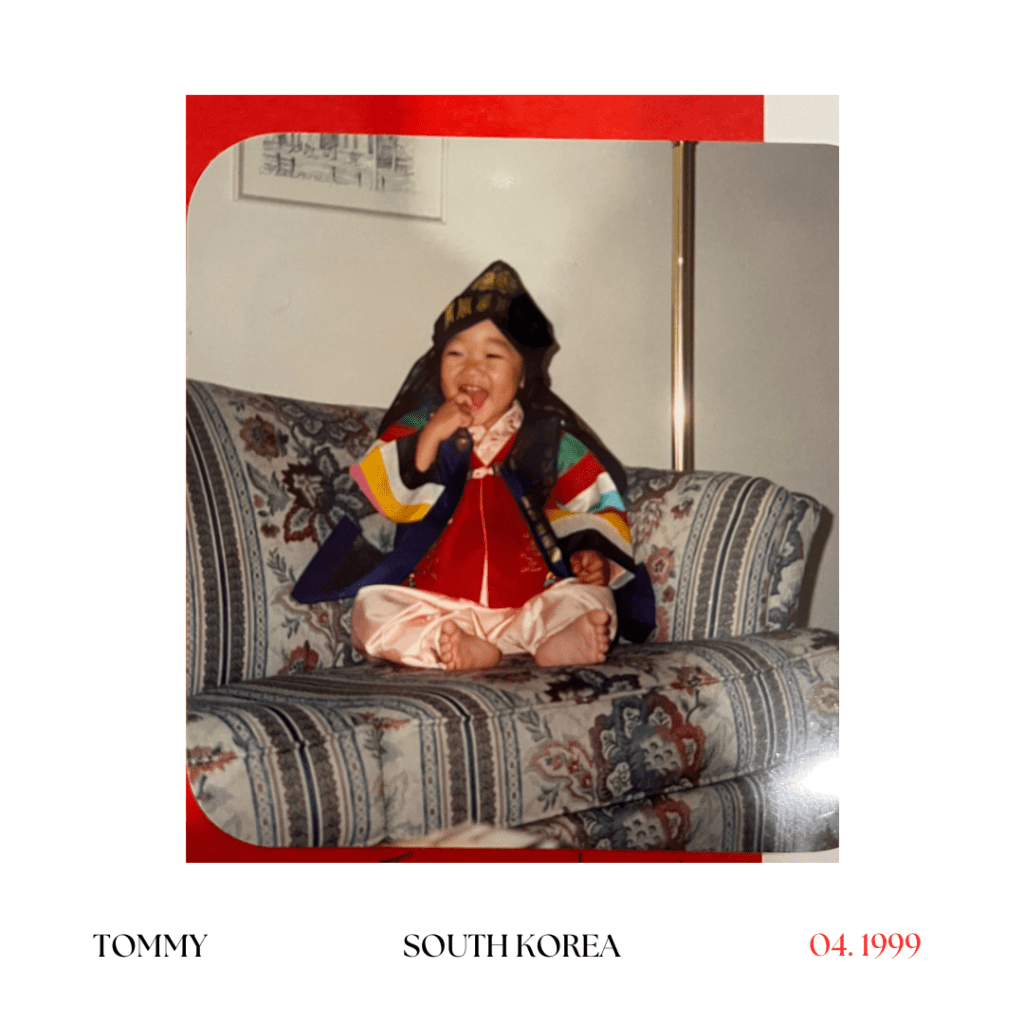
I grew up in the Seattle Metro area, in the Seattle suburbs. I think I was around 12 or 13 months when I was adopted from east Seoul. And then I was at Eastern Social Welfare Society (in Korea) and I was adopted to Northern Virginia at first and then we moved to Seattle.
I have thought about this a lot over the years. I think most, I don’t want to say most, but a lot of adoptees I’ve talked with, we go through our adolescence not thinking about it. And then one day we’re exposed to the culture. I remember looking at my file when I was 12 and my mom had it around the house. I was kind of interested in it, but I wasn’t really too concerned about it. I was just living my normal middle school life. I really didn’t care about adoption or my identity until I went to Korea when I graduated high school, I think I was 17 and it’s like a switch kind of flipped when I was there and even just being with the other adoptees on the trip around my age had a profound impact on me.
••So you said a switch flipped, what was that like was it positive or negative for you?••
I think it was definitely positive. Although it kind of opened up a can of worms, so to speak, where there was a lot of baggage I think I was carrying for many years and trying to go into adulthood and then navigating my identity during that time, I was starting college and that was really difficult.
Nicole: Have you been back to Korea since the first time you went back when you were 17?
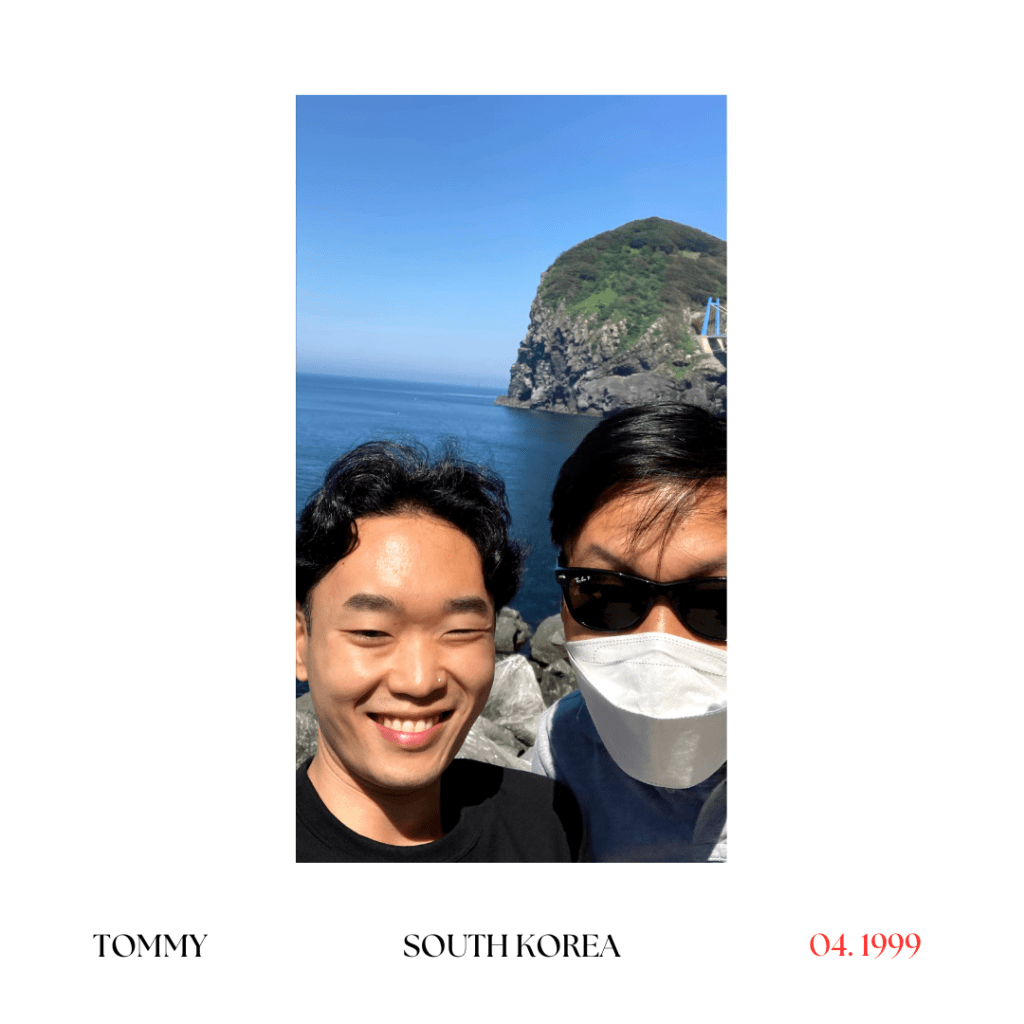
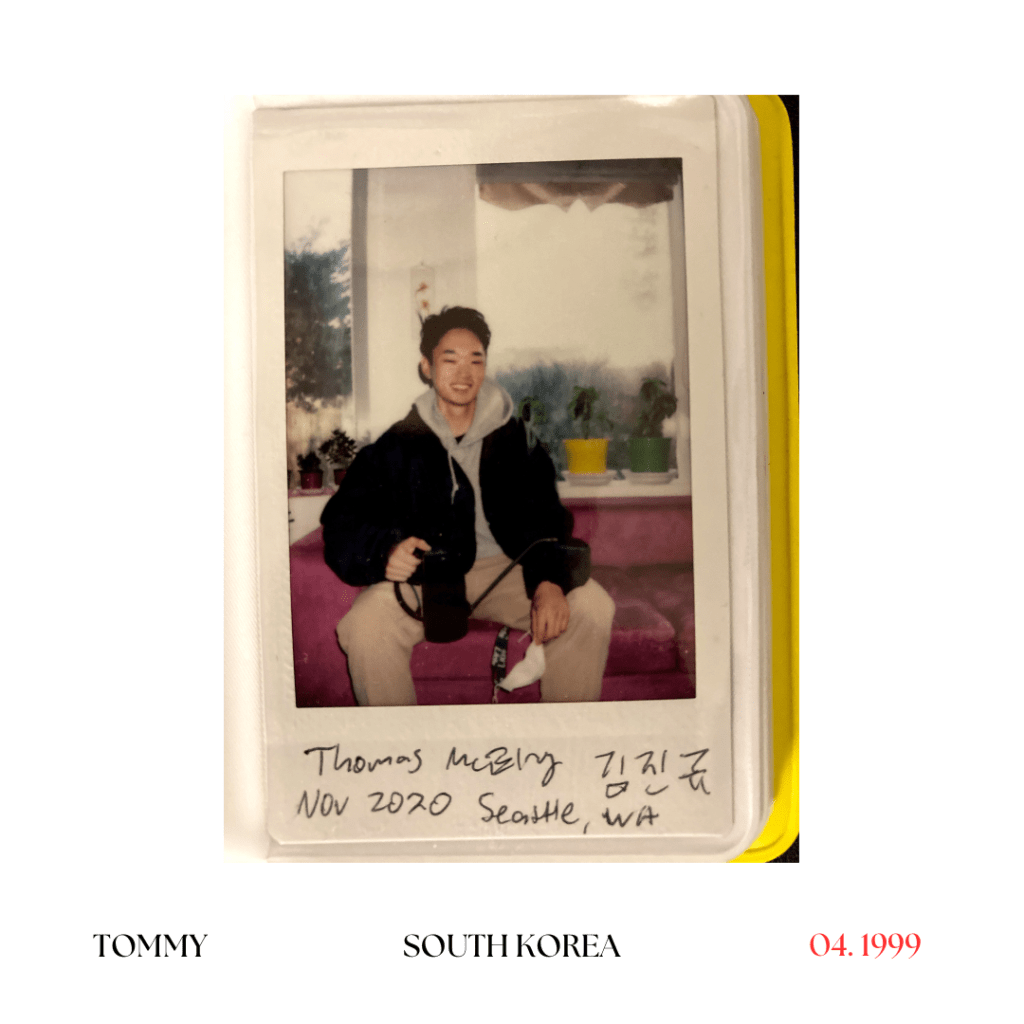
Yeah, I went there a couple of times pretty immediately after. And then I moved there right after I graduated college in 2020 that summer and lived there for 18 months.
How did your experience living in Korea compare to when you lived in Seattle in terms of acceptance and how you felt welcomed into the Korean culture versus US culture?
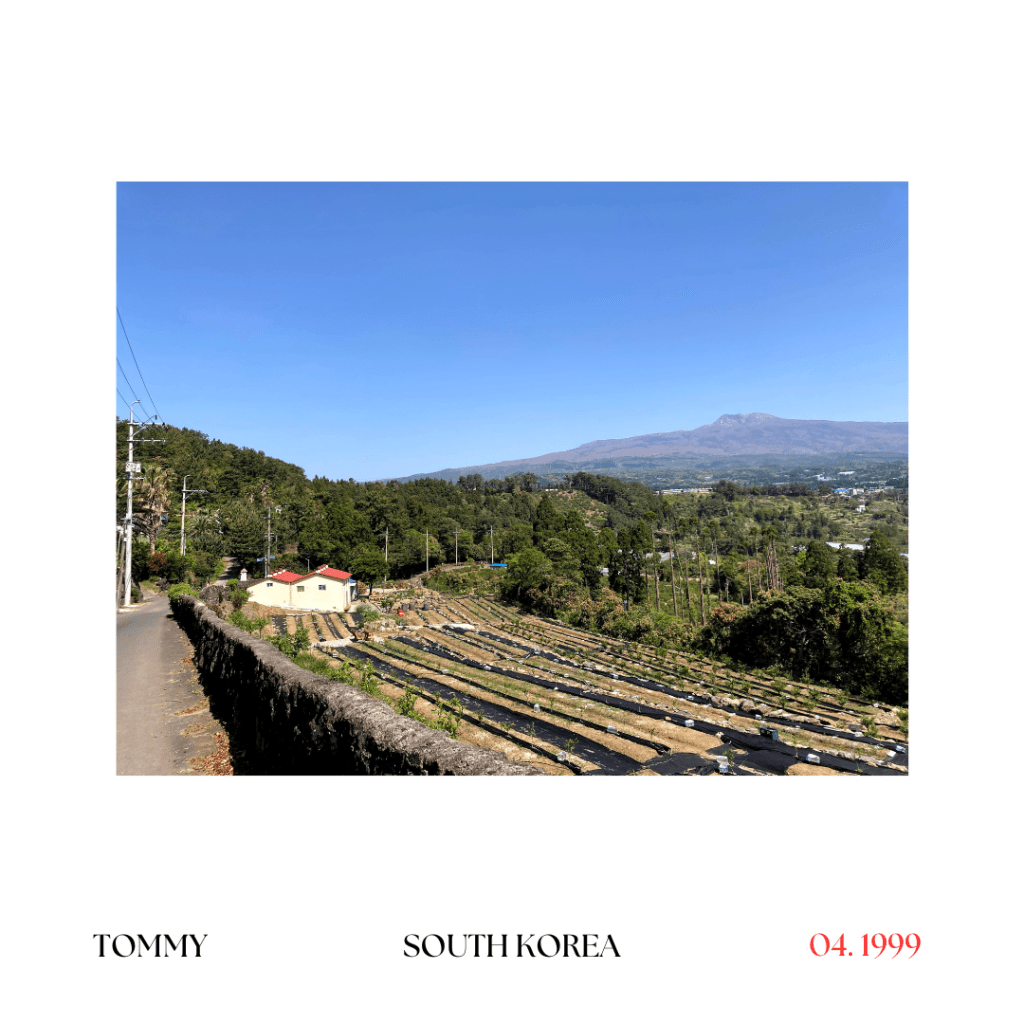
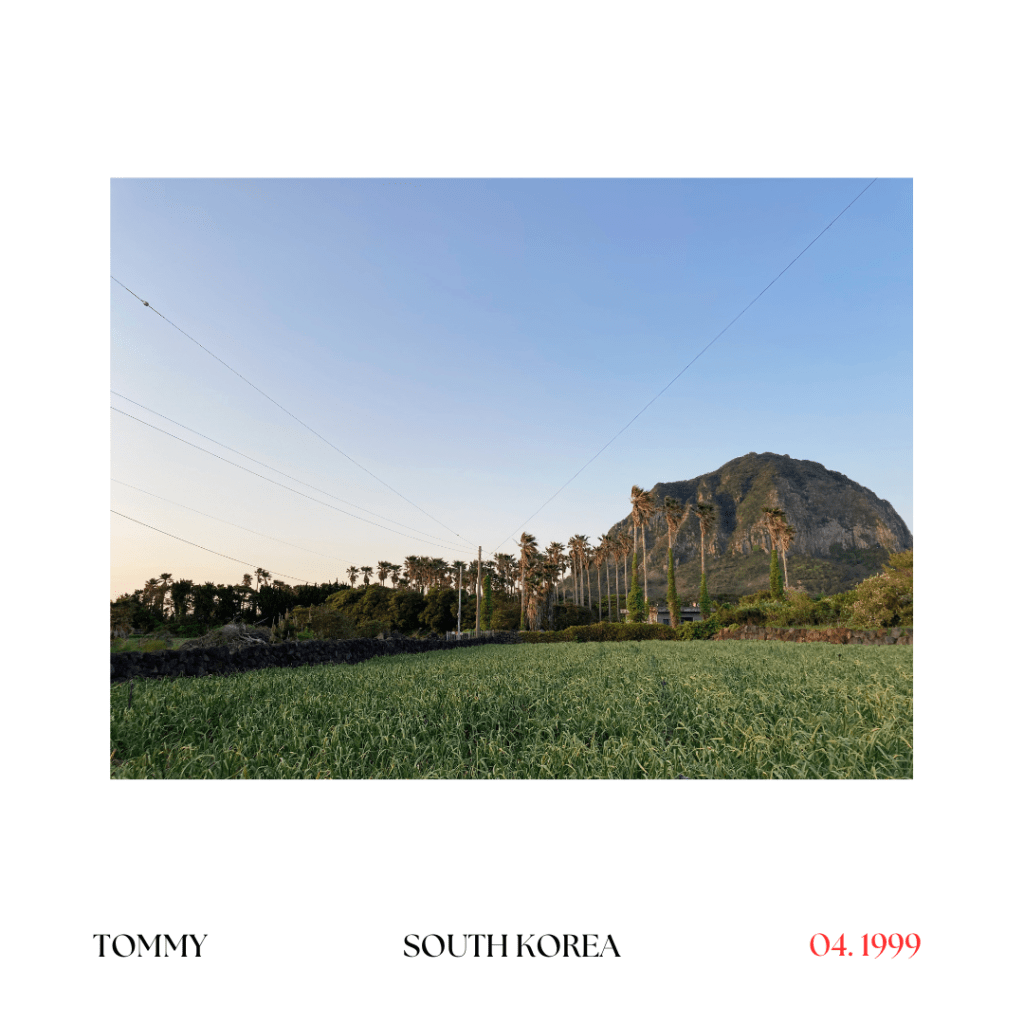
That’s a big question. I have this weird feeling like in Korean it’s 누낌 (neukkim) and I just felt good there. I really cannot explain it with words, but I just felt very comfortable. And maybe not exactly in Seoul just because it is a huge city and I wasn’t super used to that but being in the Korean countryside I felt like that is where I’m from and it was a really grounding feeling.
I think in comparison to where I’m at now in the Seattle area, I feel like it’s my home as well, I don’t really know where else I would move to, but I don’t have a connection to the land or the history or the food really, that I felt with Korea.
Can you explain 누낌 (neukkim) more?
It’s like a sixth sense, kind of. Like reading or feeling the vibe. A lot of Korean people will talk about it. For example in my language class, they would talk about it and I don’t think some of the other classmates really understood it, if you’re not Korean or you didn’t live in Korea as long.
Did you experience, I think its a bad word, but 교포 (gyopo)? Did you feel that there?
I don’t see it as a derogatory word at all because it just means ‘overseas Korean’ and I actually like using that word there. I felt like that fit me, whereas here, you know, gyopo in the states means, at least in my point of view, it has some connotations towards how you grew up and I don’t identify with the American experience, so I don’t use it here.
Do you have anything else to add about your experience living in Korea?
Yeah, I was just thinking about this the other day and I know I had mentioned earlier how that switch being flipped was really hard, but it’s one of those things where it sounds corny, but I wouldn’t be the person I am right now if I hadn’t explored that part of myself and so I just encourage anyone who’s interested in learning more about their identity, to go down that path, whether that’s moving to your birth country or just meeting a new community. It’s literally life changing.
I think aside from meeting other adoptees around my age, both going to Korea and then coming back now and meeting the Asian Adult Adoptees of Washington, that’s been really cool, it’s been a full circle moment. There are some older adoptees and younger ones too, but we all have different experiences and it’s kind of made me feel more settled in my identity. I don’t need to be Korean, I don’t need to subscribe to what maybe other folks would box me in. Probably just community experiences overall.
Can you talk about the Asian Adult Adoptees of Washington group? What do you guys do?
It’s like one of the regional US groups. So they provide programs like group programming for any BIPOC adoptee from Washington. And they had
a mentorship program I volunteered with for the past year and monthly dinners and some resources too for adoptees in the Northwest, when they go to Korea, for conferences, all that kind of stuff.
How do you feel about adoption as an adult? Do you think that your perspective about adoption has changed over the years?
Yes, most definitely I think before I wasn’t educated on the history of it and why adoption happens I was like, yeah, it’s great, you know, you get poor kids to nice homes but obviously now I know about childhood trauma and separation and white saviorism, capitalism forces that drive these agencies just to make money and profit off of other countries. I have much more critical views now.
Nicole: That’s very fair. It’s like the idea that ignorance is bliss and then, like you said, once you open it it’s hard to close. There’s a term in the adoptee community, called ‘coming out of the fog’. Have you experienced that?
I definitely understand the concept of ‘coming out of the fog’. Although I’ve heard that that phrase can be kind of a conglomerate, you know, like, boxing, all of our adoptee experiences together, like we all need to come out of the fog. So I try to be careful with that phrase just because it was a more gradual learning process for me and thus I learned about how broken the institution of adoption is in Korea or, you know, the colonialism in Korea, so it was a more gradual learning process.
I went to this guesthouse in Jeju. Just for context I think I’d lived there for about a year at that point, and I was thinking about coming back to the states, because it was really hard to move to a different country. And I was kind of at the end of my rope, so I went to Jeju for two or three weeks and I met these really cool Koreans at this hostel and it was kind of like a hippie hostel. I’d gotten the recommendation from another adoptee and so I knew the owner spoke English and they’d lived abroad for many years, but because it was during COVID, it was all Koreans staying there.
So it was cool because they all had traveled around the world and pretty much all of them spoke conversational English, which was great for me because I would have been a little lost, but I remember they were pretty fascinated by my story.
One of them told me after some soju, he was, like we have, we as in me and him, we have a similar experience because obviously he’s Korean, and he’s grown up in Korea, but he had also lived abroad for many decades, and he said that since coming back to Korea, he doesn’t feel Korean and that we are both Korean and we’re from Korea, that’s where our history and our ancestors are from, but it’s okay to not feel like we subscribe to this one kind of identity and Korean culture.
And that was such a beautiful moment, because I could tell a lot of the folks staying there, all Korean, but they maybe didn’t feel Korean anymore and they were really open to different identities within Korean culture because it can be kind of homogeneous.
And everyone will subscribe to this one movement in society there and that made me feel so much more accepted in being a Korean adoptee and being Korean like those two intersections. And I don’t know if I could have done that on my own, I needed to have other people to get that experience.
Nicole: Wow. That’s so lovely. Thank you for sharing that. Because as Korean adoptees, there are so many narratives that are forced into our head that we have had to live out to some degree. And then coming to our own consciousness of how we want to identify is very powerful, but it’s also kind of overwhelming in terms of having so much freedom because then it’s like, oh my God, we can choose exactly how we wanna feel, but great, I don’t have the terms, I don’t have the vocabulary to name it.
Tommy: Right. I think about that trip a lot because it really helped in becoming more comfortable with myself.
Nicole: It’s lovely to hear that some of these experiences are part of the overall human experience rather than exclusively the adoptee experience. It’s really nice there’s a shared, although it sounds messed up, a shared pain among like everyone or other Koreans too, and not just Korean adoptees.
Tommy: Yeah, it’s like our 한(han). I think that’s how I bonded with them during that trip, is having this pain, our 한(han) together and bonding with that and no one can take that away from you. Even if you only speak English and don’t like kimchi, you know, it’s who we are and that was really cool.
So can you talk a little bit about what you’re doing now?
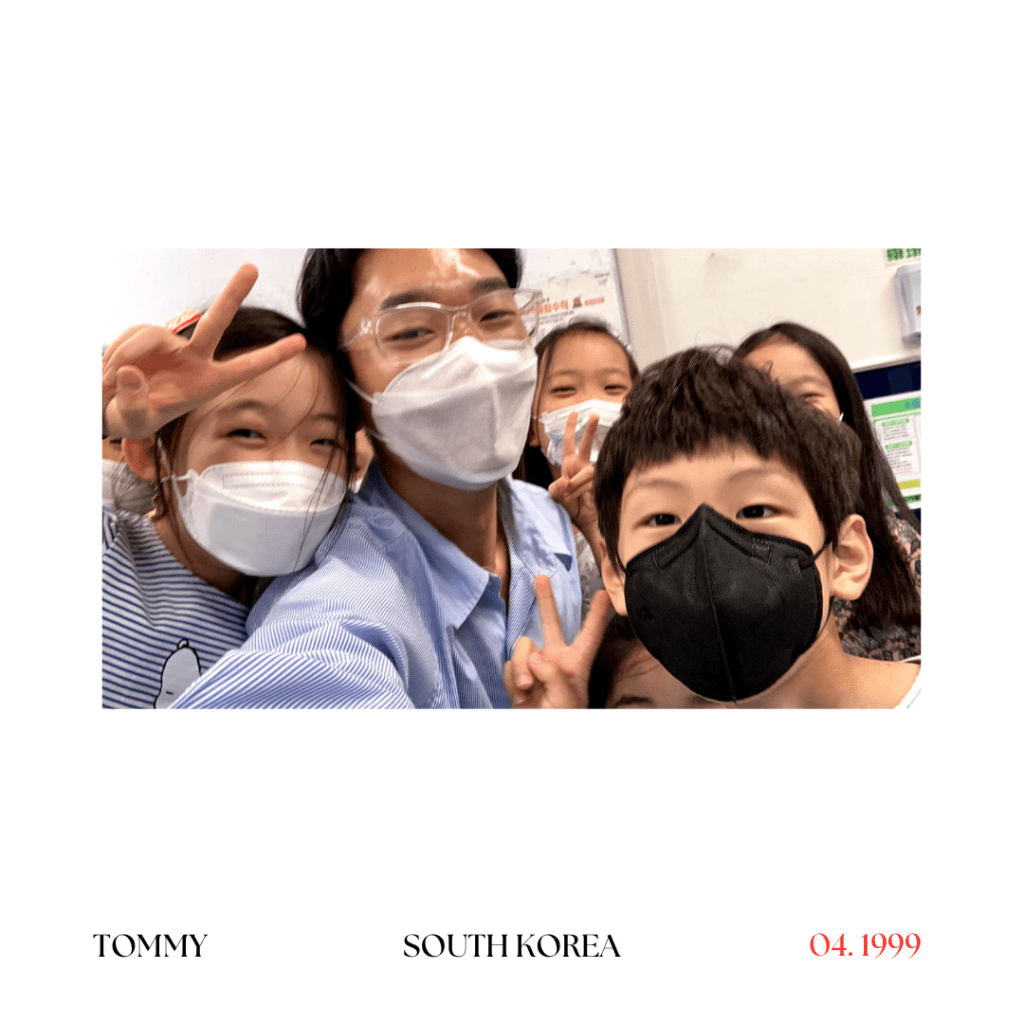
Since I’ve come back to the states, I’ve been working as a peer counselor, so it’s to little bit like therapy, although it’s more a peer to peer in a professional support kind of way where we can share lived experiences together and then using that time and that trust then kind of like case management or social work, we find them long term resources.
So that’s led me down this path and my own healing work, but a lot of the times parents I work with, they’ll ask me ‘why did you apply for this job?’
They’re a little bit confused and curious about me too, because they see my name on the emails and then I meet them and they always ask. And so I’m really happy to answer because I want to show, you know, obviously to the youth that I am working with and also to them that we all have different intersectionalities even if you’re not an adoptee, we all have different identities and different areas of life that we claim.
Something I tell a lot of the youth I work with who also have many different intersectionalities is that I know it’s really hard right now, maybe this youth is in middle school or high school and they might be getting bullied for the way they look or, you know, dealing with transphobia or stuff like that. And I think being able to honestly tell them that, yeah, we’re different and that’s good and explain that to them, because I know that sounds corny and it doesn’t help but to tell them that we have different identities and it’s really cool having these different communities and different experiences and later down the road you can find that community.
And it’s life changing and that we can do so many different things and relate to so many different people and empathize in ways that I don’t think a cis hetero white man would be able to do because they don’t have those different perspectives.
Nicole: They’re like multiple different points of connection.
Yes. Yeah, I like that. Different points of connecting with others. For the younger kids I tell them it’s like a superpower because really not many other people can do that. And, yes, it is hard now because we all just want to fit in. But I think claiming our identities to not fit in is really cool and I think being able to tell them that genuinely, you know there’s a difference when someone just tells you like ohh it’s gonna get better, just keep working versus being like, no, this is really a cool thing that we are different and we have different identities and I know it will get better because I’m going through that process right now and I think sharing that with other people it’s just so powerful.
Nicole: Yeah and it’s really cool because sorry, that’s even reductive to say, ‘It’s really cool’. It’s really transformational when you’re hearing it from someone who means it versus someone who doesn’t, and people are receptive and they can tell. So I bet that they can tell that you really mean it. And like you said, it’s coming from a very honest perspective because it’s your lived experience and you know that it will become brighter and can lead you to places you would never expect.
Tommy: I think there’s a lot of adoptees in social work and counseling. So it’s cool and I think a lot of us have realized that through our lived experiences that we can, because we are currently healing and recovering and being more confident that we can share that with others if they want. So that’s the plan for what I’m doing right now.
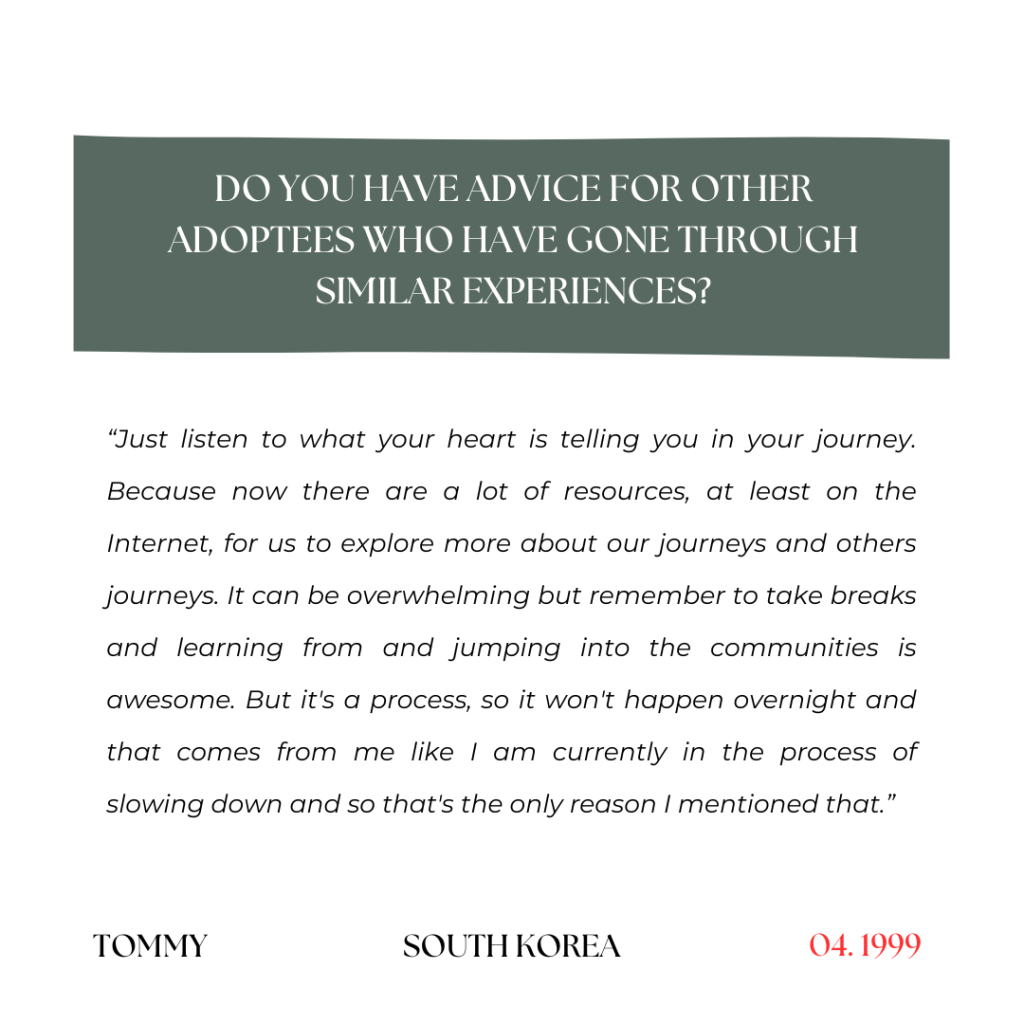
Do you have any advice for other adoptees who have gone through similar experiences?
Just listen to what your heart is telling you in your journey. Because now there are a lot of resources, at least on the Internet, for us to explore more about our journeys and others journeys. It can be overwhelming but remember to take breaks and learning from and jumping into the communities is awesome. But it’s a process, so it won’t happen overnight and that comes from me like I am currently in the process of slowing down and so that’s the only reason I mentioned that.
Enter your email below to follow along.
© Rebirth Adoptee Stories

 Rebirth