
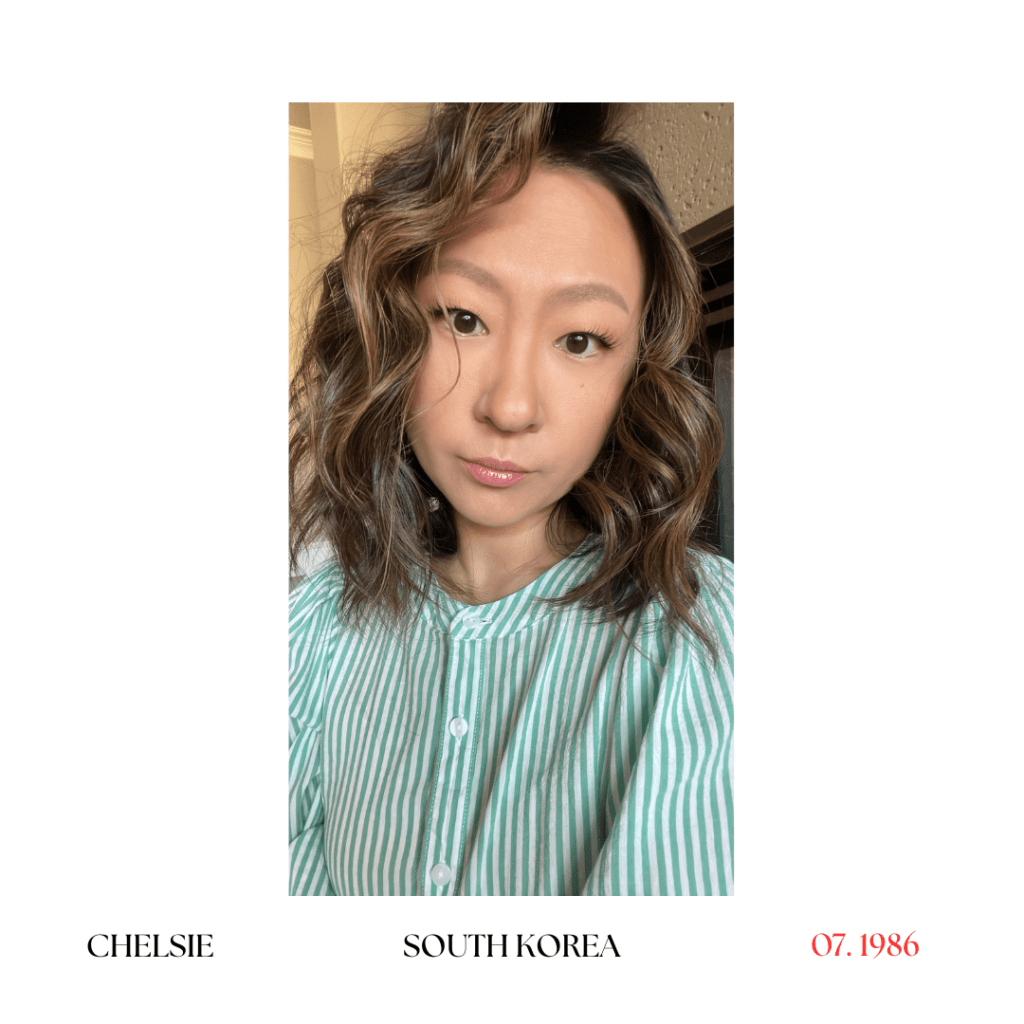
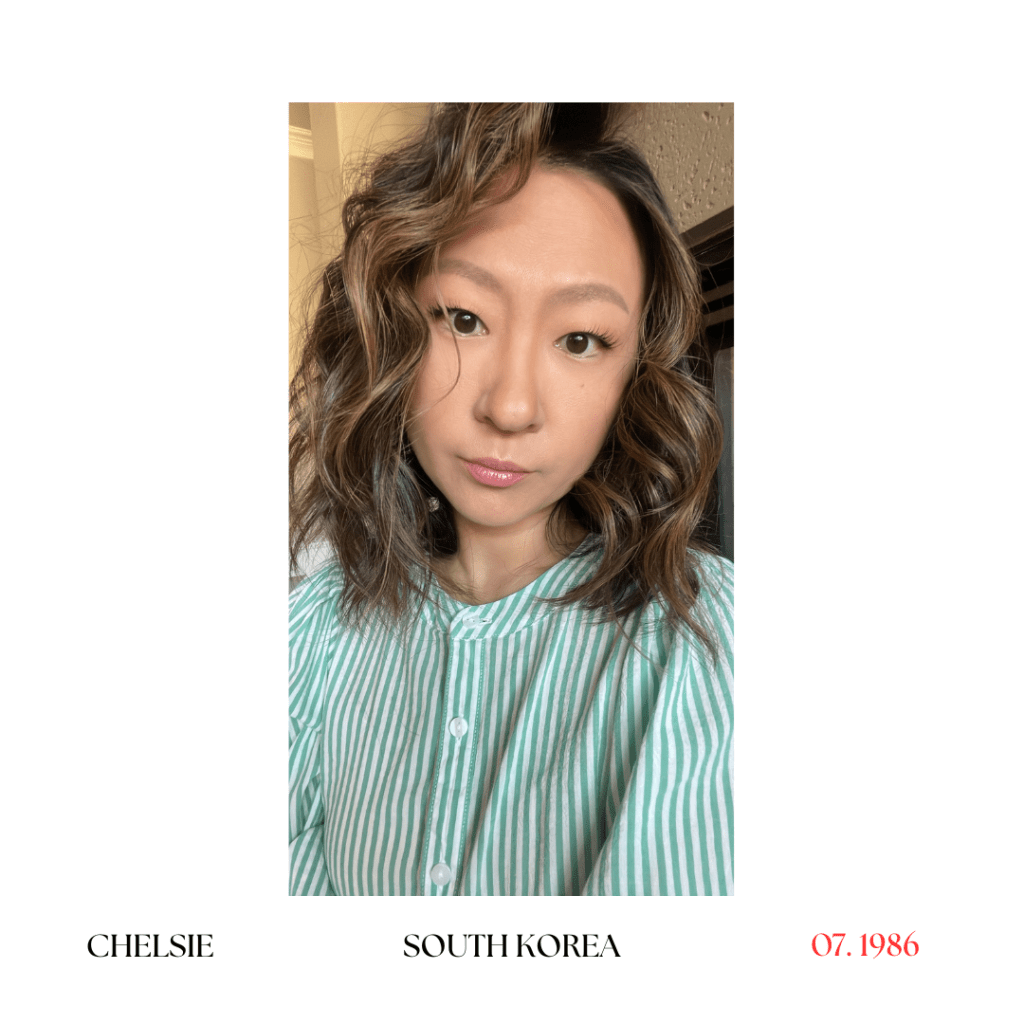
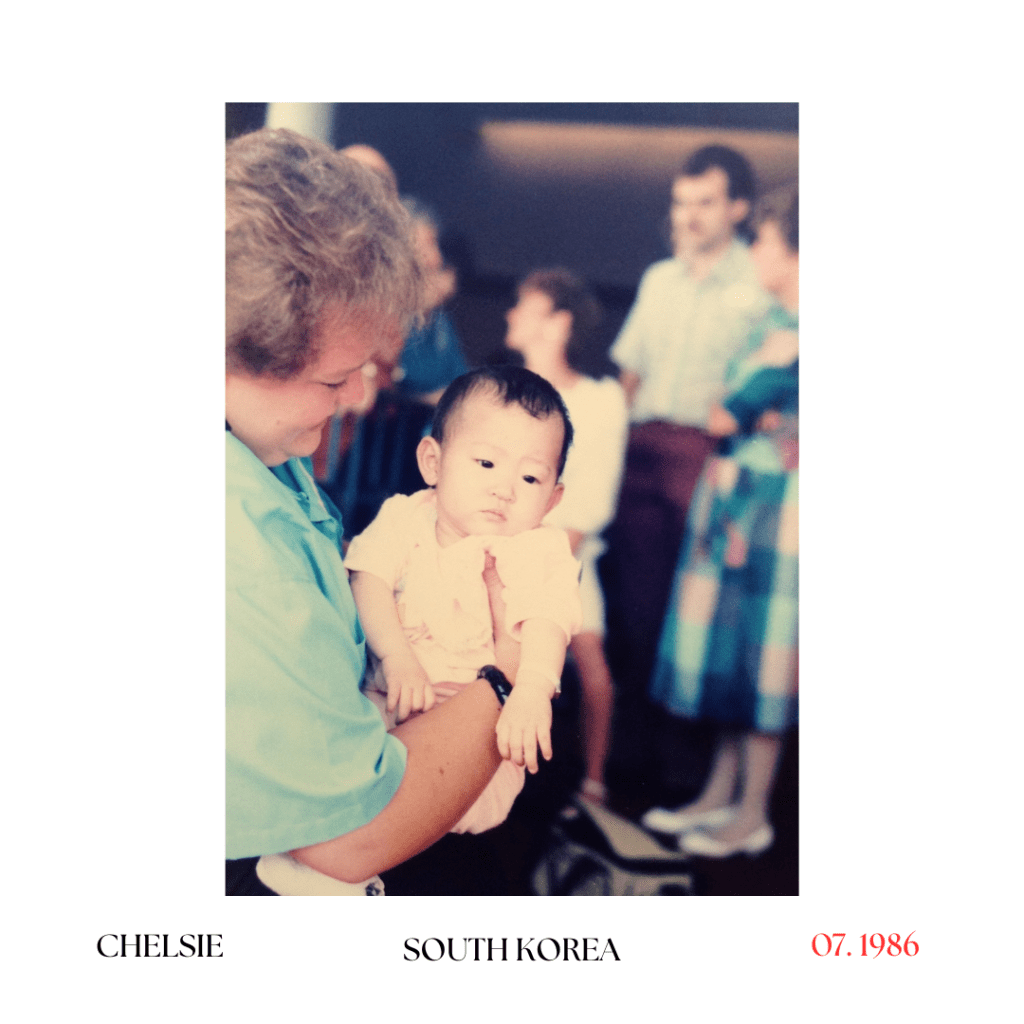
I grew up in a small town in Buffalo, Minnesota, and probably had like 8,000 people that lived there back then. I live in the Dallas Fort Worth area now. I was 10 months old when I was adopted from Jinju, South Korea.
Many people would ask me questions like, ‘who are your real parents?’ And if I said, ‘I’m adopted’. Kids would say, ‘Oh, I’m so sorry. I didn’t know that’. I’d say, ‘it’s okay. They’re just my parents, so it’s all good’. Or when I got dropped off at birthday parties, people would ask, ‘who’s that lady? Who’s the lady that brought you?’, ‘My mom.’ I think it bothered me, but it also didn’t bother me because I knew it was so obvious that I was adopted. So, I was always open to people being curious and asking questions and I was like, ‘okay, this is going to be my life’.
I think I became more insecure about it in middle school. But then at the end of high school, I really felt this is who I am . At the end of high school, I was struggling with my identity and people would ask, ‘well, where are you from?’ And I’m like, ‘well, I’m from Buffalo’, and then they would say, ‘well were you born in Buffalo’, ‘well, no, I wasn’t born there’. But what do I know about something that happened when I was a baby? After high school is when I had the question of, ‘who am I? Am I Korean? Am I Korean American? I don’t think I’m a Korean American. I don’t think I’m Korean. I don’t feel comfortable in Korea. Am I American? I’m a Korean American and Korean American adoptee, am I a Korean adoptee? My mom would say, ‘you’re Korean adopted American’ but it bothered me that she would tell me my identity.
I thought, so that’s how you identify me. But is that really my identity? Then through college I really tried to figure out who I am and that was really troublesome for me. People would say I’m sorry you’re adopted and I would say that it’s fine. But then it leads to further discovery of wait, who am I? Because I’m being told who I am from my white parents, which means they’re telling me who I am based on how they perceive me, which is different than how I perceive myself.
I think everyone has their own identity and how you identify yourself is what’s most important. And by the time I was out of college, and I had been stressing myself out, I needed to discover who I am. I think by that time, I was approaching my mid 20s and I thought, actually, ‘I’m just, Chelsie’. And sometimes I feel like I can say I’m a Korean adoptee and other times I can just say I’m Korean. If I’m speaking Korean or if I am around people that are not Korean to them I’m Korean. So, I guess I’m just Chelsie. And I think if you know me, you know that Chelsie is Chelsie. And whether I’m Korean American adopted, it doesn’t matter because it’s kind of all who I am. And I kind of gave up on the whole ‘I need a title to describe who I am’. I was like, actually, I’m just Chelsie. The change for me was when I started going to Korean culture camp. I grew up going to Camp Kimchi in Brainerd that’s family based. And I was super scared going as a kid because it freaked me out to be around so many other Korean kids. And back then, I made pen pals with some of the girls in my class and kept going back each year.
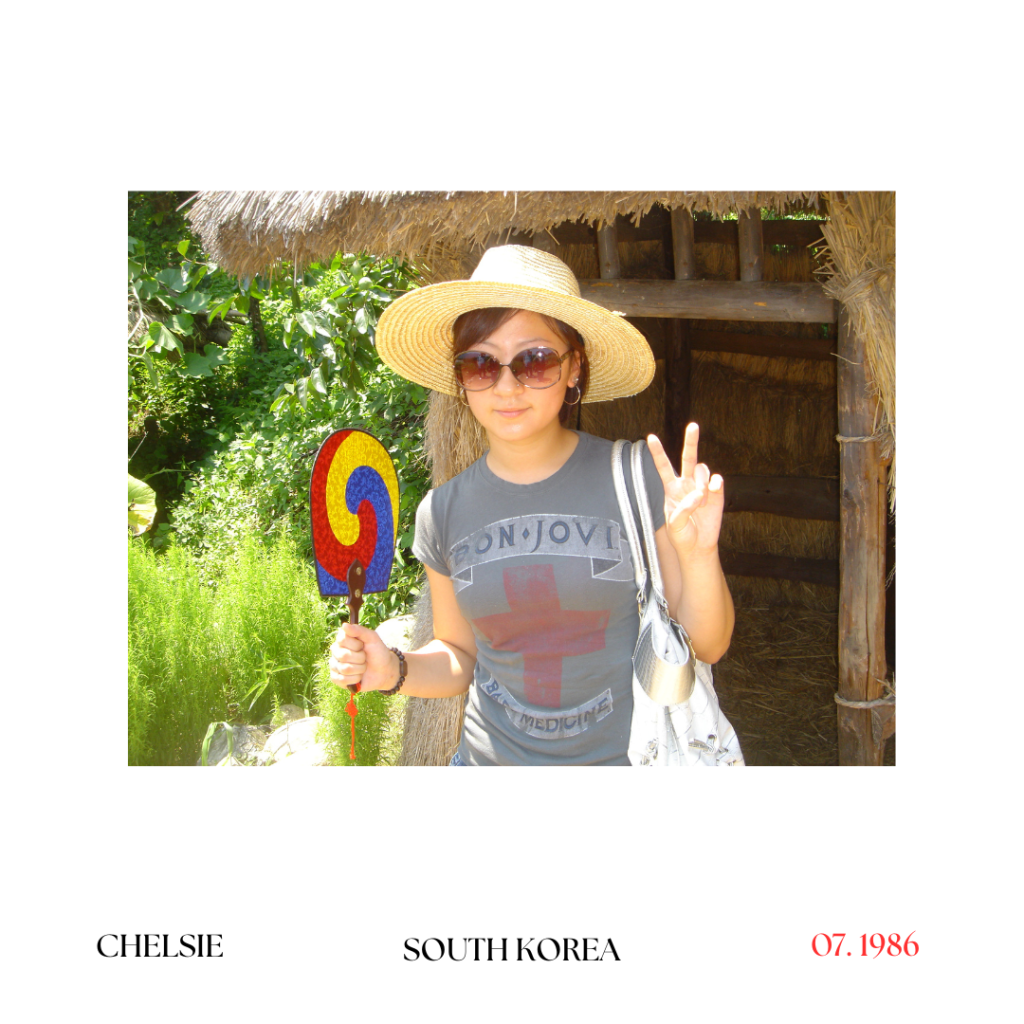
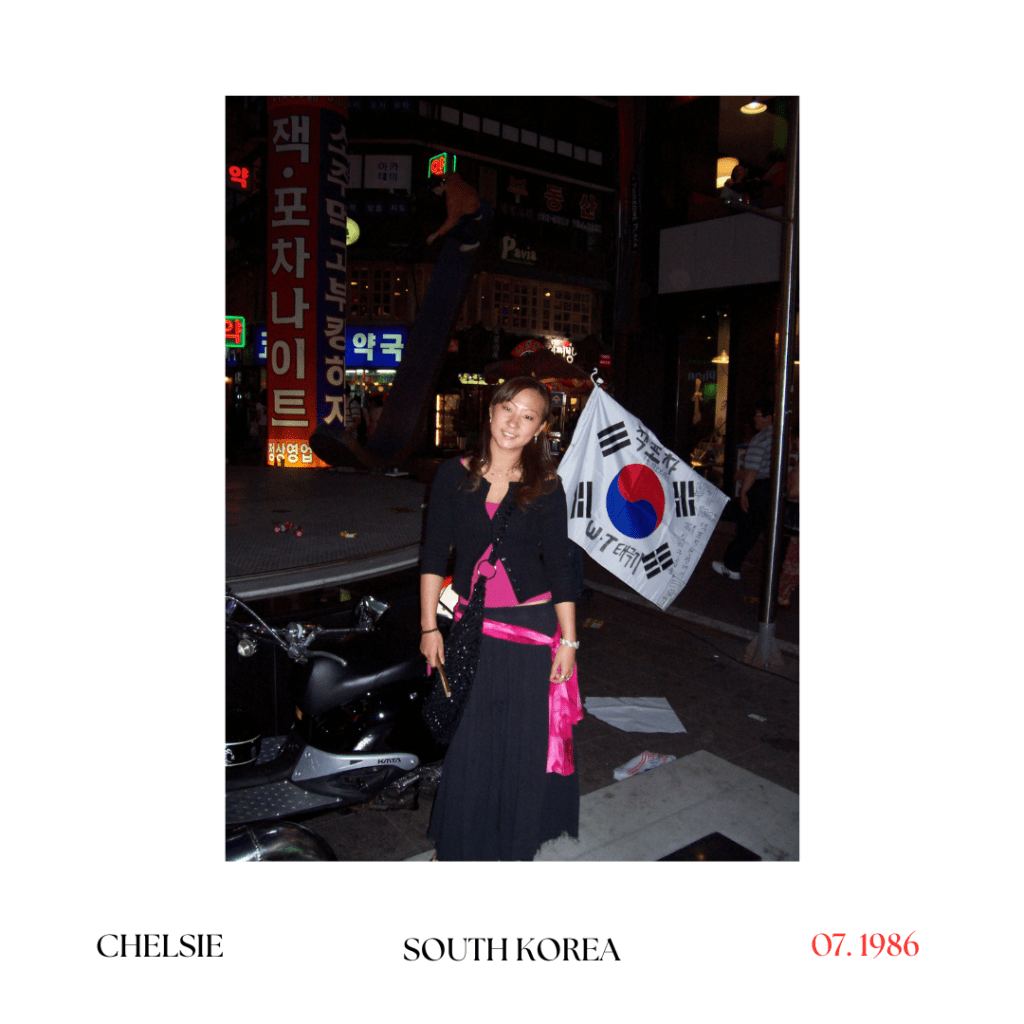
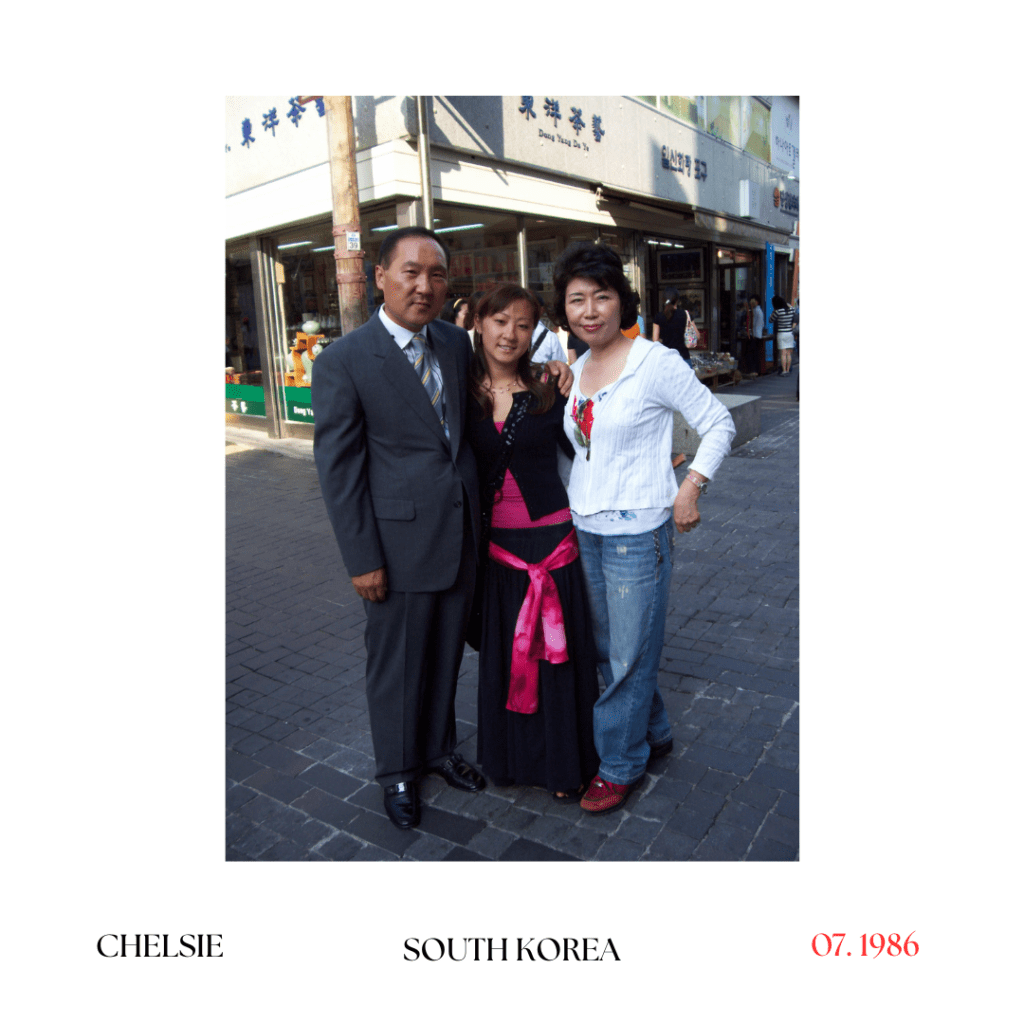
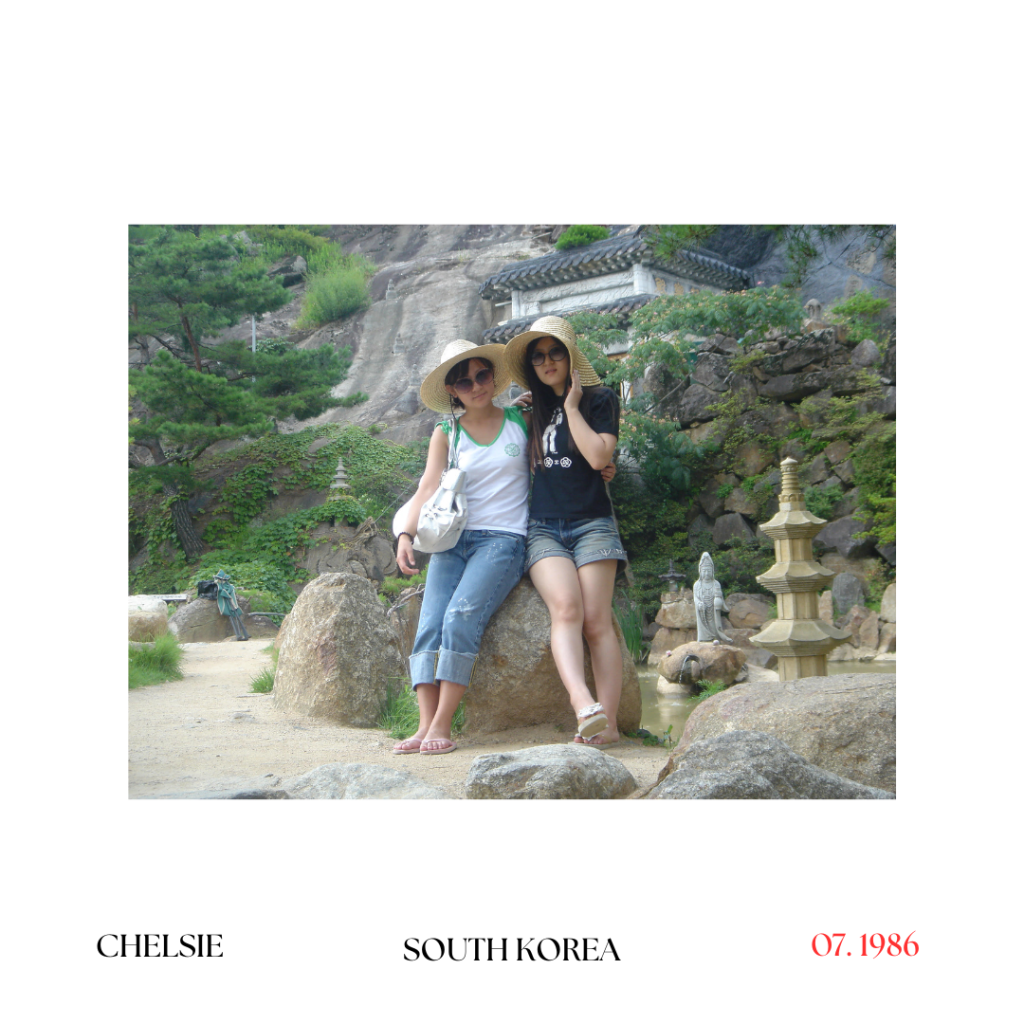
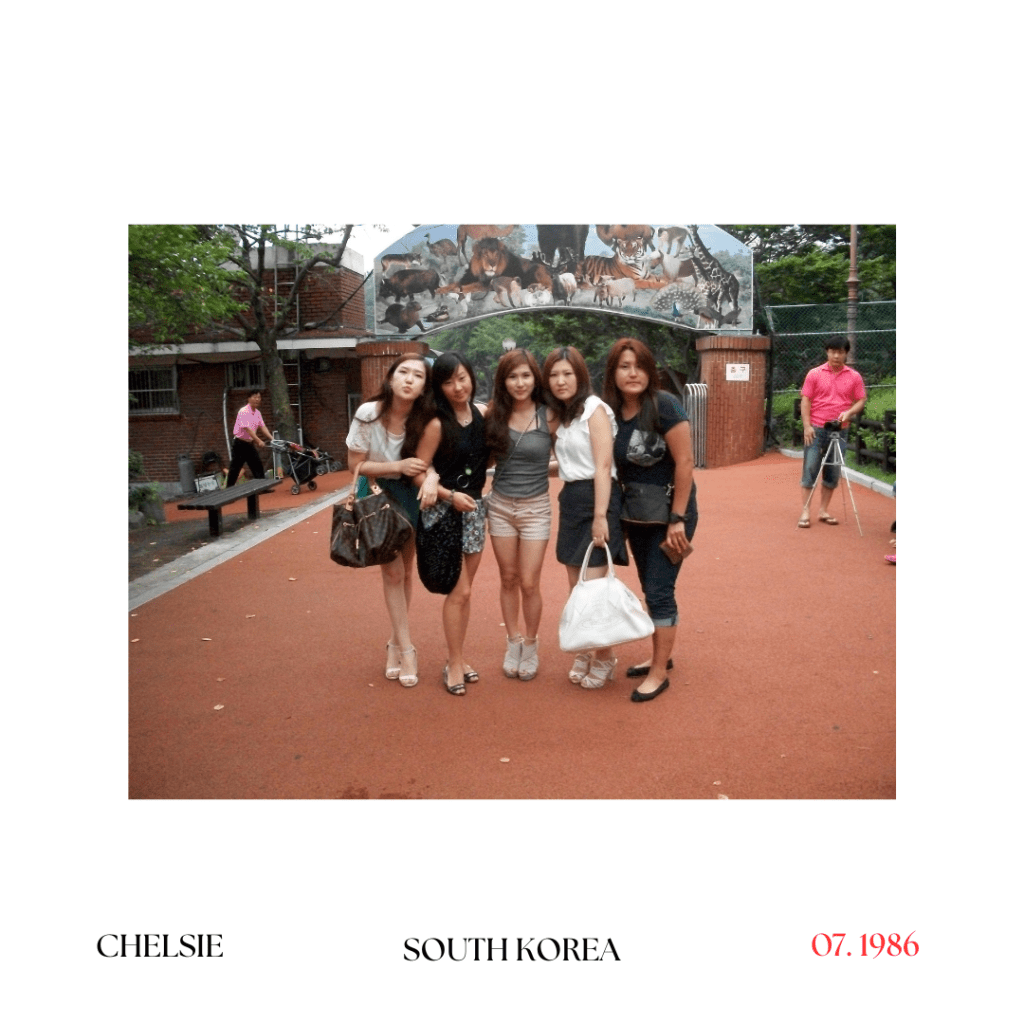
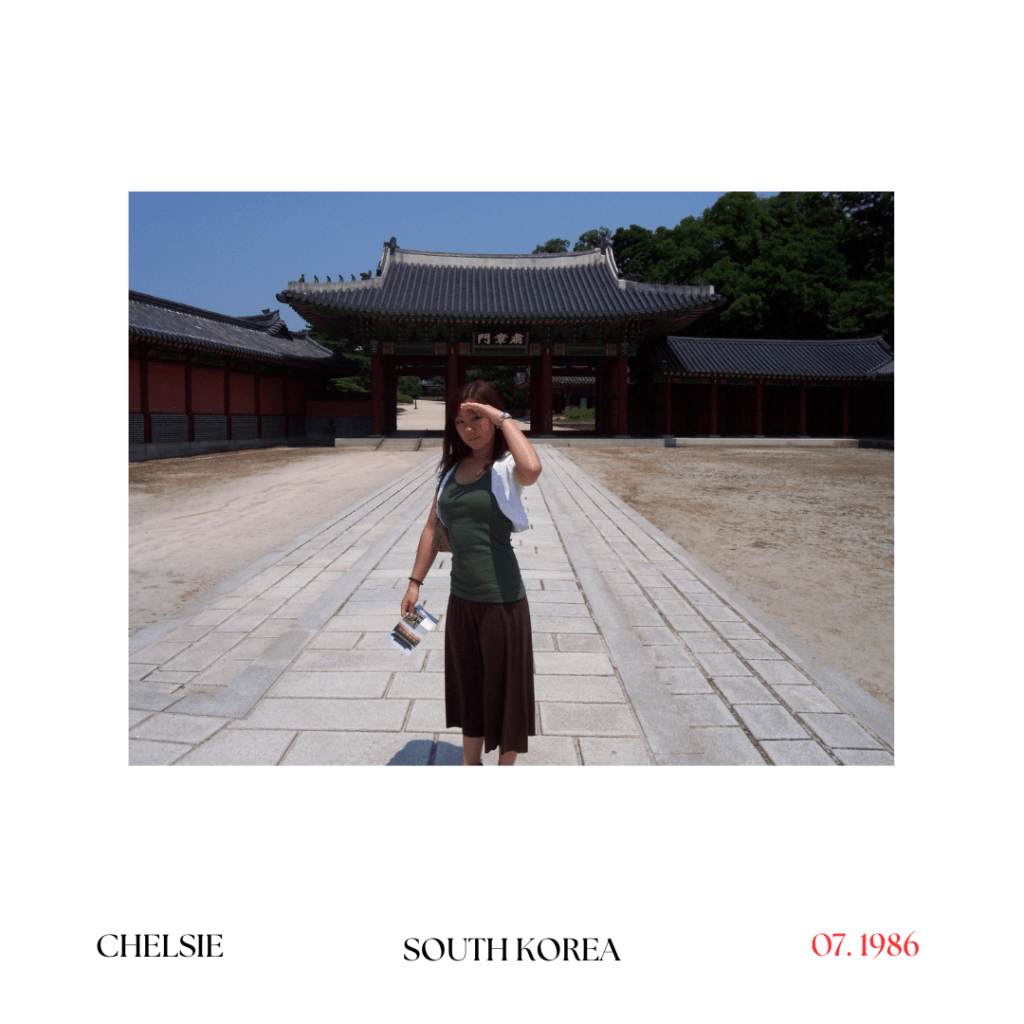
By the time I was in high school, I had built up strong enough friendships with a bunch of other campers. So we did a trip to Korea together when I graduated high school. Me and two other Korean adoptees from Camp Kimchi, one of our parents went, but she was a minister, so she was planning on doing some ministry work. We had our own apartment that we rented out. We stayed there, and we would meet up with her for lunch or have her help us with stuff, help us navigate the subway or whatever. So we had some flexibility to be our own people but she was also there to help us which we really needed.
Nicole: How did you get Involved with KIM School (Korean Institute of Minnesota)?
My high school boyfriend was a Korean adoptee who I met through Camp Kimchi. And when I started going to school at the U (University of Minnesota) I felt you had a lot of things you wanted to do, I want to go to this party or I want to go to this restaurant or I want to go meet these people. And he was an introvert, so we broke up in the first month of college. But his brother had a friend because we would still kind of hang out. Then I met his brother’s friend, and then he ended up being my boyfriend, Simon and he was already doing KIM school when I met him. And every Saturday morning, he was like, ‘I have to go to KIM school’. I’m like, ‘what the heck is Kim school’. He’s like, ‘I just hang out with these Korean adopted kids, you should come’. I started going with him and eventually I started working there.
Nicole: And then we met!
So, probably 10 years ago, I joined the AK Connection in Minneapolis. It was created in 2000 by a couple adoptees that wanted to put on some social events to meet other adoptees. I joined probably in 2012 or 2013 as a board member. I had really never been to any of the events but one of the other board members, her name’s Janessa was on the board and she was like, ‘we need another board member, we’re very male strong and with all your work with Camp Kimchi and KIM School I think you’d be a really good addition’. I showed up at the Mirror of Korea (a restaurant) and they asked me to be on the board, and I said, ‘yeah, I love helping the adoptee community’. Because if I didn’t go to Camp Kimchi, as a kid, I don’t think I would have started my birth search when I did and would have had such support and positive feedback with all my trips going back to Korea, so I’m really grateful for those relationships.
So by that time, 10 years ago, I realized that I felt really lucky. I have my own family. I do have a relationship with them. Everything has been good. My parents, I met my birth family, they came to the US once. So the stars aligned for this for me and I don’t know how it happened, but I wanted to be a positive story for people and to be optimistic and open, but when I joined AK Connection, I realized that I was one of the younger adoptees in that group because it’s adults so it was really rare that someone was in their 20s, most of them were in their 30s or 40s, even in their early 50s. And they were so negative. They really had this kind of a victim mindset like that their life has been ruined because of my Korean family or my life has been ruined because my adoptive family doesn’t understand me.
I know a lot of them struggled, keeping jobs, they struggled keeping marriages and relationships, or even keeping relationships with their kids. It was really sad to me, I felt like I really wanted to participate in that community after I had started meeting people, because there was so much trauma in that group of people.
When you guys were adopted and from when I was adopted, I feel like it was a little bit closer when the psychology of adoption started changing. Social workers were more aware of what they needed to do and how to prepare families to have a more successful family connection in bringing in these biracial adoptees and having multicultural families. That actually changed my life to just joining the AK Connection in my late 20s. And seeing all the trauma about these other older adoptees, because I had only really been working with kids and the kids were so bright eyed and bushy tailed.
The first time, I was 18, I had just graduated and went for maybe two weeks, and stayed in a hotel. That trip was very big for me because I remember once I got off the plane, I just started crying. I couldn’t even describe the feeling because it was something I had never felt before. And during that trip, one of my friends had met his birth family when he was in seventh grade so he wanted to see them again. And we got to go with him and have dinner with his birth family. And he had a younger and an older sister as well. And it was so emotional for me, seeing them together. I felt like it was really special. I wanted that.
But I was also thinking, he’s so lucky. Sometimes it’s luck in how you find your birth family. And I wasn’t confident that if I had started a birth search, I would have been able to accept any type of result. That really scared me. So I decided I’m not ready because it could be great, which would be the goal, but it could be terrible, and forever heartbreaking. And it could potentially ruin how I feel about things for the rest of my life. So I was scared, but I knew it was something I wanted to do after that trip.
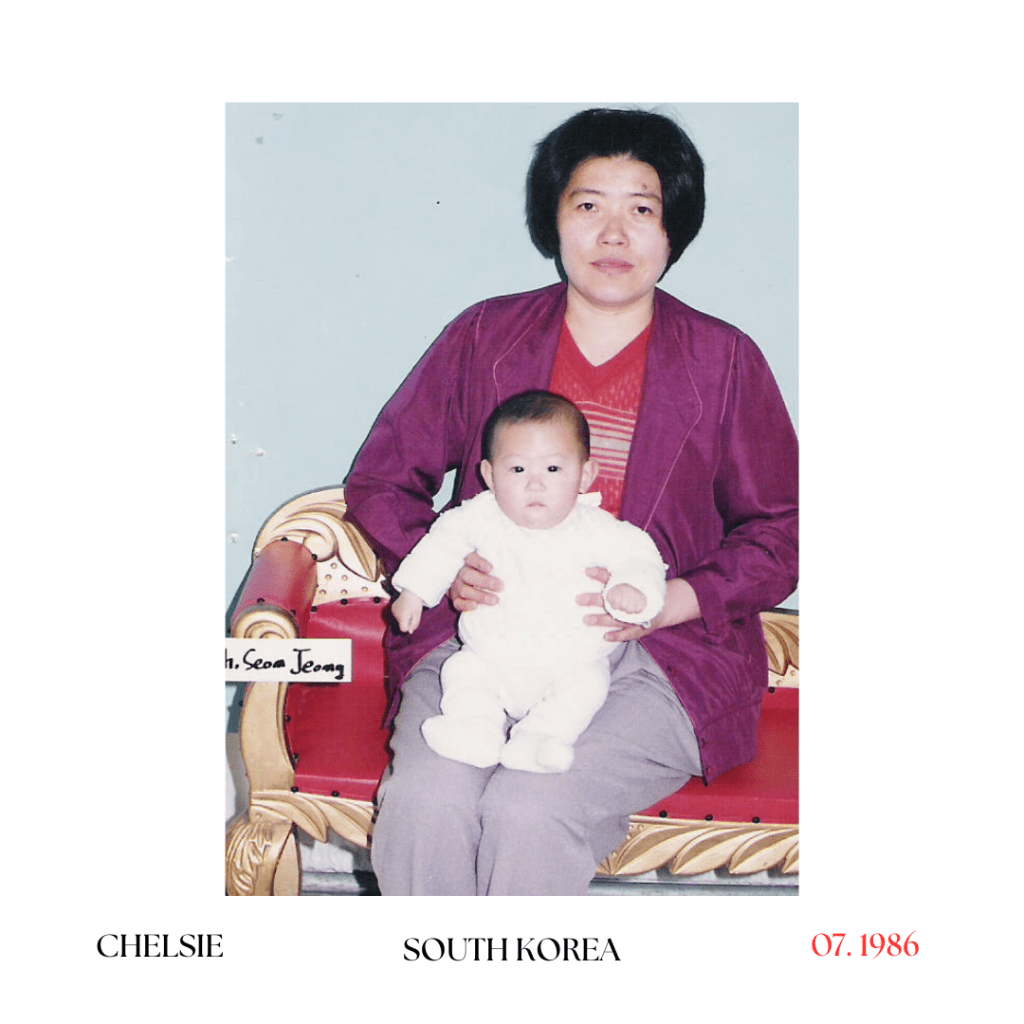
I did go to Eastern (adoption agency in South Korea) because all three of us were adopted from Eastern, and the other two of us were able to look at our files. And my file was relatively big which was weird. We sat in a room with a social worker, she had our files, and she asked, ‘who wants to go first?’ And I said, ‘Okay, I guess I’ll go first’. And she opens it up, and there’s all this information. And I was so surprised. Then she said, ‘oh, your foster parents are listed here. If you want, we can contact them’. And I met my foster family on that trip, which I’m not gonna lie, felt weird. I thought you’re not my parents. You took care of me. They had two older sons and they brought their sons to meet me and their sons were like, ‘oh my god, we remember you’. I was like, ‘really?’ And they said, ‘yeah’, because I think I was their last baby.
And they said that I had such a mild temperament and I was so easy. And the boys would play with me all the time. And so they asked, ‘should we adopt her?’ So they said the reason they remembered me was because they had considered adopting me. It was kind of odd because they got sad. And it was kind of weird. And I tried to acknowledge their sorrow because I don’t know what that’s like, but it was really sad for them.
It brings up other things too, for other people, for sure. And I was aware of that. And I needed to be prepared for that. And then after we looked at my file, we looked at my friend’s file, and he had nothing in there, he found out that his birthday was made up, he was found on the doorstep of a fire station, his Korean name was made up. And he was totally devastated. I remember he didn’t want to do anything after we left. And when we went back to our hotel, he cried for two days. And that was really big for me too because I think I also cried watching him cry because it was really heartbreaking. And I don’t think he ever went back to Korea after that. I think it was a really devastating blow for him, you know, it’s interesting, you see so much heartbreak.
Nicole: When you were at Eastern did you get to hold the babies?
Yes, I did
Nicole: It made me cry
I know that was really sad. I actually talk about that when I share my experiences going to Korea going to the adoption agency. I said that to my husband about how strongly that sat with me seeing the babies, you just know they’re so innocent, and now their life has already been set on a very difficult path.
I feel like I want to adopt, now that I have two kids, I always think if I had another one I would want to adopt. I think my experiences with adoptees would make me a more understanding parent and also being adopted and since my husband is Chinese I kind of think maybe having a Chinese adoptee would be better because then at least that kid can have a special connection with their dad being Chinese or something like that, but this is my own fantasy I don’t know if it would ever happen, I just think about it.
But I am not for or against adoption to be honest because every family and every child that’s adopted is different. I mean there’s a lot of biological families that are shit shows, so I mean adoption is family, it’s just non-blood family and so if you want to choose non-blood family and make them a shit show then it is what it is.
How was your experience meeting your birth family?
So, I wanted to go back to Korea and kind of try out my skills now I’m feeling more confident and more comfortable and I decided then to do my birth search. I think it was May, or something, the end of my sophomore year. I went to Children’s (Children’s Home Society, an adoption agency in Minnesota), and I said, ‘I want to do a search’. And they told me how much it was. And it was expensive because I had no money at the time. And you had to write a letter, and you had to send a picture. So I had my friends help me write the letter, so I didn’t have to pay for translation fees.
I figured out you can search for any family member, but it was a certain amount of money per person. If you want to search for your dad, it costs as much, and for your mom it costs this much. And I think I only had enough money to do one. I searched for my mom, I wanted to do my mom first. And then I thought maybe this is good, you know? They were very clear at the beginning, saying that you might never find anything, so please be really open to the fact that nothing could happen. And I’m like, ‘yeah, I get it cool, here’s my money’.
So then it was like two months after that that I went to Korea. But I didn’t go back to Korea at that time thinking I wanted to meet my birth family. I just went because I wanted to experience Korea again, now that I know a little bit more Korean because I felt like an idiot the first time I went to Korea, right, like you’re Korean, and people look at me.
My mom didn’t want me to go by myself, but I had told her I wanted to go by myself. And she was like, ‘I’m just not comfortable with you going to a foreign country by yourself, I’m gonna go with you’. And we didn’t even have any plans. We didn’t do a tour. We were just going out on our own everyday and exploring different things. And back, then, I had to check my email on the computer in the lobby. And my mom was taking a nap or something because she was jet-lagged. So I went down there and I checked my email. And I got an email from my social worker in Korea who I had met two years previously and she said, ‘Hey, come to the agency on Saturday and meet your birth dad’. And I was really confused because I didn’t do a birth dad search.
And I was really freaked out because I didn’t feel prepared. I didn’t come here expecting to do this. I’m really, I’m not prepared. And my mom was not prepared either. I feel like this trip was super hard. And so then we went to the agency on Saturday, and we found out that my birth dad went to jail when my mom was pregnant with me, and when he was in there, my birth mom ran away. So my older sister was kept by my grandparents, my dad’s parents because she was six. But my grandparents were like we can’t take a baby, it’s too much. So my aunt and uncle took me but my aunt and uncle, my dad’s brother, and his wife also had a baby. I have a cousin that’s nine months older than me. And Korea was very poor back then, my mom gave birth to me in the house. I came out on the kitchen floor because they had no money.
So anyway, she ran away and we got divvied up and then after some time my aunt and uncle were like, ‘we can’t take care of her, we don’t have enough money to raise this baby’. And they looked at me as an orphan. They’re like ‘she doesn’t have a mom or dad, what can we do?’ They are the ones that put me up for adoption. And they claimed themselves to be my parents.
So when the birth family search started, and I was looking for my birth mom, they contacted my dad’s brother’s wife. That’s how I got in contact with him. So I met him at the agency. My mom cried through the whole thing. He asked me to go back home with him and meet the rest of the family. He said, ‘your grandparents want to meet you’. And this again, was a big moment for me, because he’s just a stranger. I wasn’t crying when I met him, I think I was so shocked. And he said, ‘I want you to come home with me’. And I’m like, ‘where’s that?’ He’s like, ‘it’s three hours away’. And in my mind, I’m like, ‘are you gonna kill us? What if you’re not my real birth family this is gonna be super weird’. So all these thoughts are going through my head. And he said, ‘I want you to come, just go back to your hotel and pack a bag. And you guys can stay at my house for three days and then I’ll bring you back here’. And I thought, ‘holy shit, am I gonna get into a stranger’s car and go to his house’. And I looked at my mom, and she was crying and I said, ‘what should we do?’ And she said, ‘when you look back on this moment, one day, what will you have wanted to do?’ ‘I would want to go, I would get in the stranger’s car’. And we did.
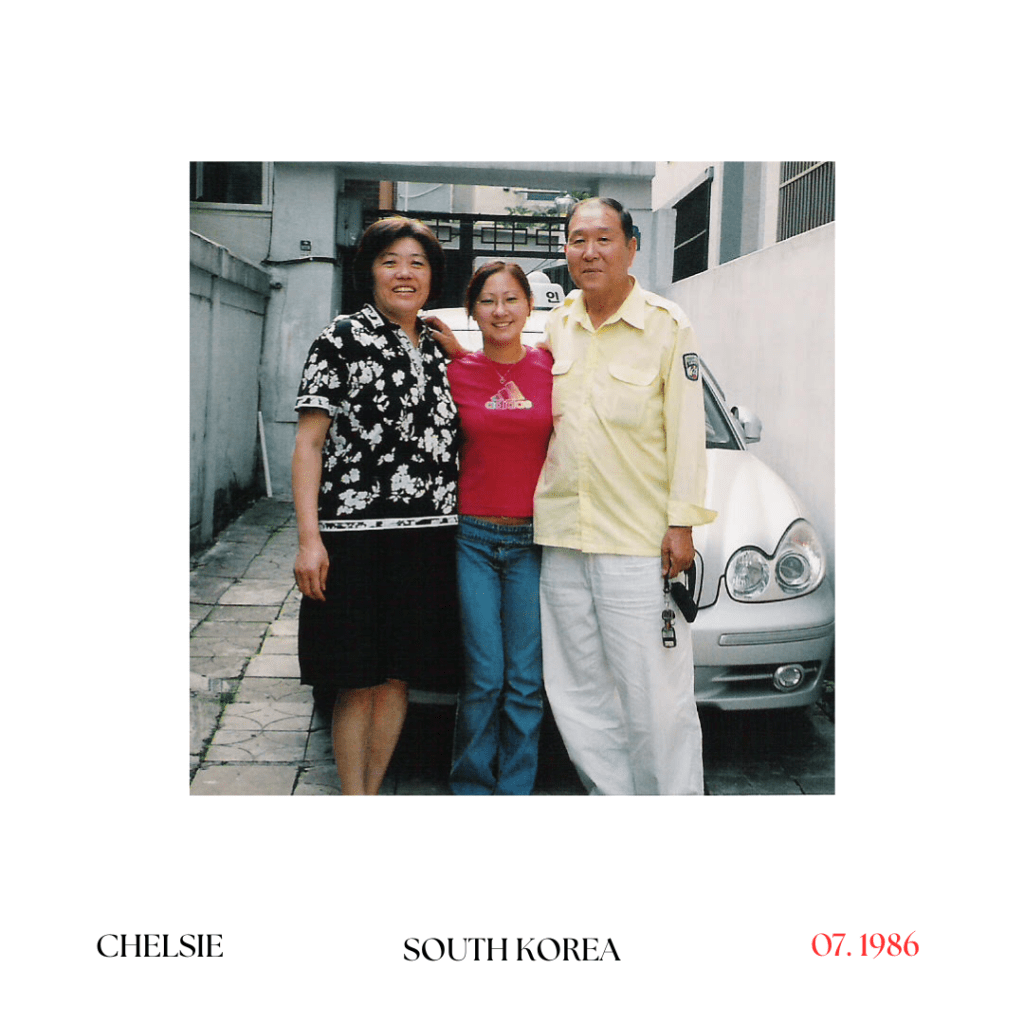
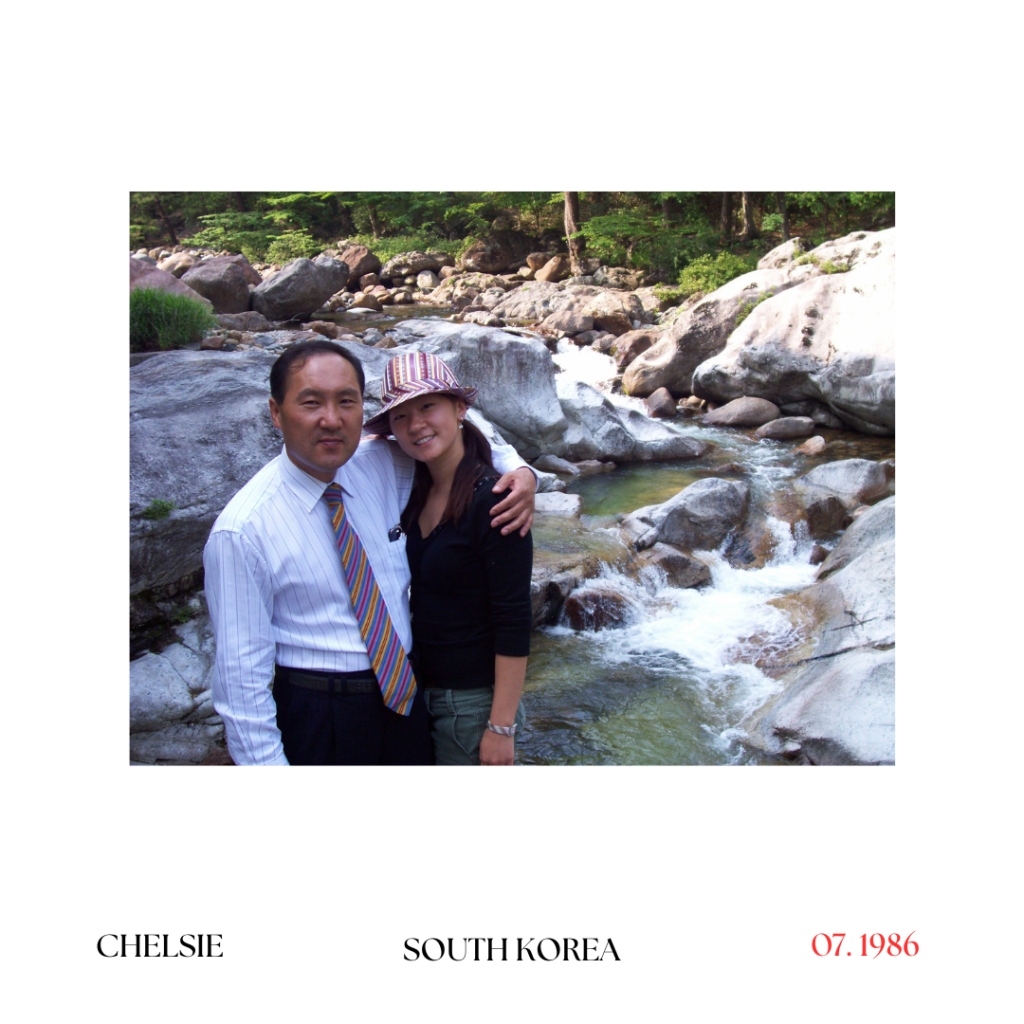
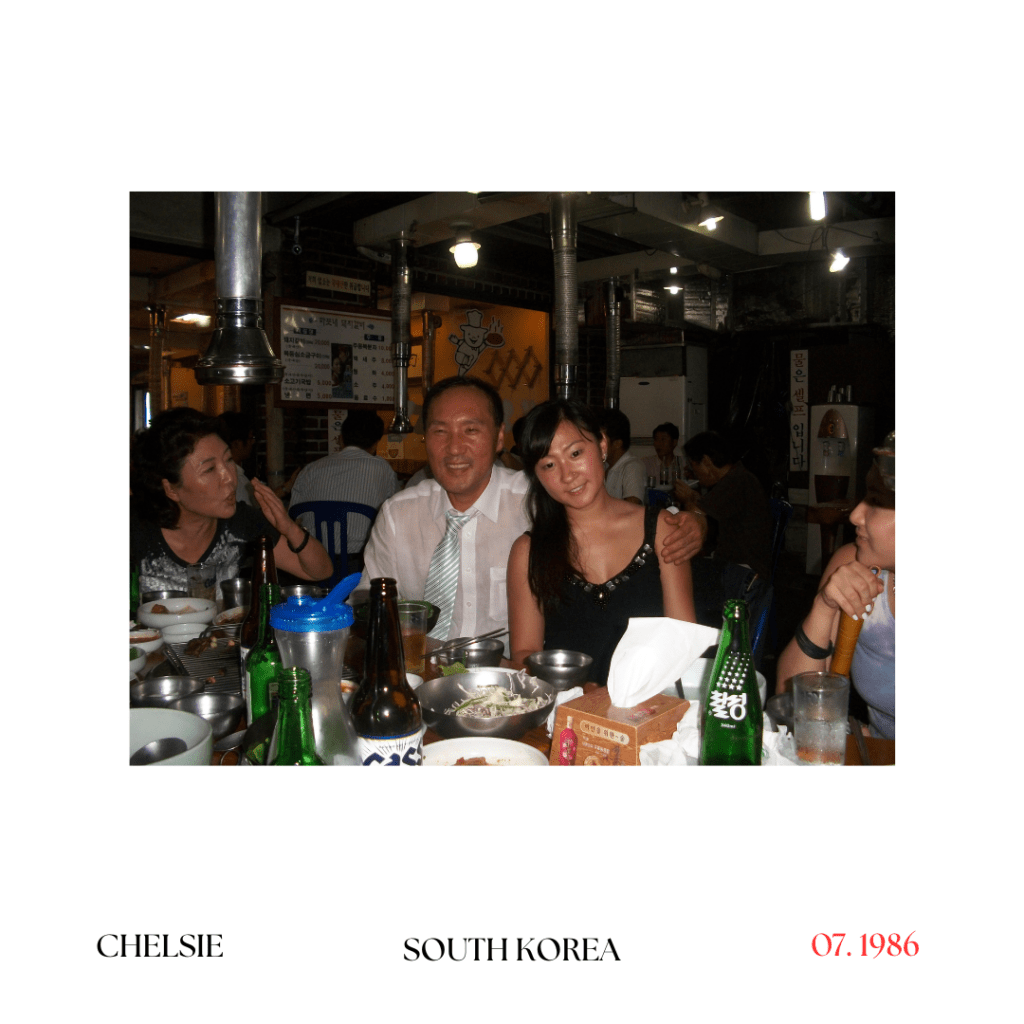
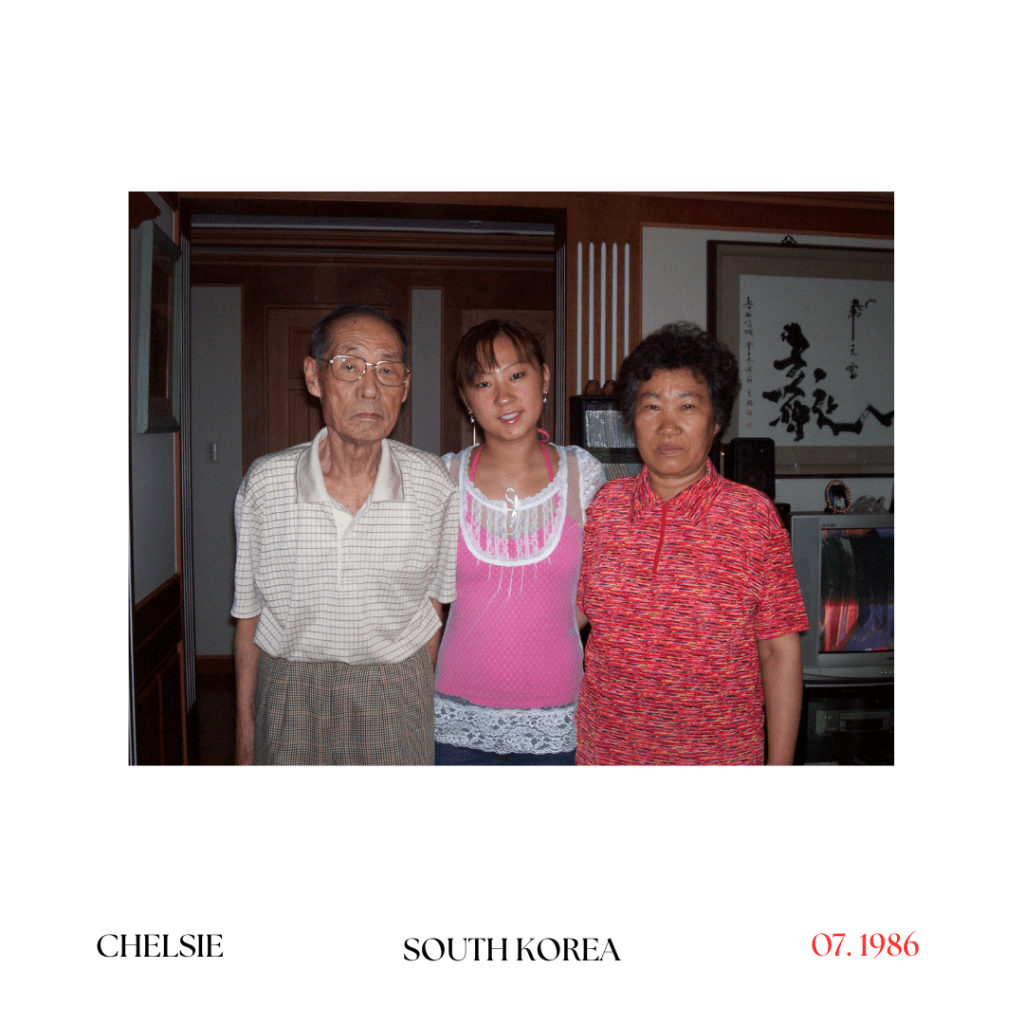
And then he drove us to his house, and I met my grandparents and my aunt and uncle, who gave me up for adoption. They could not stop crying, my grandma couldn’t stop crying, my mom was crying. That’s when I met my little siblings for the first time. My dad had remarried. And I had two half siblings, they were in middle school or elementary school, really little. And that’s when I was able to ask the questions about what happened. And he answered everything. And I felt like he was kind.
He said, ‘hey, you know, I messed up. Can I have a relationship with you starting now?’ And I’m like, ‘Yeah, I would like that’, ‘we don’t need to owe each other anything, let’s just start now as if we’ve always known each other’, which I liked because then there was no pressure.
So then, I told my birth father on that trip that I wanted to meet my older sister, and me and her have the same mom and the same dad. She was in Beijing, she went to school in Beijing, learning Mandarin. So he told me, ‘he needs time’. He’s like, ‘I need time. Because this all happened so suddenly, she doesn’t even know you’re here’. Oh my god. I’m like, ‘okay’, ‘I’ll let you know, after I talk to her and I’ll ask you to come back’.
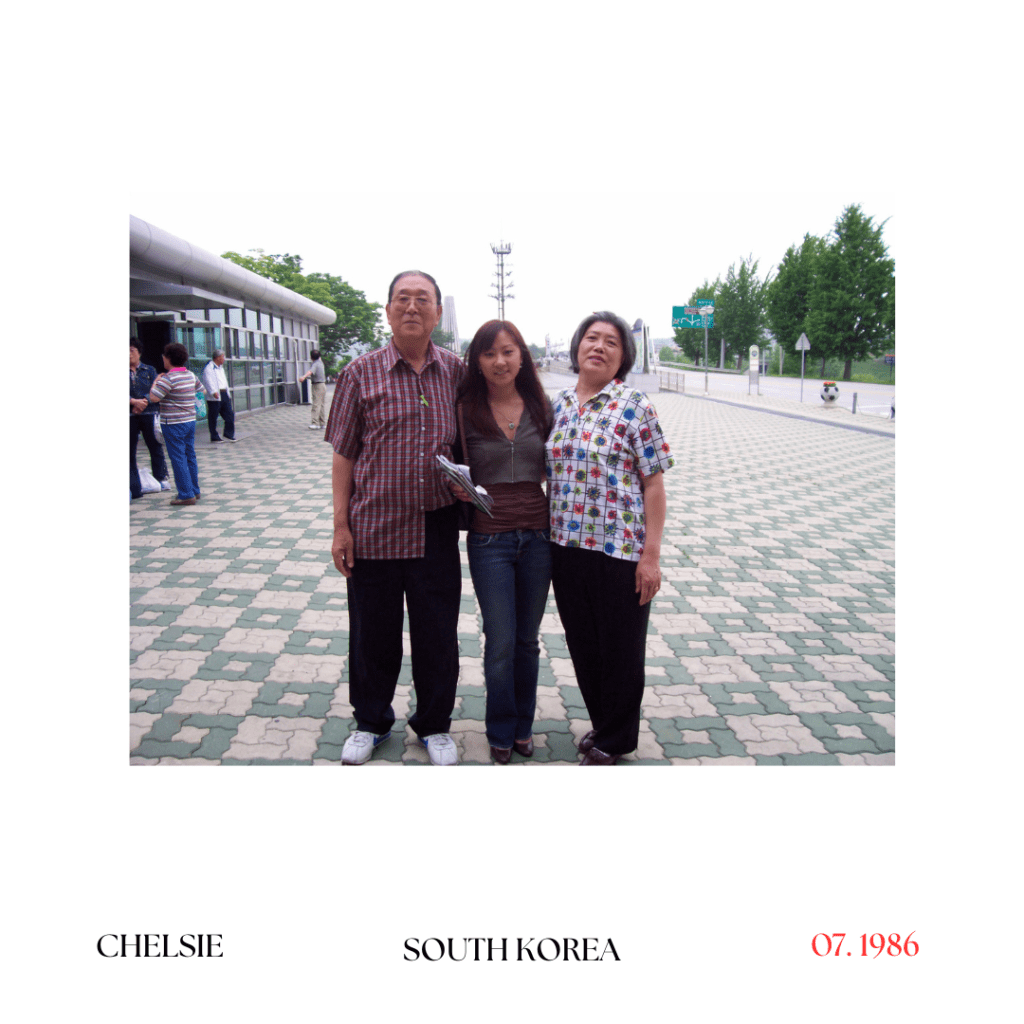
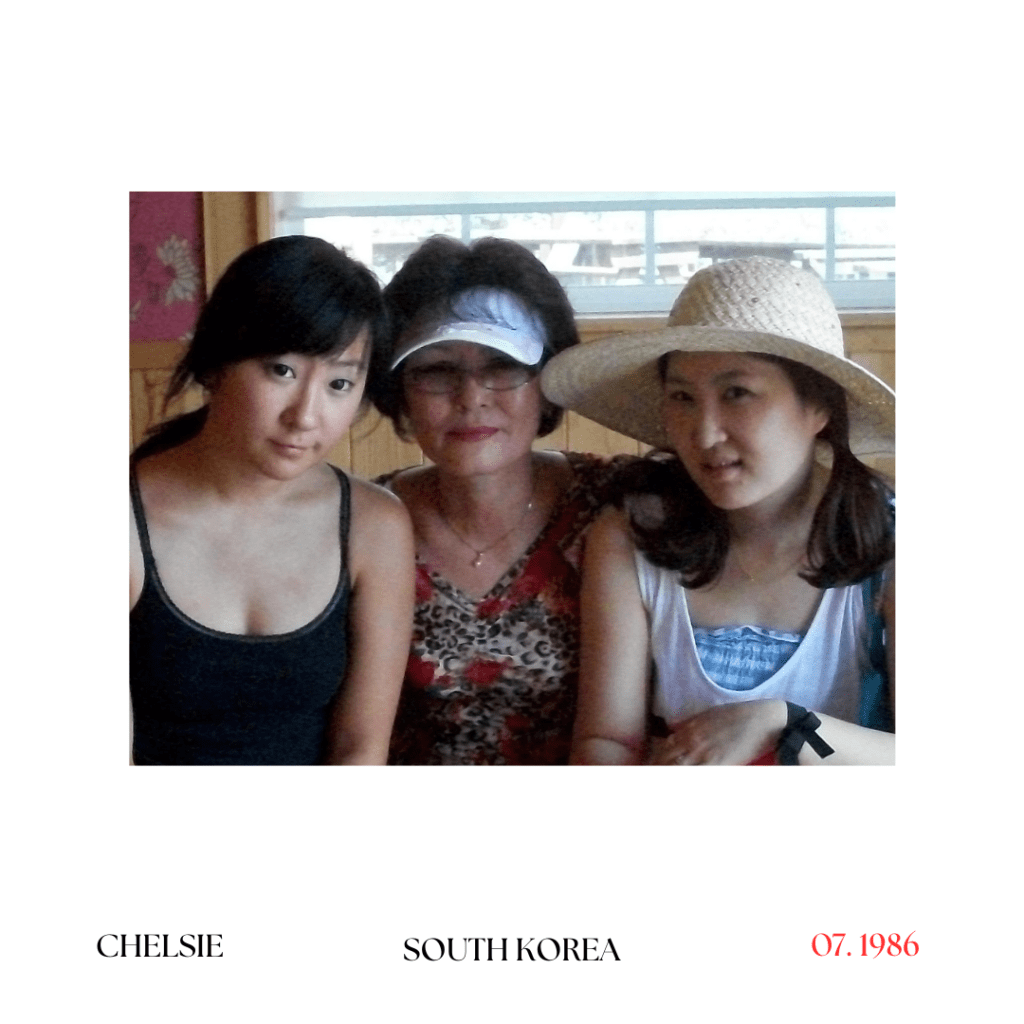
Another year went by, and he said, come back. ‘Your unnee (older sister in Korean) wants to meet you, she’s ready, bring your parents and your brother. Let’s all meet’. And we did. My parents came and brought my little brother. And we went to Korea, we stayed there. And my sister was crying, it was really hard for her, I think, because I really didn’t know how it was gonna be. But we were hanging out. She was very quiet, but she was sweet to me and she was sweet to my parents.
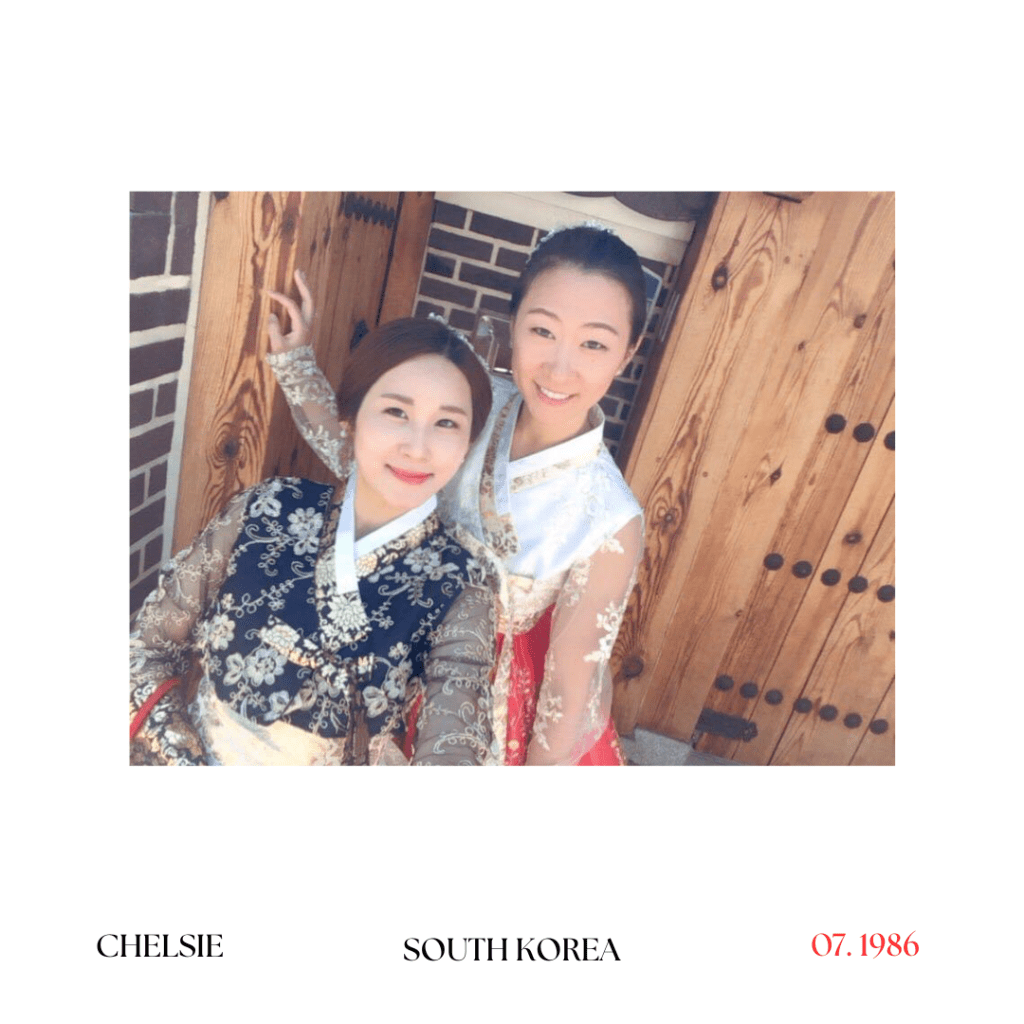
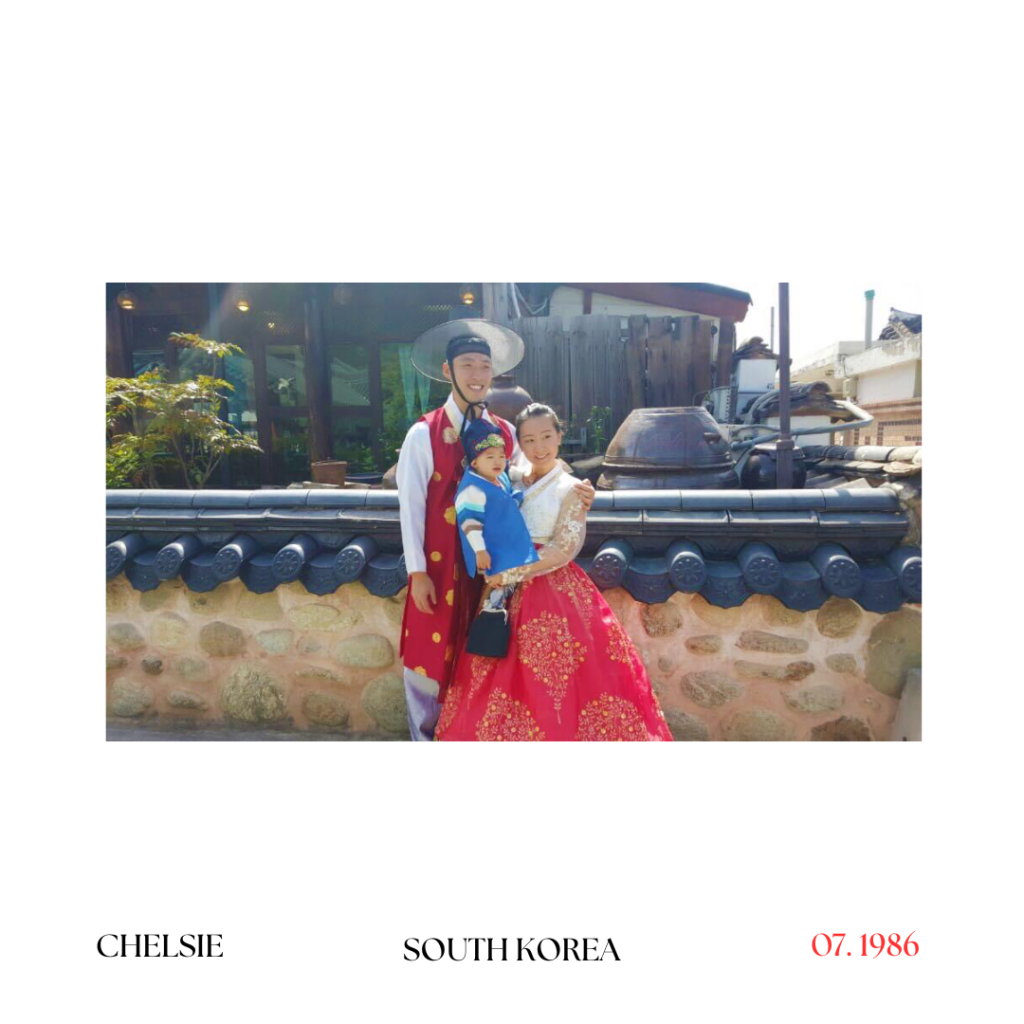
My birth father brought my parents to a hanbok (Korean traditional dress) maker and had hanboks made for them and hanboks made from me and my brother. And I remember seeing my parents were in a hanbok, I felt so happy, hand in hand with my birth family and my parents are in Korea feeling uncomfortable as shit, they don’t know what’s going on, they have diarrhea from all the spicy food, they’re struggling, but they’re holding it together for me. And I was so grateful. And so I felt like that trip was really good for that reason. And then the following year, I went by myself to Korea, my parents were comfortable with it because they had met my birth family, and they knew where he lived and how he lives, so they told me to go. So on that trip, I really bonded with my sister because it was really just us a lot of times.
Nicole: Were you speaking Korean this entire time?
I was speaking Korean and she would speak in broken English, we would pull up the phone and we would pull up the dictionary if there was a word we didn’t know. And randomly like every few days a translator would come. But if not, it was okay.
The initial meeting with my birth family, a translator came to the house and was there in the morning when we woke up and was there all day translating for us. So it wasn’t until I went back by myself that they didn’t have a translator every day, because I think they wanted my parents to feel comfortable. So they always had a translator when they were around. But with me, they were like, ‘you’re okay, right?’ And I’m like, ‘Yeah, I’m okay’.
Anyway, I hung out with my sister, my cousins, and my younger sister a lot on that trip. And I found out that my dad had remarried again, who’s on his third marriage now? And my stepmom, his wife, is super sweet to me. And this was the trip that my sister had practiced, I think, to talk to me in English because we went out partying and the night before I left my dad told us we needed to be home at a certain time. And I said, ‘yeah, we’ll be home’ and she was like, ‘yeah, we’ll be home’. But we were not home. We partied all night. We didn’t get home until morning, when we had to leave and my birth dad was pissed. Because we had to drive from his home back to Incheon, which is four hours away. And so we’re in the car, me and my sister are wasted. And we’re just sitting in the back and she reaches over and she holds my hand. And then she says in English. ‘I remembered you’. And she’s crying and she said, ‘I loved you. You’re my baby. One day I go to school, I come home, you’re gone. Nobody talked about you’. She says, ‘I forget’. She says she was maybe in elementary school and that she was at school. And she thought, ‘oh my god, I have a baby. I forgot about that’. So she ran home and said, ‘Grandma, grandma, remember I have a baby. I have a baby sister. We have to find her’. And I guess grandma said, ‘well, actually your sister went to America. And she has a different family now. And it would be really impossible for us to find her’. And she didn’t like that. She was like, ‘but it’s my responsibility as an unnee (older sister) to take care of my baby. With mom gone I have to take care of her’. So I guess Grandma told her that if you pray every day, she’ll find you. And she’s like, ‘I prayed every day and you found me’.
We were both crying and I felt like that moment brought us so close together. And then it was after that trip, I wanted to meet my birth mom. And I wanted him to find her. And he said again, and he was like, ‘okay’, secret secrets. ‘So your sister thinks your mom is dead. She is not dead. But I have to let her know that. So give me some time. I’m gonna tell her and you come back’. And I was like, ‘Oh, God, holy shit, alright, so mom is not dead’.
And then he messaged me again, maybe another year later, and said, ‘okay, I called your mom. I told your sister, you come. You and your sister, we will go together’. I was like, ‘okay’, but then I was unable to get there. I was out of college and I was working, but I couldn’t go at that time. And so they said, ‘okay’. And my sister met our birth mom without me one time. And then she said, ‘I’ll wait until you come back and then we’ll see her together’.
And this trip, I was going back to Korea by myself. And I was living downtown (Minneapolis) by myself in my own apartment. And I just got super freaked out right before I left because I felt like when I met my birth father, it happened so suddenly, I didn’t have time to think about it. But I knew I was going back to Korea this time for my birth mom. And it really scared me because when I was a kid I would never fantasize about meeting my birth dad, it was always about meeting my mom. And it just scared me to think that this fantasy was gonna come true.
I think my boyfriend at the time was bringing me to the airport and he was on his way to pick me up and I was crying. So I called my mom and I said, ‘I just can’t, I can’t do it. I’m scared’. She was so supportive. She said, ‘no, you should go, what do you mean, you’ve been waiting for this your whole life. You have to go, don’t look back on this moment, thinking you made a mistake’. And I’m like, ‘Ah, okay’, so I went. And met my birth mom and my sister. And it was weird. My first thought actually was, oh my god, you’re so old. When I was a kid, I would fantasize about what she looked like and she was a young woman because I’m a little kid. So you think of this young Asian woman like in her 20s or 30s. Right?
But then my vision of her never changed over the years in my mind. So when I saw her, I was like, ‘oh my god, who’s this grandma. She’s so old’. We had a translator come with and she basically said the same thing that my dad said about what happened, your dad was in jail. I had so much pressure on me from your grandparents and I felt if I didn’t leave, that we wouldn’t survive’. You know, she’s like, ‘we were so poor. And your grandparents hated me. And they were so worried about your dad that I thought the only way for you and your sister to survive would be for me to leave you’. And that was sad to me. I was like God, that’s so sad to have gone through that. I can’t imagine leaving my kids. So if you’re leaving them because you’re scared that you’re not going to survive, it’s so sad, you know? But she was odd. And she didn’t seem to want a relationship with me.
She said that she had remarried and that she had two sons, but she did not give any information about them. She told me that her husband had passed away suddenly in an accident. And since then, she was just working really hard to take care of her and her son, because she didn’t want to leave them like she left us. And she would go to my sister’s school sometimes and watch her when she plays outside on the playground. That’s so sad because you know, not only did I not grow up with her, but my sister didn’t have her either. So I felt sad for her as well.
The next time I went back, I brought Joe, I was married and then the next time we went back and I brought my son. And now I’m trying to figure out when we can go back again, because my daughter hasn’t been to Korea. So I’ve gone there so many times, and every time I’ve been there, it’s always some new, I don’t know, discovery or new door opened. It’s just a lot. I mean, I could say so many things that happened but I just told you the kind of the big moments that I don’t know that I think changed my life because I came back from all these trips always feeling a little bit sad, right? I suddenly have a lot of information to take in, a lot to process.
And I think after I met my birth mom, I felt a sudden peace. I felt like the way that my life turned out was right. You know, because I won’t always have the what ifs, well, what if I wasn’t adopted? Or what if my mom didn’t leave? There are so many what if questions. But after I met her, I was like, ‘Oh, actually, it’s good. And I’m glad because you’re kind of crazy. And so I was kind of glad that I had this different path’.
So the whole journey of my birth family really led me to inner peace. And it was really good for me. So, I took a while after I got back from that trip because I came back really, I think angry. I was really angry at my birth mom because I kind of blamed her for breaking our family. Because obviously, my dad had already confessed ‘yeah, I did some shady shit, I got in trouble and went to jail. But, I didn’t even know that you were gone. Where’s my other baby? I should have two babies’. And they were like, ‘she’s gone’. And he went to the adoption agency and tried to get me back. Because he was like, ‘I didn’t do this. I didn’t. That’s my baby. I didn’t put her up for adoption’. They were like, ‘It’s too late. Sorry. You’re gonna have to wait and see if she contacts you one day’.
I think he was very surprised. So I think I was always in his heart. I think my grandparents always felt guilty because they felt responsible for driving my mom away. And I only met my grandfather one time, the first time. The first time I met them he was really old and he did not talk. He sat in the chair, he was a skinny old man and he just stared at me. I swear to God he didn’t even blink, just stared the whole time. And I almost thought, maybe he’s just super senile, and he has no idea what’s going on, which is fine. But then, when we were going back to Seoul, my birth father was bringing me and my mom back to Seoul to our hotel. And he suddenly jumped out of the chair, and he had so much to say, he started crying, he got up and he’s an old man, he’s shaking and bent over. And my grandma’s grabbing him so he doesn’t fall down. And he was rambling.
I didn’t actually understand what he was saying. But he was crying and grabbing me, grabbing my arms. And my grandma and my birth dad were telling him to stop. And my birth dad got our luggage and we went down the elevator to the car. And he jumped in the elevator. He came down and as far as I knew at that time, he wasn’t really leaving the house because he was so fragile. And my grandma was holding his arm helping him so he doesn’t fall and I’m in the car and he had his arms in the window, grabbing me crying and my dad was like, ‘stop, stop, we have to go. We have to go’. My grandma was crying. And my mom was crying. And that’s my last vision of seeing my biological grandfather was his arms through the window, grabbing me, crying, and my dad just driving us away and then I just see him and my grandma was holding him back and she was crying. And then he passed away that year. And I almost feel like he found some peace in meeting me, and I was wondering maybe he needed that, you know, I think he waited a long time so I think it was all really hard for him as well, seeing him was so sad. And now when I think about him, that’s what I think of the vision of the window and his arms and him crying. It shook up the whole family.
Do you have any advice for other adoptees?
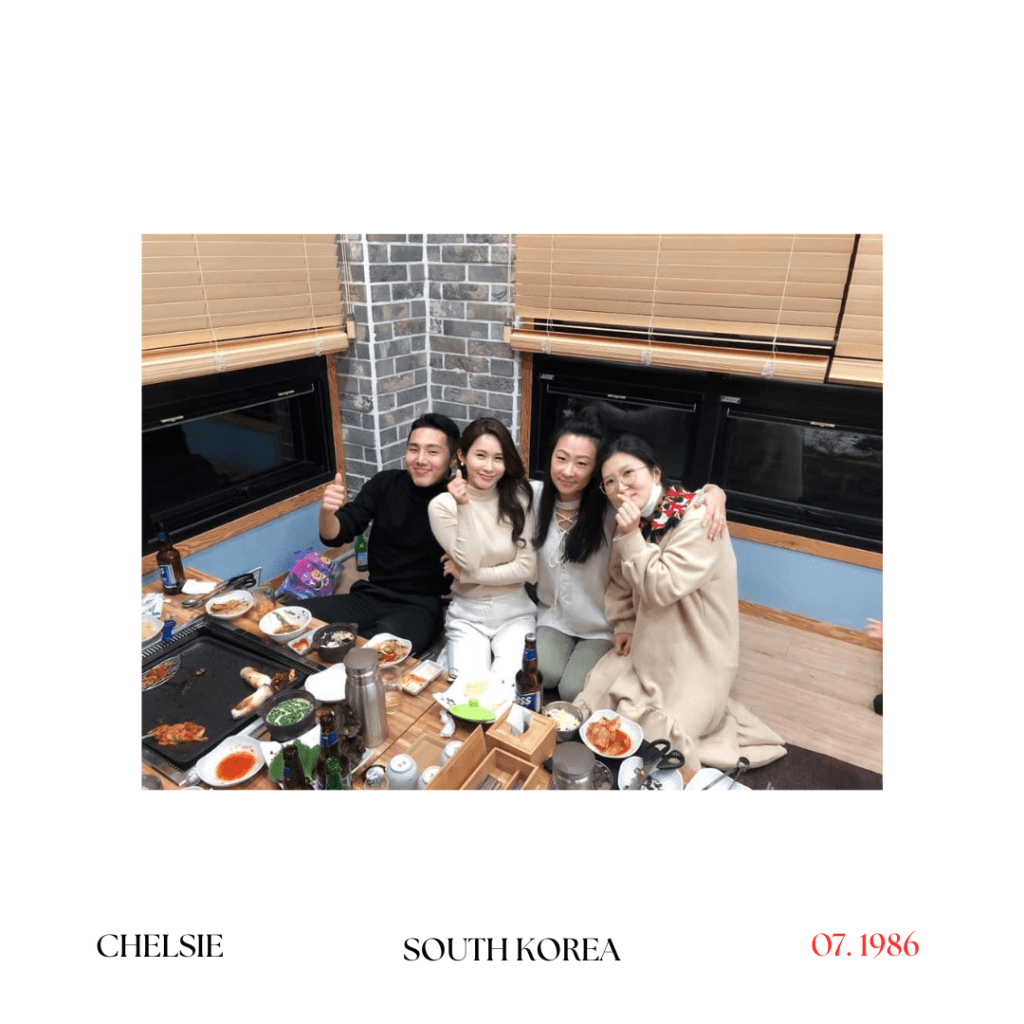
I do, two of my really good friends who I actually met through AK Connections and they have also met their birth families and they both speak a little bit of Korean and they have ongoing relationships with their families, and they go back and they stay with them and they learn how to cook more Korean foods and they get new skincare and they make all of these new memories with their birth families. I love those friendships, I love my relationships with those two girls because it’s so unique. I have a connection with them that I don’t have with anyone else. I have a connection with them that I don’t have with my husband and they feel the same way. So we often talk about our birth families and when we go back how we feel and what we want to bring and what we want to bring back and what we want to take away from those trips, what kind of self discoveries we want to make.
But it’s really hard for me to give advice to people who go back to Korea, I almost feel that it’s inappropriate, it’s not my journey and everyone has to have their own journey. So I kind of pull back when people ask me that question, as well as it almost turns me off, first of all you know me, I love the white parents, I am a huge supporter of the white parents, love the white parents, but when the white parents push Korea trips on their kids that are under 18, that makes me cringe. I am always like this is a lot, it’s so much, and I know you want to be supportive, but are you taking your kids because they said I want to go to Korea on their own, or is it because you’ve been saying you want to go to Korea, do you actually want to go to Korea? And the white parents ask me ‘well what advice do you have for me?’ And I’m like ‘I don’t know because you’re opening a journey box that is very separate from you’, it’s a big journey for the white parents, it’s huge for them too, and I don’t belittle that, and I think it’s really hard for them, it’s scary for them, it’s emotional for them, but that journey is different for them than it’s going to be for their kids, and they’re totally separate. Sometimes I feel like because the white parents want to open this journey box, then they push it on their kid and sometimes I just don’t think they’re ready. So when people ask me about Korea, should I do this? Should I do a birth tour, should I go on my own, should I go with my family, should I go with my spouse? I’m like do what you want, it’s your journey. That would be my advice, you do what makes you feel comfortable, what makes you feel peaceful, what will bring you some answers that you can handle, don’t go in over your head on your first trip at least. Later you can, because every time you go back to Korea it’s so emotional, and it’s a little bit dark, you know you have a lot to process.

Enter your email below to follow along.

© Rebirth Adoptee Stories

 Rebirth